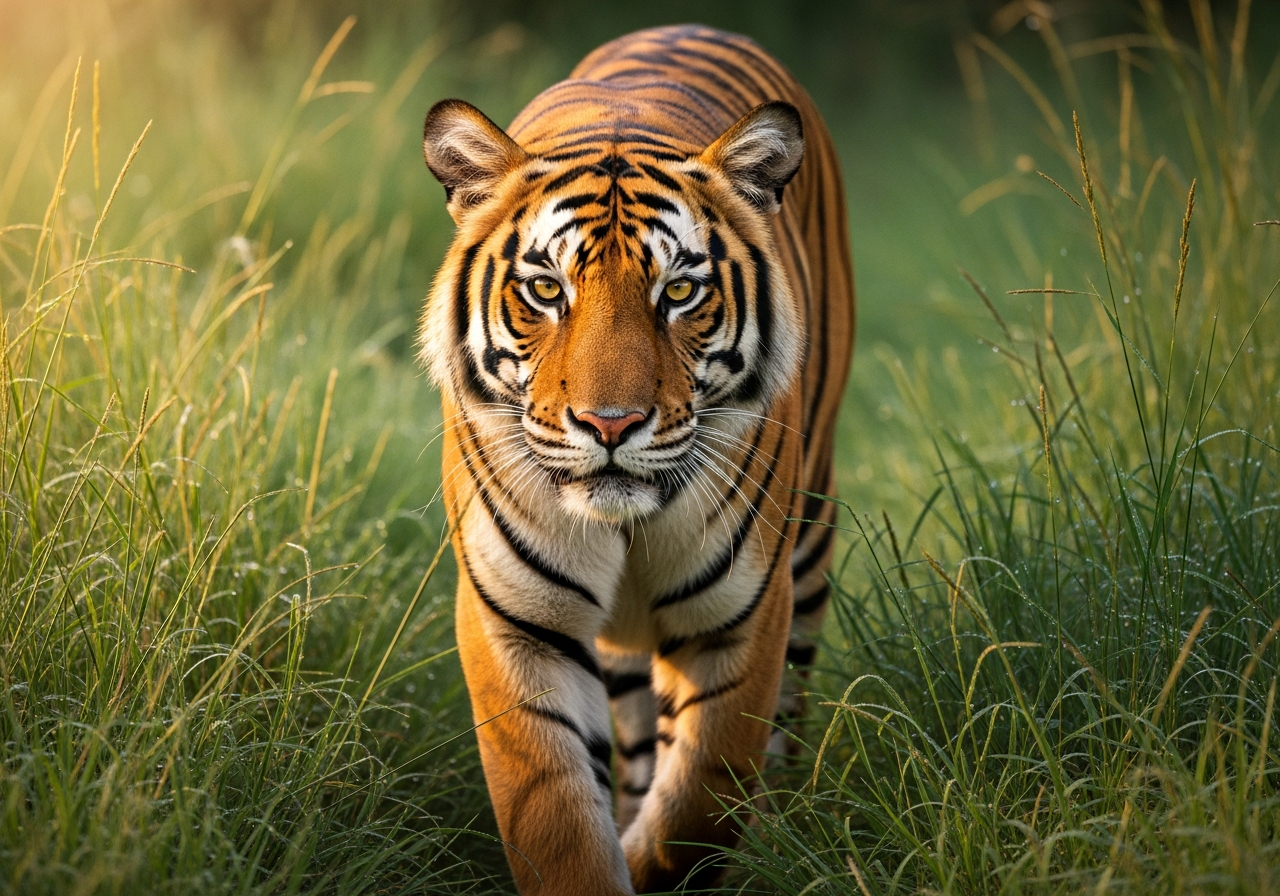
Tiger
Panthera tigris
Quick answer
Tigers are the largest living cat species, reaching up to 300 kg (660 lb). They are solitary, primarily nocturnal hunters native to Asia, from Siberian forests to tropical mangroves. Every tiger's stripe pattern is unique, like a human fingerprint. Wild tigers live around 10 to 15 years.
Tiger facts at a glance
| Scientific name | Panthera tigris |
|---|---|
| Diet | Carnivore |
| Habitat | Forest, grassland, mangrove swamp |
| Lifespan | 10–15 years in the wild |
| Weight | 90–300 kg (200–660 lb) |
| Top speed | 65 km/h (40 mph) |
| Conservation status | Endangered (IUCN) |
| Kingdom | Animalia |
|---|---|
| Phylum | Chordata |
| Class | Mammalia |
| Order | Carnivora |
| Family | Felidae |
| Genus | Panthera |
Where it lives
Forests, grasslands, and mangroves across Asia, from the Russian Far East to Sumatra.
Behavior
Unlike lions, tigers are solitary and territorial, coming together only to mate. They are powerful swimmers and, unusually for cats, enjoy water, often cooling off in rivers and lakes. Tigers communicate through scent marks, scratch marks, and vocalizations that can carry for kilometers.
Diet and hunting
Tigers are ambush predators that hunt deer, wild boar, and other large mammals. They stalk silently and use their immense strength to overpower prey, often dragging carcasses far heavier than themselves to cover. A tiger may eat up to 35 kg (77 lb) of meat in one night.
Habitat and range
Tigers once roamed across much of Asia. Today they survive in scattered populations from the snowy forests of the Russian Far East to the mangroves of the Sundarbans and the tropical forests of India and Southeast Asia.
Conservation
Wild tiger numbers crashed in the 20th century due to poaching and habitat loss, with as few as 3,200 remaining around 2010. Intensive conservation has since helped numbers begin to recover in some countries, but tigers remain Endangered.
Frequently asked questions about the Tiger
Are tigers the biggest cats in the world?
Yes. Tigers are the largest of all living cat species. The Siberian (Amur) tiger is the biggest subspecies, with males weighing up to about 300 kg (660 lb).
What do tigers eat?
Tigers are carnivores that mainly hunt large prey such as deer and wild boar. They are ambush hunters and can eat up to 35 kg of meat in a single feeding.
Why do tigers have stripes?
A tiger's stripes provide camouflage in tall grass and dappled forest light, helping it stalk prey unseen. Each tiger's stripe pattern is unique, and the markings are also present on its skin.
Can tigers swim?
Yes. Tigers are strong, confident swimmers and often enter water to cool down or cross rivers. This sets them apart from most other cats, which usually avoid water.
How many tigers are left in the wild?
Recent estimates put the wild tiger population at roughly 4,500 individuals. Numbers have begun to recover in some countries thanks to anti-poaching efforts and habitat protection, but tigers remain Endangered.
How long do tigers live?
Wild tigers typically live 10 to 15 years, while tigers in captivity can live up to 20 to 25 years with veterinary care and a steady food supply.