Capybara
Hydrochoerus hydrochaeris
Quick answer
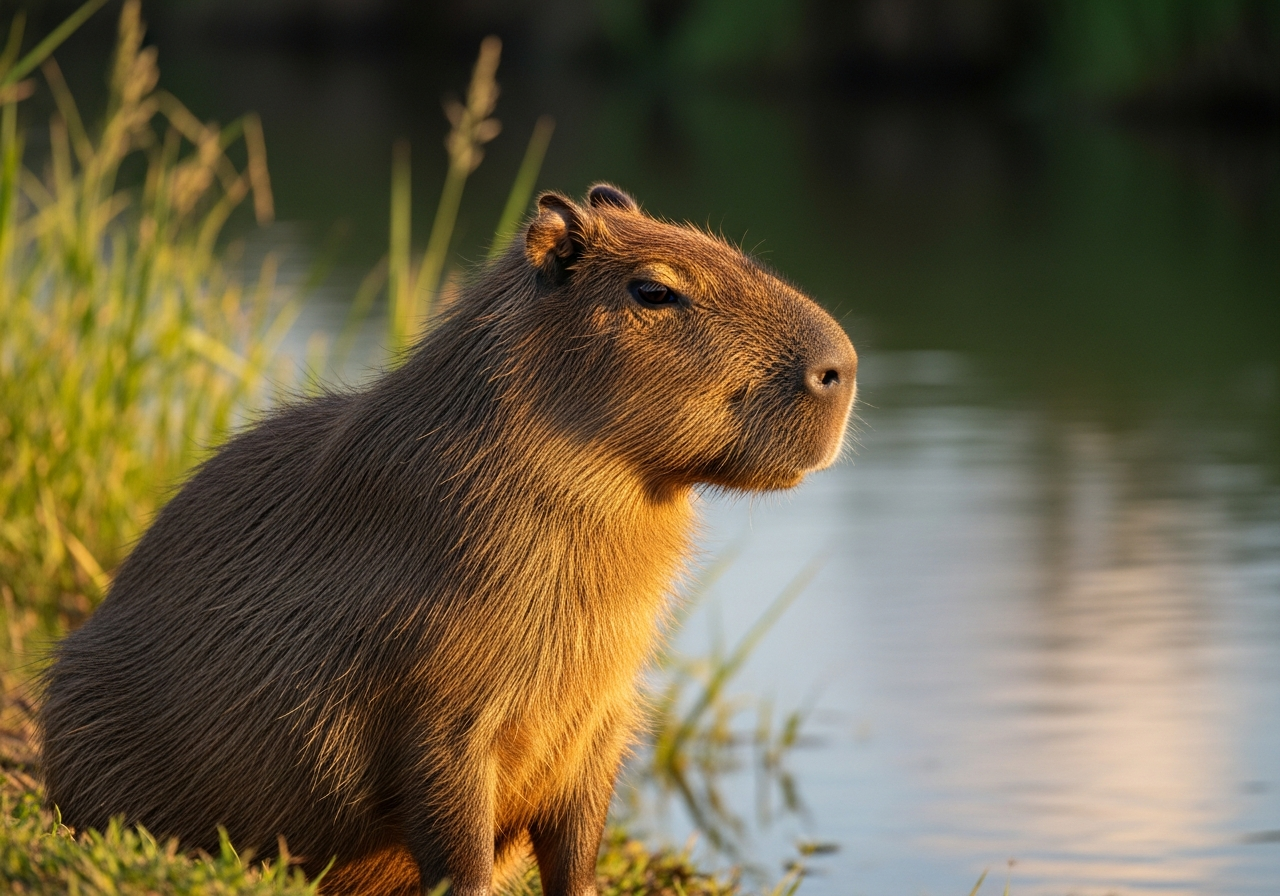
The capybara is the largest living rodent, a barrel-shaped, semi-aquatic herbivore from the wetlands and grasslands of South America. Adults can weigh up to 65 kg (143 lb) and stand about 0.6 m (2 ft) tall, with partially webbed feet for swimming. Highly social, capybaras live in groups near water, grazing on grasses and aquatic plants, and are known for their remarkably calm, friendly demeanor. In the wild they typically live 8 to 10 years.
Capybara facts at a glance
| Scientific name | Hydrochoerus hydrochaeris |
|---|---|
| Diet | Herbivore (grazer) |
| Habitat | Wetlands, riverbanks, and grasslands |
| Lifespan | 8–10 years in the wild |
| Weight | 35–65 kg (77–143 lb) |
| Top speed | Up to 35 km/h (22 mph) |
| Conservation status | Least Concern (IUCN) |
| Kingdom | Animalia |
|---|---|
| Phylum | Chordata |
| Class | Mammalia |
| Order | Rodentia |
| Family | Caviidae |
| Genus | Hydrochoerus |
Where it lives
Wetlands, riverbanks, and grasslands across much of South America east of the Andes.
Diet and digestion
Capybaras are grazing herbivores that feed mainly on grasses and aquatic plants, supplementing their diet with fruit and bark in the dry season. Like rabbits, they practice coprophagy, eating some of their own droppings to extract more nutrients from tough, fibrous plants. Their teeth grow continuously to cope with the wear of grinding vegetation. An adult can eat several kilograms of grass each day.
Habitat and range
Capybaras live across much of South America east of the Andes, in countries including Brazil, Venezuela, Colombia, and Argentina. They are always found near water, inhabiting marshes, riverbanks, flooded grasslands, and the edges of lakes and ponds. Water is central to their lives, providing food, escape from predators, and relief from the heat. They are well adapted to seasonally flooded landscapes such as the Pantanal and Llanos.
Predators and conservation
As large, abundant herbivores, capybaras are important prey for jaguars, pumas, caimans, and anacondas, and the young are vulnerable to many predators. They are listed as Least Concern, with healthy populations across their range, and are even farmed in some areas for meat and leather. Their habit of staying near water makes wetland conservation important for them. In some regions they have adapted well to human-altered landscapes and even urban parks.
Frequently asked questions about the Capybara
What is the largest rodent in the world?
The capybara is the largest living rodent. Adults can weigh up to 65 kg (143 lb), far larger than any other rodent, and stand about 0.6 m (2 ft) at the shoulder.
What do capybaras eat?
Capybaras are grazing herbivores that eat mainly grasses and aquatic plants, plus some fruit and bark. They also eat their own droppings to absorb more nutrients from fibrous plants.
Why are capybaras so friendly with other animals?
Capybaras have a calm, tolerant temperament and are social grazers that pose no threat to other species, so many animals, including birds and monkeys, are comfortable around them.
Can capybaras swim?
Yes. Capybaras are excellent swimmers with partially webbed feet. They use water to feed, cool off, and escape predators, and can stay submerged for several minutes.
Where do capybaras live?
Capybaras live in wetlands, grasslands, and riverbanks across much of South America east of the Andes, always staying close to water.
How long do capybaras live?
Wild capybaras typically live 8 to 10 years, though predation often shortens their lives. In captivity, protected from predators, they can live around 12 years.