Koi
Cyprinus rubrofuscus
Quick answer
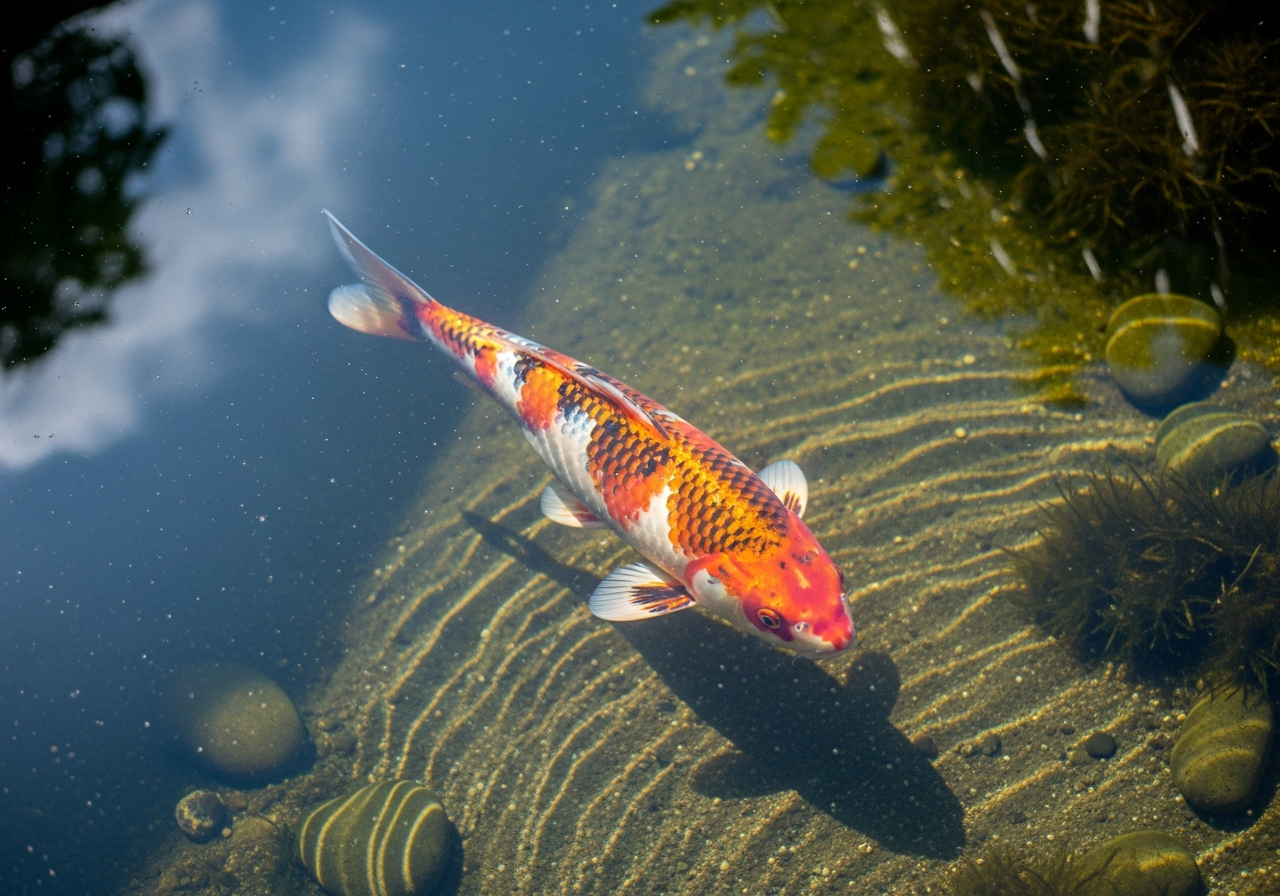
Koi are colorful ornamental carp bred for decoration and kept in garden ponds and water gardens around the world. Developed in Japan from common carp, they come in many color patterns and can grow 60 to 90 cm (2 to 3 ft) long. Hardy and long-lived, well-kept koi commonly reach 25 to 35 years and sometimes far longer.
Koi facts at a glance
| Scientific name | Cyprinus rubrofuscus |
|---|---|
| Diet | Omnivore |
| Habitat | Garden ponds; wild carp in rivers and lakes |
| Lifespan | 25–35 years, sometimes much longer |
| Length | 60–90 cm (2–3 ft) |
| Top speed | Slow, steady swimmer |
| Conservation status | Least Concern (IUCN) |
| Kingdom | Animalia |
|---|---|
| Phylum | Chordata |
| Class | Actinopterygii |
| Order | Cypriniformes |
| Family | Cyprinidae |
| Genus | Cyprinus |
Where it lives
Developed as an ornamental carp in Japan and kept in ponds worldwide; wild ancestors live in East Asian rivers and lakes.
Behavior and intelligence
Koi are social, calm fish that often become tame enough to be hand-fed and to recognize the people who care for them. They are bottom-feeders that browse along the floor of a pond and gather at the surface at feeding time. In cold weather they slow down and rest near the pond bottom, becoming sluggish until the water warms again.
Diet and feeding
Koi are omnivores that eat a wide range of foods, including algae, plants, insects, worms, and prepared koi pellets. Keepers often feed high-protein food in warm months and reduce feeding as temperatures drop, since the fish digest slowly in cold water. Overfeeding and poor water quality are common problems in ponds.
Origins and varieties
Koi were developed in Japan beginning in the 1800s, when farmers selected colorful mutations of common carp raised for food. Today there are many named varieties distinguished by color, pattern, and scale type, and prized show koi can sell for very high prices. Their wild ancestor, the East Asian carp, lives in rivers and lakes across East Asia.
Care and longevity
Koi are hardy fish that can live for decades in a well-maintained pond with clean, oxygenated water and enough space to grow. They are famous for their long lifespans, and some individuals have reportedly lived well past 50 years. Predators such as herons and raccoons, along with poor water quality, are the main risks to pond koi.
Frequently asked questions about the Koi
How long do koi live?
Well-kept koi commonly live 25 to 35 years, and in excellent conditions some have reportedly lived far longer, occasionally past 50 years.
What do koi eat?
Koi are omnivores that eat algae, plants, insects, and worms, along with commercial koi pellets. They eat less in cold water because they digest slowly.
How big do koi get?
Koi typically grow 60 to 90 cm (2 to 3 ft) long, with the largest individuals reaching about 1 m, depending on genetics, space, and care.
Are koi just goldfish?
No. Koi are ornamental carp, while goldfish are a separate domesticated species. Koi grow larger and have barbels around the mouth that goldfish lack.
Can koi live in cold water?
Yes. Koi are cold-tolerant and can survive winter in ponds that do not freeze solid, becoming sluggish and resting near the bottom until the water warms.
Why are some koi so expensive?
High-quality show koi are prized for their color, pattern, body shape, and pedigree. Champion fish from respected breeders can sell for very large sums.