Clownfish
Amphiprion ocellaris
Quick answer
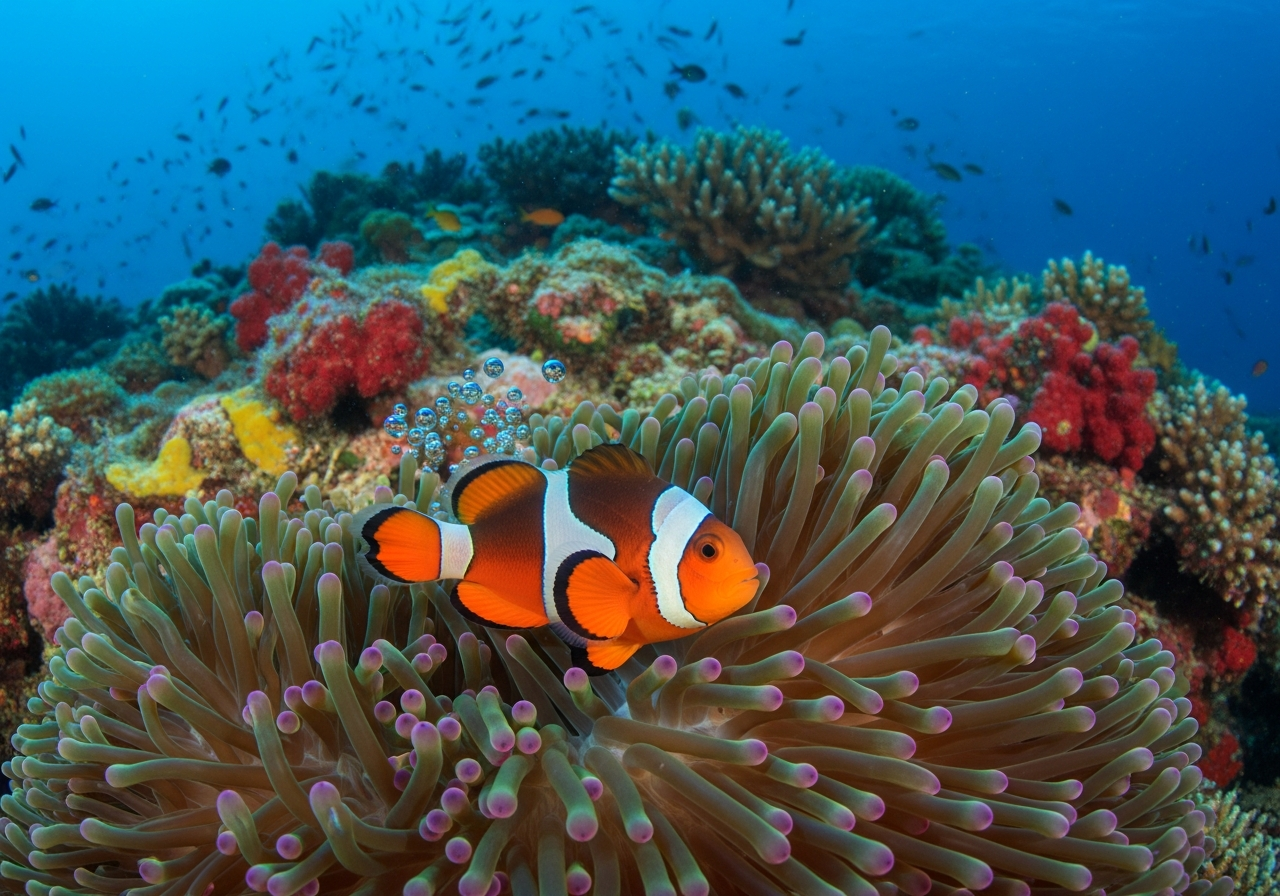
The clownfish, or anemonefish, is a small, brightly colored reef fish famous for living safely among the stinging tentacles of sea anemones, protected by a special mucus coating. Made famous by the film Finding Nemo, clownfish form a partnership with their anemone that benefits both. All clownfish are born male and can change sex, and they typically live 6 to 10 years.
Clownfish facts at a glance
| Scientific name | Amphiprion ocellaris |
|---|---|
| Diet | Omnivore |
| Habitat | Coral reefs of the Indo-Pacific |
| Lifespan | 6–10 years |
| Length | 8–11 cm (3–4.3 in) |
| Top speed | Slow; stays near its anemone |
| Conservation status | Least Concern (IUCN) |
| Kingdom | Animalia |
|---|---|
| Phylum | Chordata |
| Class | Actinopterygii |
| Order | Perciformes |
| Family | Pomacentridae |
| Genus | Amphiprion |
Where it lives
Coral reefs of the warm Indo-Pacific, from the Red Sea and East Africa to Japan and Australia.
A partnership with anemones
Clownfish live among the venomous tentacles of sea anemones, which sting most other fish. A layer of special mucus on the clownfish's skin protects it from the stings, so the anemone becomes a safe home and shelter from predators. In return, the clownfish drives off intruders, cleans the anemone, and its waste helps feed it.
Born male, can change sex
All clownfish hatch as males. They live in small groups dominated by a single breeding female; if she dies, the largest male changes sex to become the new female, and the next fish in line steps up to breed. This flexible system keeps a breeding pair available within each anemone.
Reef life and diet
Clownfish rarely stray far from their host anemone. They are omnivores, feeding on algae, plankton, small crustaceans, and leftover scraps. Their bright orange-and-white pattern, bold against the anemone, warns rivals and helps members of the group recognize one another.
Conservation
Common clownfish are listed as Least Concern, but they depend entirely on healthy coral reefs and anemones. Coral bleaching from warming seas, reef destruction, and over-collection for the aquarium trade are growing concerns for some populations and the ecosystems they rely on.
Frequently asked questions about the Clownfish
How do clownfish live in anemones without being stung?
Clownfish are protected by a special mucus coating on their skin that prevents the anemone's stinging cells from firing, letting them shelter safely among tentacles that would sting other fish.
Can clownfish change sex?
Yes. All clownfish are born male, and they live in groups led by one dominant female. If she dies, the largest male changes sex to become the new breeding female.
What do clownfish eat?
Clownfish are omnivores that feed on algae, plankton, small crustaceans, and food scraps, usually staying close to the safety of their host anemone.
Where do clownfish live?
Clownfish live on warm coral reefs in the Indo-Pacific, from the Red Sea and East Africa to Southeast Asia, Japan, and Australia, always closely associated with sea anemones.
Are clownfish endangered?
Common clownfish are listed as Least Concern, but they rely on healthy reefs and anemones, so coral bleaching, habitat loss, and over-collection for aquariums are concerns for some populations.