Bald Eagle
Haliaeetus leucocephalus
Quick answer
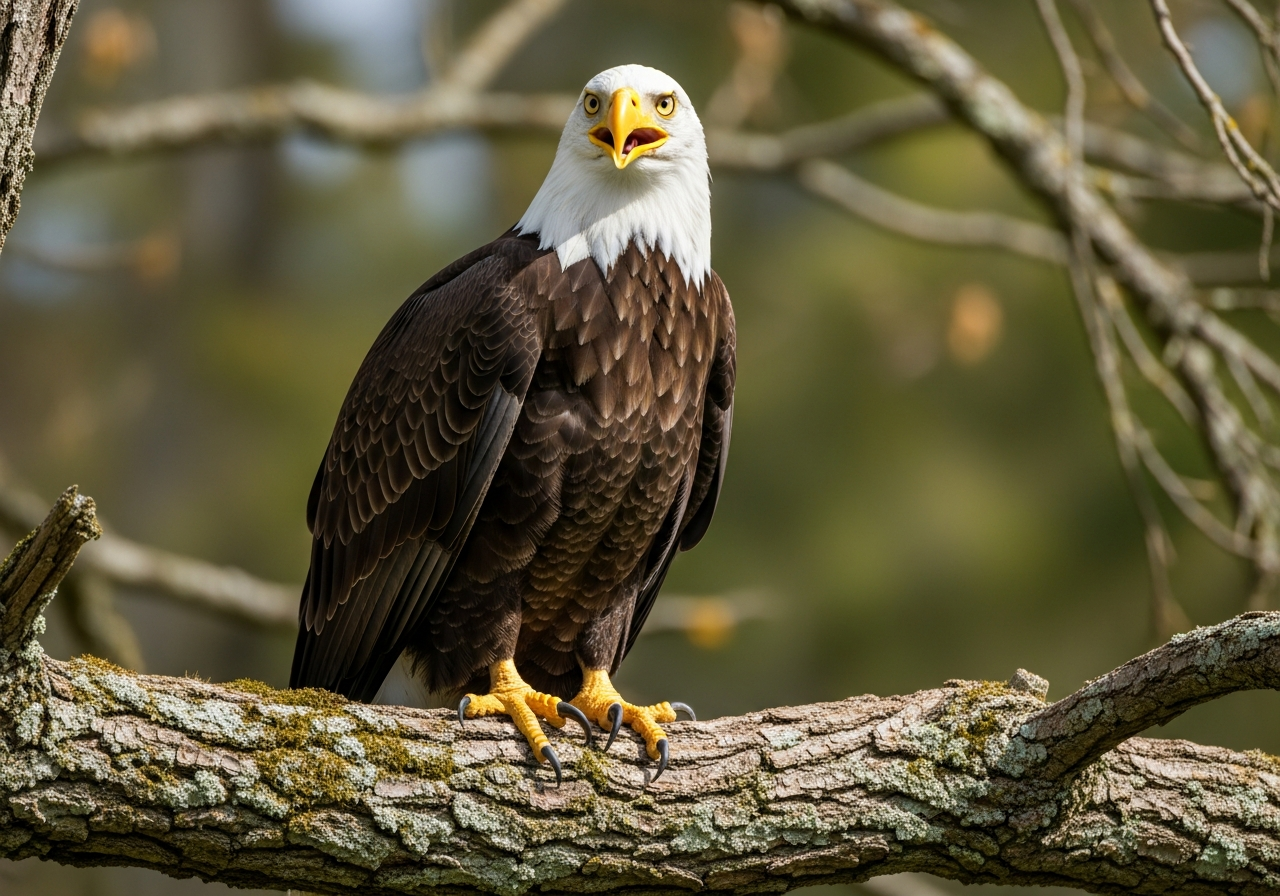
The bald eagle is a large bird of prey native to North America, recognizable by its white head and tail against a dark brown body. It is not actually bald; "bald" comes from an old word meaning white-headed. Bald eagles mainly eat fish, build the largest tree nests of any North American bird, and can live 20 to 30 years in the wild.
Bald Eagle facts at a glance
| Scientific name | Haliaeetus leucocephalus |
|---|---|
| Diet | Carnivore (mainly fish) |
| Habitat | Forests near lakes, rivers, and coasts |
| Lifespan | 20–30 years in the wild |
| Wingspan | 1.8–2.3 m (6–7.5 ft) |
| Top speed | 120 km/h (75 mph) in a dive |
| Conservation status | Least Concern (IUCN) |
| Kingdom | Animalia |
|---|---|
| Phylum | Chordata |
| Class | Aves |
| Order | Accipitriformes |
| Family | Accipitridae |
| Genus | Haliaeetus |
Where it lives
Near lakes, rivers, and coasts across Canada, the United States, and northern Mexico.
Behavior and nesting
Bald eagles mate for life and return to the same nest each year, adding material until it becomes the largest tree nest of any North American bird, sometimes weighing over a tonne. They are powerful fliers that can soar for hours on rising air, and they are known to steal fish from ospreys and other birds rather than always catching their own.
Diet and hunting
Fish make up most of a bald eagle's diet. It hunts by swooping low over water and snatching prey from the surface with its talons. Eagles also eat waterbirds, small mammals, and carrion, and will gather in large numbers at salmon runs and other seasonal food sources.
Habitat and range
Bald eagles live only in North America, from Alaska and Canada down to northern Mexico, almost always near open water with abundant fish and tall trees for nesting. Populations are densest along coasts, large rivers, and lakes.
Conservation
Bald eagles were once endangered in the contiguous United States, devastated by the pesticide DDT, which thinned their eggshells. After DDT was banned and strong protections were put in place, the species recovered dramatically and was removed from the U.S. endangered species list in 2007. It is now listed as Least Concern.
Frequently asked questions about the Bald Eagle
Are bald eagles actually bald?
No. Bald eagles have a full covering of white feathers on their heads. The name comes from an older meaning of "bald" that meant white-headed or marked with white, not hairless.
What do bald eagles eat?
Bald eagles eat mainly fish, which they snatch from the water with their talons. They also take waterbirds, small mammals, and carrion, and will steal prey from other birds.
How fast can a bald eagle fly?
Bald eagles cruise at around 50 km/h (30 mph) but can reach about 120 km/h (75 mph) when diving toward prey.
How long do bald eagles live?
In the wild, bald eagles typically live 20 to 30 years. In captivity, protected from hazards, they can live even longer.
Are bald eagles endangered?
Not anymore. After near collapse from DDT poisoning, bald eagle populations recovered and the species is now listed as Least Concern, though it remains protected by law in the United States.
How big is a bald eagle's nest?
Bald eagles build the largest tree nests of any North American bird. Reused and expanded over years, a nest can reach 2.5 m (8 ft) across and weigh more than a tonne.