Bearded Dragon
Pogona vitticeps
Quick answer
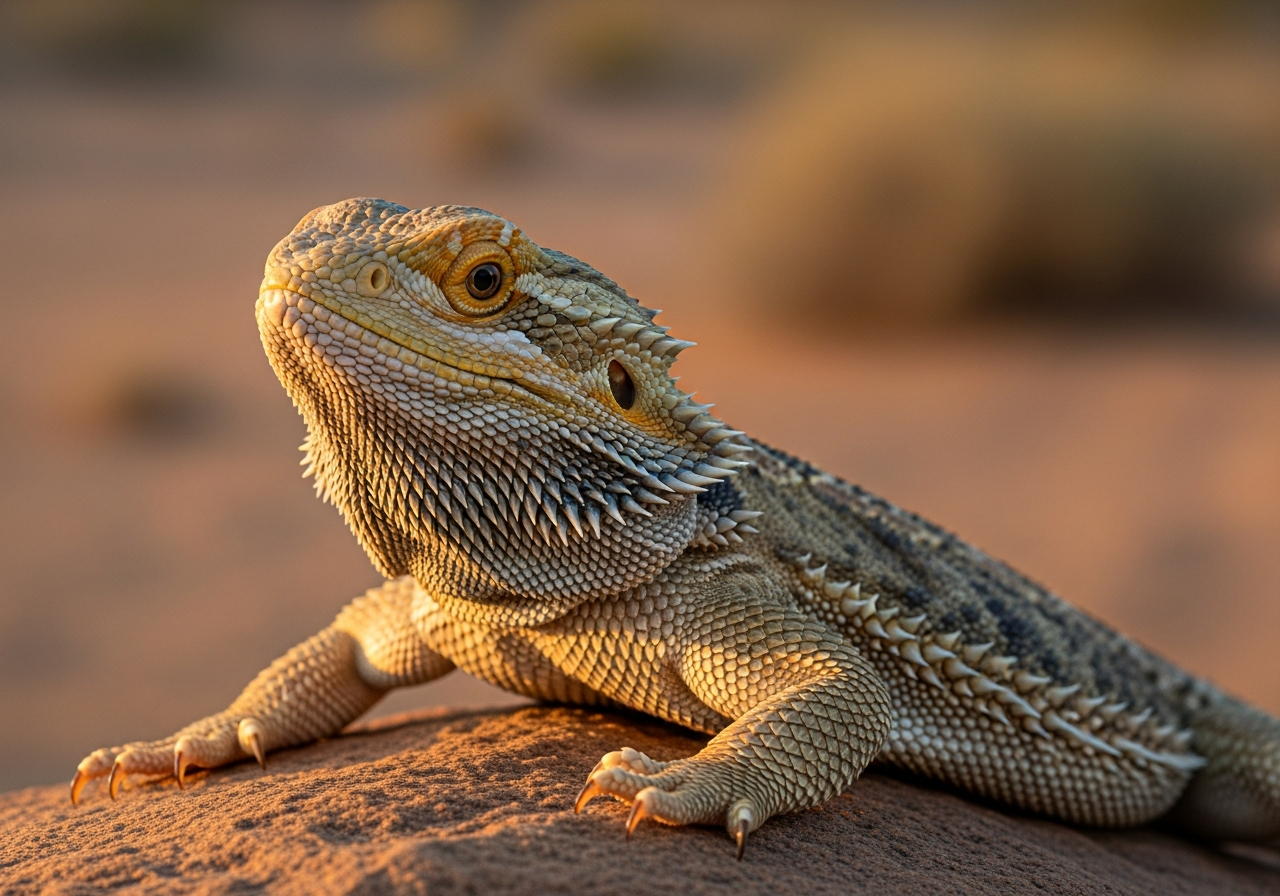
The bearded dragon is a medium-sized lizard from the deserts of central Australia and one of the most popular pet reptiles in the world. Named for the spiny 'beard' under its chin, which it puffs out and darkens to display, it is docile, curious, and tolerant of handling. Bearded dragons are omnivores that typically live 10 to 15 years in captivity.
Bearded Dragon facts at a glance
| Scientific name | Pogona vitticeps |
|---|---|
| Diet | Omnivore |
| Habitat | Arid deserts and woodlands of Australia |
| Lifespan | 10–15 years in captivity |
| Length | 40–60 cm (16–24 in) including tail |
| Top speed | Up to 15 km/h (9 mph) |
| Conservation status | Least Concern (IUCN) |
| Kingdom | Animalia |
|---|---|
| Phylum | Chordata |
| Class | Reptilia |
| Order | Squamata |
| Family | Agamidae |
| Genus | Pogona |
The beard display
Bearded dragons get their name from the spiny pouch of skin under the chin. When threatened, excited, or showing dominance, a 'beardie' puffs this beard out and can turn it black, while opening its mouth wide to look bigger and more intimidating to rivals and predators.
Body language
These lizards 'talk' with body language. A slow arm wave is a sign of submission or acknowledgment, while fast head-bobbing signals dominance. Reading these cues, along with color changes, helps keepers understand a bearded dragon's mood and well-being.
Diet and care
Bearded dragons are omnivores. Young dragons eat mostly insects to fuel rapid growth, while adults eat more leafy greens and vegetables. In captivity they need a warm basking spot, a cooler zone, and UVB lighting to process calcium and keep their bones healthy.
Desert adaptations
Native to Australia's hot, dry interior, bearded dragons bask to raise their body temperature and shelter in burrows or shade to avoid extreme heat. They can survive long dry spells and, in cooler conditions, may enter a dormant state called brumation, the reptile equivalent of hibernation.
Frequently asked questions about the Bearded Dragon
Why is it called a bearded dragon?
It is named for the spiny flap of skin under its chin, which it can puff out and darken like a beard when it feels threatened, excited, or wants to display dominance.
What do bearded dragons eat?
Bearded dragons are omnivores. Juveniles eat mostly insects such as crickets, while adults eat more leafy greens and vegetables along with some insects.
How long do bearded dragons live?
With proper care, pet bearded dragons typically live 10 to 15 years, making them a long-term commitment as a pet reptile.
Are bearded dragons good pets?
Yes. Bearded dragons are popular because they are generally docile, tolerate handling well, and have interesting behaviors, though they need correct heating, UVB lighting, and diet to stay healthy.
What does it mean when a bearded dragon waves its arm?
Arm-waving is a natural bearded dragon behavior usually interpreted as a sign of submission or acknowledgment of another dragon, person, or its surroundings.