Saltwater Crocodile
Crocodylus porosus
Quick answer
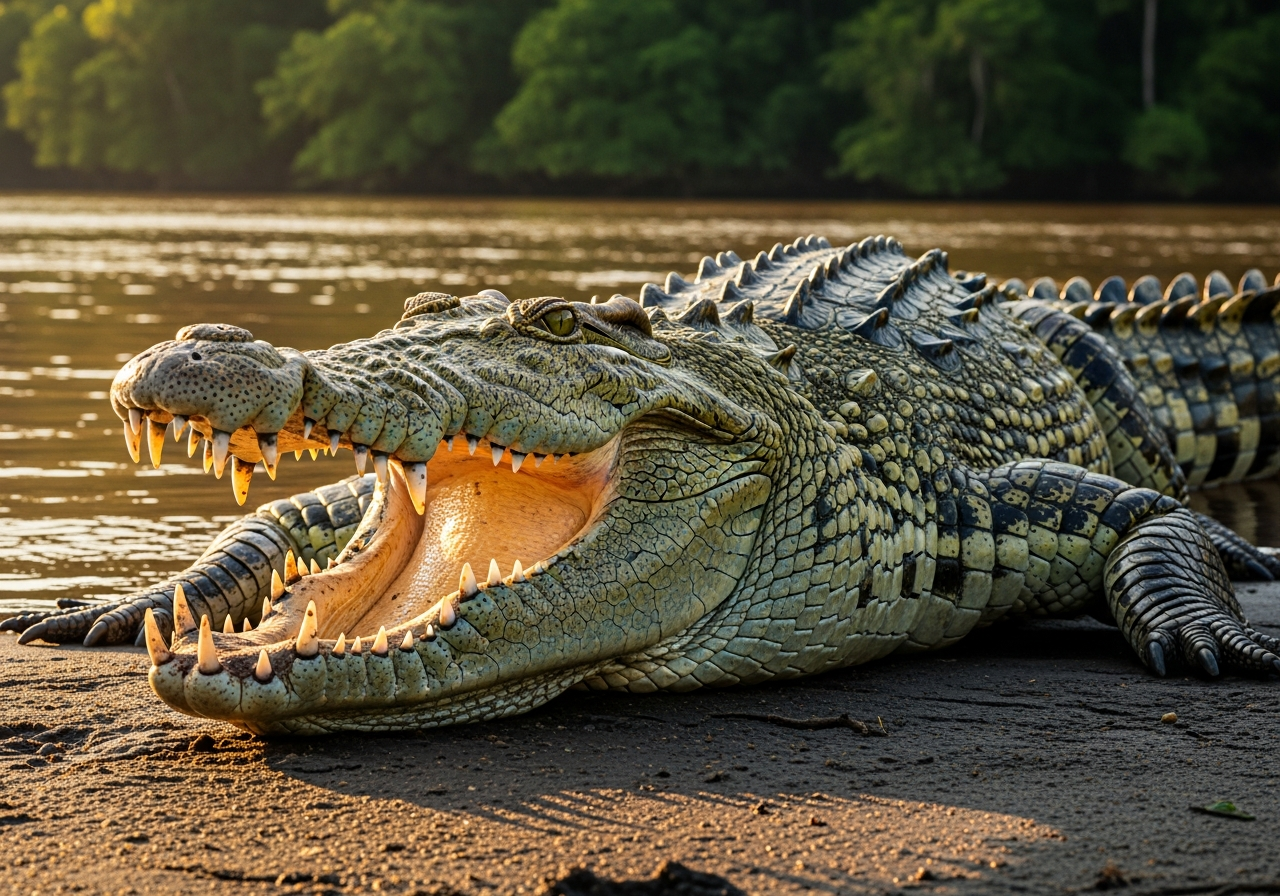
The saltwater crocodile is the largest living reptile, with big males reaching up to 6 m (20 ft) and over 1,000 kg (2,200 lb). Found across the Indo-Pacific from India to northern Australia, it has the strongest bite force ever measured in a living animal and is an ambush predator that can survive in both fresh and salt water. Saltwater crocodiles can live 70 years or more.
Saltwater Crocodile facts at a glance
| Scientific name | Crocodylus porosus |
|---|---|
| Diet | Carnivore |
| Habitat | Estuaries, mangroves, rivers, coasts |
| Lifespan | 70+ years |
| Length | Up to 6 m (20 ft) |
| Bite force | ~3,700 psi, the strongest measured |
| Conservation status | Least Concern (IUCN) |
| Kingdom | Animalia |
|---|---|
| Phylum | Chordata |
| Class | Reptilia |
| Order | Crocodilia |
| Family | Crocodylidae |
| Genus | Crocodylus |
Behavior and hunting
Saltwater crocodiles are patient ambush predators. They lie almost motionless at the water's edge, then explode forward to seize prey and drag it under in a "death roll." They are highly territorial, and large males defend stretches of river and coast aggressively.
Diet and bite
Salties eat almost anything they can overpower, from fish, crabs, and turtles to large mammals that come to drink. Their bite force is the strongest ever measured in a living animal, but the muscles that open the jaws are weak, which is why a crocodile's mouth can be held shut by hand.
Habitat and range
The saltwater crocodile ranges across the Indo-Pacific, from eastern India and Southeast Asia to northern Australia and the western Pacific. Unusually for a reptile, it tolerates salt water well and can travel long distances along coastlines between river systems.
Conservation
Hunted heavily for their skins in the 20th century, saltwater crocodiles were pushed to low numbers in many areas. Protection and managed populations, especially in Australia, allowed a strong recovery, and the species is now listed as Least Concern overall, though some regional populations remain at risk.
Frequently asked questions about the Saltwater Crocodile
How big do saltwater crocodiles get?
Saltwater crocodiles are the largest living reptiles. Large males commonly reach 4.5 to 5 m, and exceptional individuals exceed 6 m (20 ft) and weigh over 1,000 kg.
How strong is a saltwater crocodile's bite?
The saltwater crocodile has the strongest bite force ever measured in a living animal, around 3,700 psi. However, the muscles that open its jaws are weak enough to be held shut by hand.
Can saltwater crocodiles live in the ocean?
Yes. Unlike most crocodilians, saltwater crocodiles tolerate salt water and can swim long distances along coastlines, which is how they spread across so many islands.
What do saltwater crocodiles eat?
They are opportunistic carnivores that eat fish, crustaceans, turtles, birds, and mammals. Large adults can take prey as big as water buffalo by ambushing animals at the water's edge.
How fast can a saltwater crocodile move?
In water they can burst to around 29 km/h (18 mph) over short distances. On land they are much slower and rely on surprise rather than chasing prey.
How long do saltwater crocodiles live?
Saltwater crocodiles are long-lived, commonly reaching 70 years and sometimes more in the wild and in captivity.