Meerkat
Suricata suricatta
Quick answer
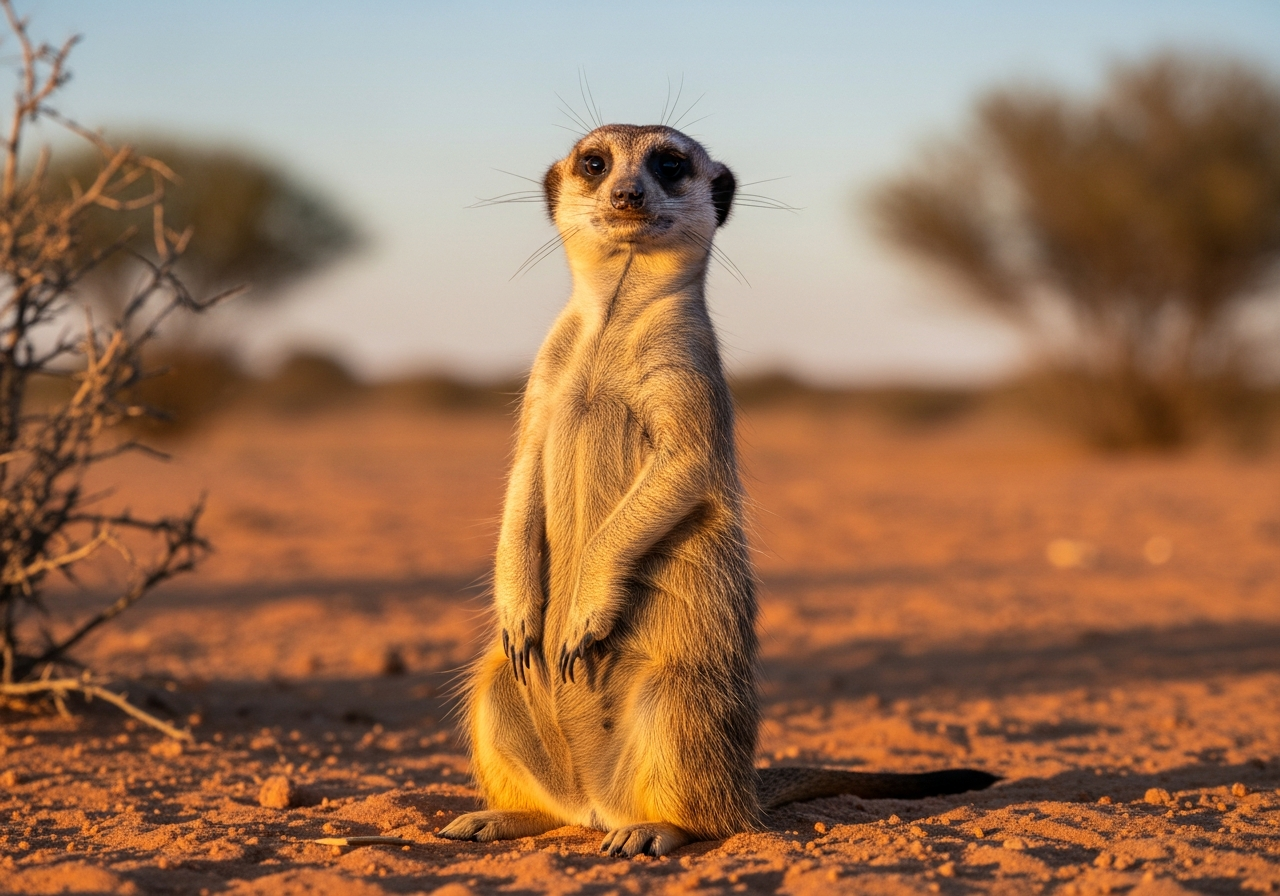
The meerkat is a small, highly social mongoose native to the deserts and dry plains of southern Africa, famous for standing upright on its hind legs to watch for danger. Meerkats live in tight-knit groups called mobs, take turns as lookout sentinels, and raise their young cooperatively. They are immune to some scorpion and snake venom and typically live around 10 years.
Meerkat facts at a glance
| Scientific name | Suricata suricatta |
|---|---|
| Diet | Insectivore (mostly) |
| Habitat | Desert and dry savanna |
| Lifespan | About 10 years |
| Weight | 0.6–1 kg (1.3–2.2 lb) |
| Top speed | Up to 32 km/h (20 mph) |
| Conservation status | Least Concern (IUCN) |
| Kingdom | Animalia |
|---|---|
| Phylum | Chordata |
| Class | Mammalia |
| Order | Carnivora |
| Family | Herpestidae |
| Genus | Suricata |
Teamwork and sentinels
Meerkats live in cooperative groups of up to 30 or more. While most of the mob forages, one or more take turns standing guard on raised ground or a bush, scanning the sky and horizon for predators. The sentinel gives different alarm calls for different threats, telling the group whether danger comes from the air or the ground.
Raising young together
Meerkats are cooperative breeders. A dominant pair produces most of the pups, and other members of the group help by babysitting, feeding, and teaching the youngsters, including how to handle dangerous prey such as scorpions. This shared care gives pups a strong chance of survival in a harsh environment.
Built for the desert
Dark patches around the eyes cut glare from the bright desert sun, like built-in sunglasses, and long claws make meerkats expert diggers of the extensive burrow systems where they shelter from heat and predators. They are partly immune to the venom of some scorpions and snakes they hunt.
Behavior and range
Found across the Kalahari and other dry regions of southern Africa, meerkats are active by day and retreat underground at night and during the hottest hours. Their tight social bonds, sunbathing huddles, and upright watch posture have made them one of the most recognizable and popular small animals.
Frequently asked questions about the Meerkat
Why do meerkats stand up on their hind legs?
Meerkats stand upright to act as sentinels, getting a better view to watch for predators such as eagles and jackals. They also stand to warm up in the morning sun.
What do meerkats eat?
Meerkats are mainly insectivores, feeding on beetles, larvae, and especially scorpions, to which they have some venom resistance. They also eat spiders, small reptiles, eggs, and roots.
Do meerkats live in groups?
Yes. Meerkats are highly social and live in cooperative groups called mobs or gangs of up to 30 or more, sharing lookout duty and raising pups together.
Are meerkats immune to venom?
Meerkats have partial resistance to the venom of some scorpions and snakes they hunt, which lets them tackle prey that would harm many other animals, though they are not fully immune.
Where do meerkats live?
Meerkats live in the deserts and dry savannas of southern Africa, including the Kalahari, sheltering in extensive underground burrow systems.