Rhinoceros
Ceratotherium simum
Quick answer
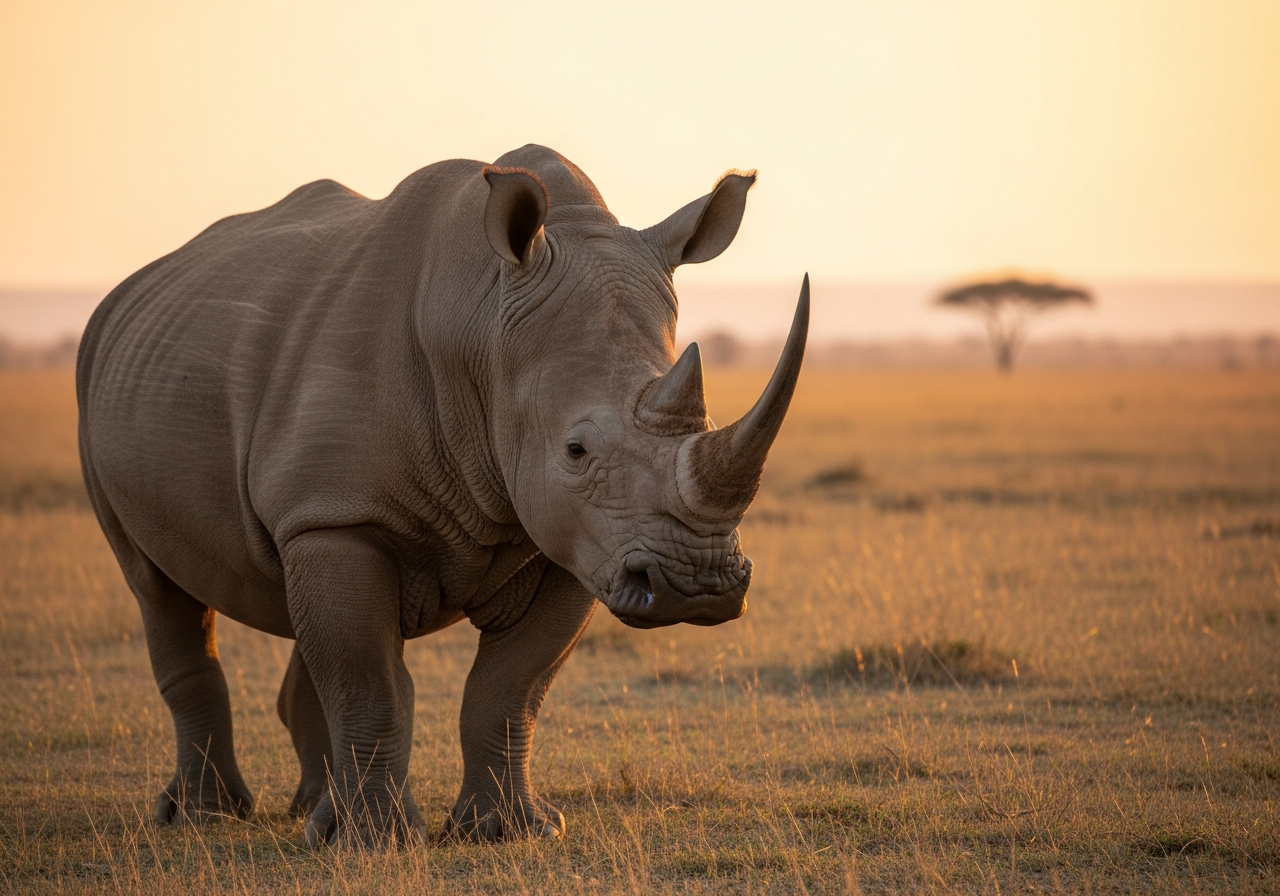
The rhinoceros is a massive, thick-skinned herbivore famous for the horn (or horns) on its snout, which is made of keratin, the same material as hair and nails. The white rhino is the largest of the five species and can weigh over 2,300 kg (5,000 lb). Rhinos have poor eyesight but an excellent sense of smell and hearing, and they typically live 40 to 45 years.
Rhinoceros facts at a glance
| Scientific name | Ceratotherium simum |
|---|---|
| Diet | Herbivore |
| Habitat | Savanna, grassland, and tropical forest |
| Lifespan | 40–45 years |
| Weight | 1,800–2,500 kg (4,000–5,500 lb) |
| Top speed | 50 km/h (31 mph) |
| Conservation status | Near Threatened (IUCN) |
| Kingdom | Animalia |
|---|---|
| Phylum | Chordata |
| Class | Mammalia |
| Order | Perissodactyla |
| Family | Rhinocerotidae |
Horns of keratin
A rhino's horn is not bone but compacted keratin, the same protein found in hair and fingernails, and it keeps growing through life. Tragically, demand for horn in illegal markets has made rhinos a prime target for poachers, even though the horn has no proven medicinal value.
Five species, two continents
There are five rhino species: the white and black rhinos of Africa, and the greater one-horned, Sumatran, and Javan rhinos of Asia. White rhinos are grazers with a wide, square lip for cropping grass, while black rhinos are browsers with a hooked lip for grabbing leaves and twigs.
Senses and behavior
Rhinos have notoriously poor eyesight but compensate with acute hearing and a superb sense of smell. Despite their bulk, they can charge at up to 50 km/h (31 mph). They often wallow in mud, which cools their skin and protects it from sun and biting insects.
Conservation
Rhinos are among the most threatened large mammals on Earth, hammered by poaching for their horns and by habitat loss. The northern white rhino is functionally extinct, with only two females left, while the Javan and Sumatran rhinos are Critically Endangered. Intensive protection has helped some populations recover.
Frequently asked questions about the Rhinoceros
What is a rhino's horn made of?
A rhino's horn is made of keratin, the same protein as human hair and nails, not bone. It grows continuously throughout the animal's life.
How many species of rhino are there?
There are five rhino species: the white and black rhinos in Africa, and the greater one-horned, Javan, and Sumatran rhinos in Asia.
How fast can a rhino run?
Despite weighing over two tonnes, a rhino can charge at up to about 50 km/h (31 mph), much faster than a human can sprint.
Why are rhinos poached?
Rhinos are killed for their horns, which are illegally traded for use in some traditional medicines and as status symbols, despite the horn having no proven medical benefit.
Are rhinos endangered?
It depends on the species. The white rhino is Near Threatened, while the black, Javan, and Sumatran rhinos are Critically Endangered. Poaching and habitat loss are the main threats.