Blue Tang
Paracanthurus hepatus
Quick answer
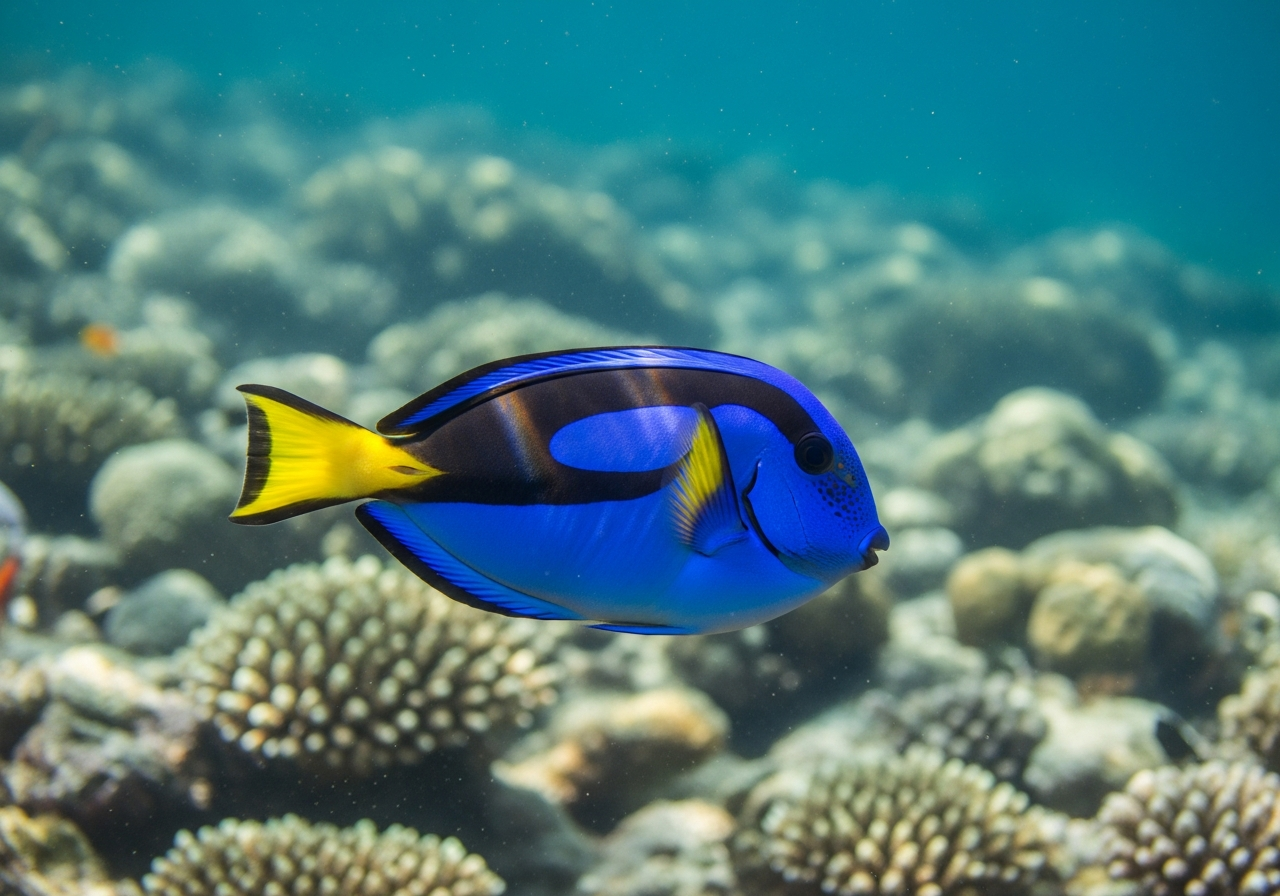
The blue tang is a vivid royal-blue reef fish with a yellow tail, best known as Dory from the films Finding Nemo and Finding Dory. It lives on coral reefs across the Indo-Pacific, where it feeds mainly on algae and helps keep reefs healthy. Like other surgeonfish, it carries a sharp, scalpel-like spine near its tail that it uses for defense.
Blue Tang facts at a glance
| Scientific name | Paracanthurus hepatus |
|---|---|
| Diet | Omnivore (mostly algae) |
| Habitat | Indo-Pacific coral reefs |
| Lifespan | Up to about 20 years |
| Length | Up to about 30 cm (12 in) |
| Top speed | Fast, agile reef swimmer |
| Conservation status | Least Concern (IUCN) |
| Kingdom | Animalia |
|---|---|
| Phylum | Chordata |
| Class | Actinopterygii |
| Order | Acanthuriformes |
| Family | Acanthuridae |
| Genus | Paracanthurus |
Where it lives
Coral reefs across the Indo-Pacific, from East Africa to Japan and the Great Barrier Reef.
Appearance and defense
The blue tang's brilliant blue body is marked with a bold black pattern and a bright yellow tail. Like all surgeonfish, it has a sharp, blade-like spine on each side of the tail base that it can flick out to slash at attackers or rivals. When threatened, it may also play dead by lying on its side.
Diet and feeding
Blue tangs feed mainly on algae growing on the reef, grazing throughout the day. By keeping algae in check, they help corals get the light and space they need to grow, making tangs important to reef health. They also take plankton from the water when it is plentiful.
Habitat and behavior
Blue tangs live on coral reefs across the Indo-Pacific, from East Africa to Japan and the Great Barrier Reef. Juveniles often shelter among branching corals, while adults form loose groups in open water above the reef. They rely on the reef both for food and for hiding places from predators.
As an aquarium fish
Blue tangs are popular saltwater aquarium fish, and their fame from animated films increased demand. They are difficult to breed in captivity, so many are still taken from the wild, which raises concerns about reef collection. The species is listed as Least Concern overall, but responsible sourcing matters for healthy reefs.
Frequently asked questions about the Blue Tang
Is the blue tang the fish Dory?
Yes. The character Dory from Finding Nemo and Finding Dory is a blue tang, also called a royal blue tang or palette surgeonfish.
What do blue tangs eat?
Blue tangs feed mainly on algae growing on coral reefs, and they also eat plankton. Their grazing helps keep algae from smothering corals.
Are blue tangs poisonous?
Blue tangs are not venomous, but they have a sharp, scalpel-like spine near the tail that can cut, and their flesh has been linked to ciguatera poisoning if eaten, so they are not a typical food fish.
How big do blue tangs get?
Blue tangs grow to about 30 cm (12 in) long. Aquarium specimens can reach a substantial size, so they need a large tank with plenty of swimming room.
Can you keep a blue tang as a pet?
Blue tangs are kept in saltwater aquariums, but they need large tanks and good water quality, and they are hard to breed in captivity, so many are still wild-caught.