Blue Whale
Balaenoptera musculus
Quick answer
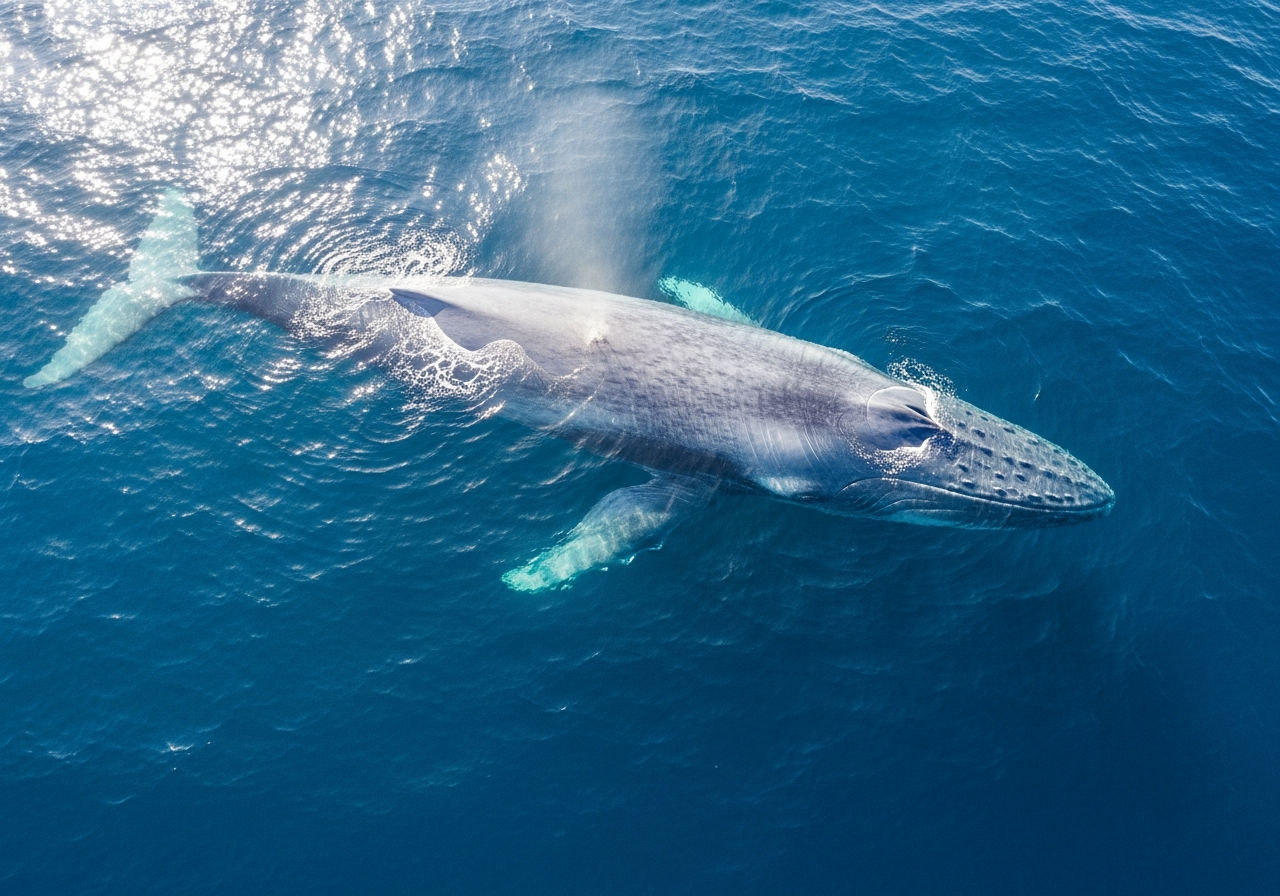
The blue whale is the largest animal known to have ever existed, reaching up to 30 m (98 ft) long and 180 tonnes. It feeds almost entirely on tiny krill, eating up to 4 tonnes a day, and its heart alone can weigh as much as a small car. Blue whales can live 80 to 90 years.
Blue Whale facts at a glance
| Scientific name | Balaenoptera musculus |
|---|---|
| Diet | Carnivore (krill) |
| Habitat | Open oceans worldwide |
| Lifespan | 80–90 years |
| Length | Up to 30 m (98 ft) |
| Weight | Up to 180 tonnes |
| Conservation status | Endangered (IUCN) |
| Kingdom | Animalia |
|---|---|
| Phylum | Chordata |
| Class | Mammalia |
| Order | Artiodactyla |
| Family | Balaenopteridae |
| Genus | Balaenoptera |
The largest animal ever
Blue whales are bigger than any dinosaur known to science. Their tongue alone can weigh as much as an elephant, and their heart can be the size of a small car. A newborn calf is already around 7 m long and gains roughly 90 kg every day in its first months.
Feeding on the tiny
Despite their size, blue whales eat some of the smallest animals in the ocean: shrimp-like krill. They feed by gulping huge volumes of water and filtering out krill through baleen plates, consuming up to 4 tonnes of krill on a single feeding day.
Communication
Blue whales produce some of the loudest and lowest-frequency sounds of any animal. These powerful calls can travel hundreds of kilometers through the ocean, helping whales communicate across vast distances.
Conservation
Blue whales were hunted to the brink of extinction during 20th-century commercial whaling. Although they have been protected since the 1960s, recovery is slow, and they remain Endangered, facing threats from ship strikes, entanglement, and ocean change.
Frequently asked questions about the Blue Whale
What is the largest animal in the world?
The blue whale is the largest animal known to have ever lived, reaching up to 30 m (98 ft) in length and weighing as much as 180 tonnes, larger than any dinosaur.
What do blue whales eat?
Blue whales eat almost exclusively krill, tiny shrimp-like crustaceans. They can consume up to 4 tonnes of krill in a single day during feeding season.
How big is a blue whale's heart?
A blue whale's heart can weigh around 180 kg, roughly the size of a small car, making it the largest heart of any animal.
Are blue whales endangered?
Yes. Blue whales are classified as Endangered. Commercial whaling devastated their numbers in the 20th century, and recovery has been slow despite international protection.
How long do blue whales live?
Blue whales are believed to live 80 to 90 years on average, and some individuals may live even longer.
How loud are blue whales?
Blue whales are among the loudest animals on Earth. Their low-frequency calls can exceed 180 decibels and travel hundreds of kilometers across the ocean.