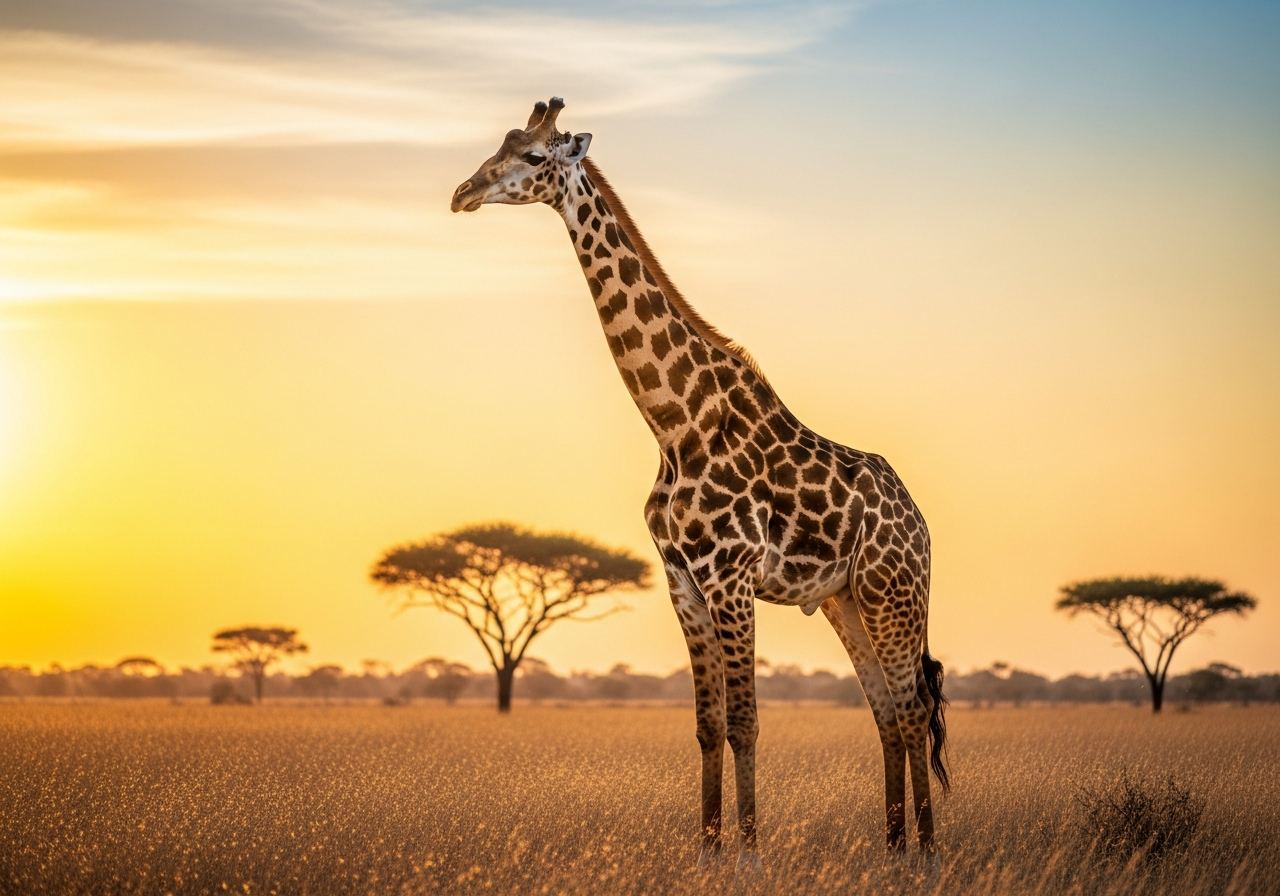
Giraffe
Giraffa camelopardalis
Quick answer
The giraffe is the tallest living animal, with adult males reaching up to 5.5 m (18 ft). Native to the savannas of Africa, giraffes use their long necks and 45 cm (18 in) tongues to browse leaves high in acacia trees. Despite the neck's length, a giraffe has just seven neck bones, the same number as humans, and typically lives around 25 years.
Giraffe facts at a glance
| Scientific name | Giraffa camelopardalis |
|---|---|
| Diet | Herbivore |
| Habitat | Savanna, grassland, and open woodland |
| Lifespan | 20–25 years in the wild |
| Height | 4.3–5.5 m (14–18 ft) |
| Top speed | 60 km/h (37 mph) |
| Conservation status | Vulnerable (IUCN) |
| Kingdom | Animalia |
|---|---|
| Phylum | Chordata |
| Class | Mammalia |
| Order | Artiodactyla |
| Family | Giraffidae |
| Genus | Giraffa |
Where it lives
Savannas and open woodlands of sub-Saharan Africa, from the Sahel to South Africa.
Built tall
A giraffe's neck alone can be over 2 m (6 ft) long, yet it contains only seven vertebrae like almost all mammals. To pump blood up to the brain, the giraffe has an oversized heart and the highest blood pressure of any animal, with special vessels in the neck that stop it blacking out when it lowers its head to drink.
Diet and feeding
Giraffes are browsers that feed mainly on the leaves, shoots, and flowers of acacia and other trees, using a long prehensile tongue and tough lips to strip foliage past the thorns. They eat for many hours a day and get most of their water from their food, so they can go long stretches without drinking.
Conservation
Giraffe numbers have fallen sharply in recent decades, a decline some call a 'silent extinction'. Habitat loss, poaching, and civil unrest across their range have driven the species to Vulnerable, with some subspecies critically threatened. Protected reserves and anti-poaching work are central to their recovery.
Frequently asked questions about the Giraffe
How tall is a giraffe?
Adult giraffes stand between 4.3 and 5.5 m (14 to 18 ft) tall, with males taller than females. They are the tallest land animals on Earth.
How many bones are in a giraffe's neck?
A giraffe has just seven neck vertebrae, the same number as a human. Each bone is simply very long, which is what gives the giraffe its towering neck.
What do giraffes eat?
Giraffes are herbivores that browse mostly on acacia leaves and other tree foliage, using their long tongue to reach past thorns. They feed for many hours each day.
How fast can a giraffe run?
Giraffes can gallop at up to about 60 km/h (37 mph) over short distances, fast enough to outrun most predators despite their ungainly appearance.
Why are giraffes endangered?
Giraffes are listed as Vulnerable due to habitat loss, poaching, and human conflict across Africa. Populations have dropped significantly, prompting concern about a quiet, overlooked decline.

Social life and defense
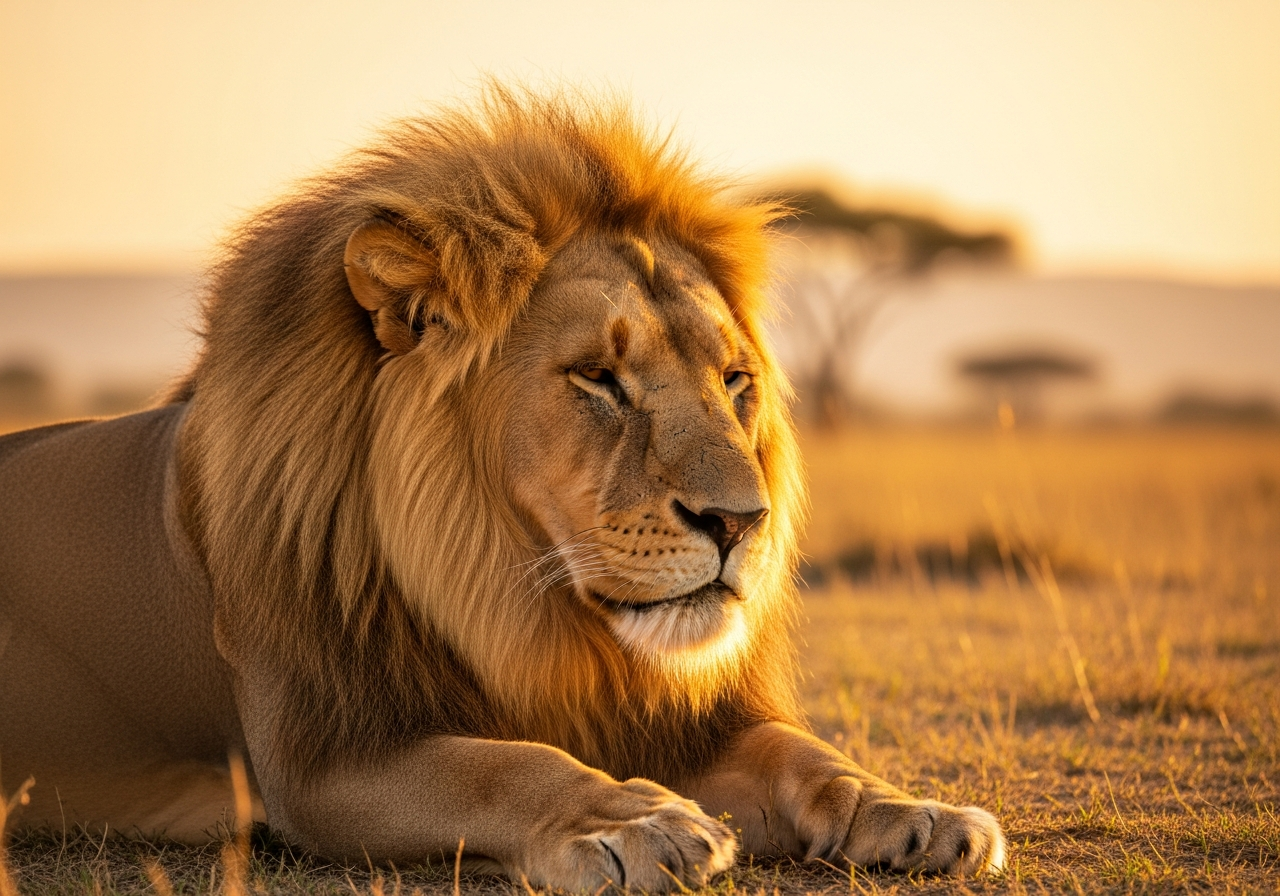
Giraffes live in loose, ever-changing herds. Males settle dominance by 'necking', swinging their heads at each other like clubs. Their main defense is a powerful kick that can injure or kill a lion, and their height gives them an excellent early view of approaching predators.