Atlantic Bluefin Tuna
Thunnus thynnus
Quick answer
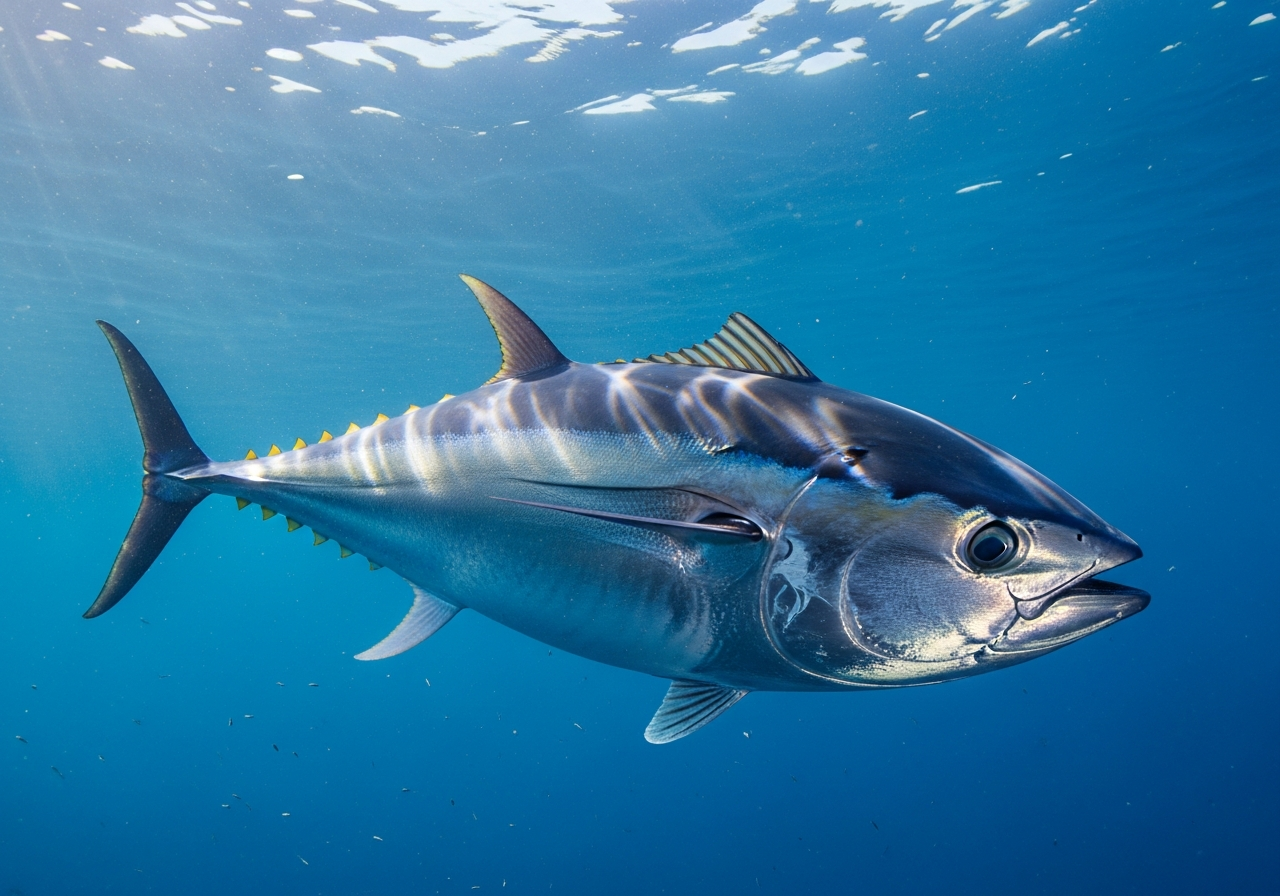
The Atlantic bluefin tuna is one of the largest and fastest bony fish, reaching about 3 m (10 ft) long and weighing over 450 kg (1,000 lb). It is a warm-blooded predator that crosses the Atlantic Ocean and Mediterranean Sea on long migrations, hunting smaller fish and squid in open water. A prized food fish, it can live 35 to 50 years.
Atlantic Bluefin Tuna facts at a glance
| Scientific name | Thunnus thynnus |
|---|---|
| Diet | Carnivore (fish and squid) |
| Habitat | Open Atlantic Ocean and Mediterranean Sea |
| Lifespan | 35–50 years |
| Length | 2–3 m (6.5–10 ft) |
| Top speed | Up to 70 km/h (43 mph) |
| Conservation status | Least Concern (IUCN) |
| Kingdom | Animalia |
|---|---|
| Phylum | Chordata |
| Class | Actinopterygii |
| Order | Scombriformes |
| Family | Scombridae |
| Genus | Thunnus |
Where it lives
Open waters of the Atlantic Ocean and Mediterranean Sea, migrating between cold feeding grounds and warm spawning areas.
Behavior and warm-blooded biology
Unlike most fish, the bluefin tuna is partly warm-blooded, keeping its muscles, brain, and eyes warmer than the surrounding seawater. This adaptation lets it stay powerful and alert in cold water and chase prey at high speed. Its torpedo-shaped body, retractable fins, and crescent tail are built for sustained, efficient swimming across entire ocean basins.
Diet and hunting
Bluefin tuna are fast-moving carnivores that feed on schooling fish such as herring, mackerel, and sardines, along with squid and crustaceans. They often hunt in groups, herding prey into tight balls before slashing through them at speed. Their high metabolism demands large amounts of food to fuel their constant swimming.
Habitat and migration
Atlantic bluefin live throughout the North Atlantic and the Mediterranean Sea, ranging from cold subarctic feeding grounds to warmer spawning areas. They undertake long trans-Atlantic migrations and return to specific regions, such as the Gulf of Mexico and Mediterranean, to spawn. They move between surface waters and depths of several hundred meters.
Fishing and conservation
Bluefin tuna are among the most valuable fish in the world, especially for sushi and sashimi, which led to severe overfishing in past decades. Stricter quotas and management have helped Atlantic populations rebound, and the species is now listed as Least Concern, though continued careful management is essential. Their slow maturity still makes them sensitive to heavy fishing pressure.
Frequently asked questions about the Atlantic Bluefin Tuna
How big do bluefin tuna get?
Atlantic bluefin tuna can grow to about 3 m (10 ft) long and weigh more than 450 kg (1,000 lb), making them one of the largest bony fish in the ocean.
How fast can a bluefin tuna swim?
Bluefin tuna are among the fastest fish, capable of bursts up to about 70 km/h (43 mph) thanks to their streamlined bodies and powerful crescent-shaped tails.
Are tuna warm-blooded?
Bluefin tuna are partly warm-blooded, keeping their muscles, eyes, and brain warmer than the surrounding water. This boosts their speed, vision, and stamina in cold seas.
What do bluefin tuna eat?
They are carnivores that feed mainly on schooling fish such as herring, mackerel, and sardines, plus squid and crustaceans, often hunting cooperatively.
How long do bluefin tuna live?
Atlantic bluefin tuna can live 35 to 50 years. They grow slowly and mature late, which makes their populations sensitive to overfishing.
Are bluefin tuna endangered?
Atlantic bluefin were heavily overfished but have recovered under stricter quotas and are now listed as Least Concern by the IUCN, though they still require careful management.