Manta Ray
Mobula birostris
Quick answer
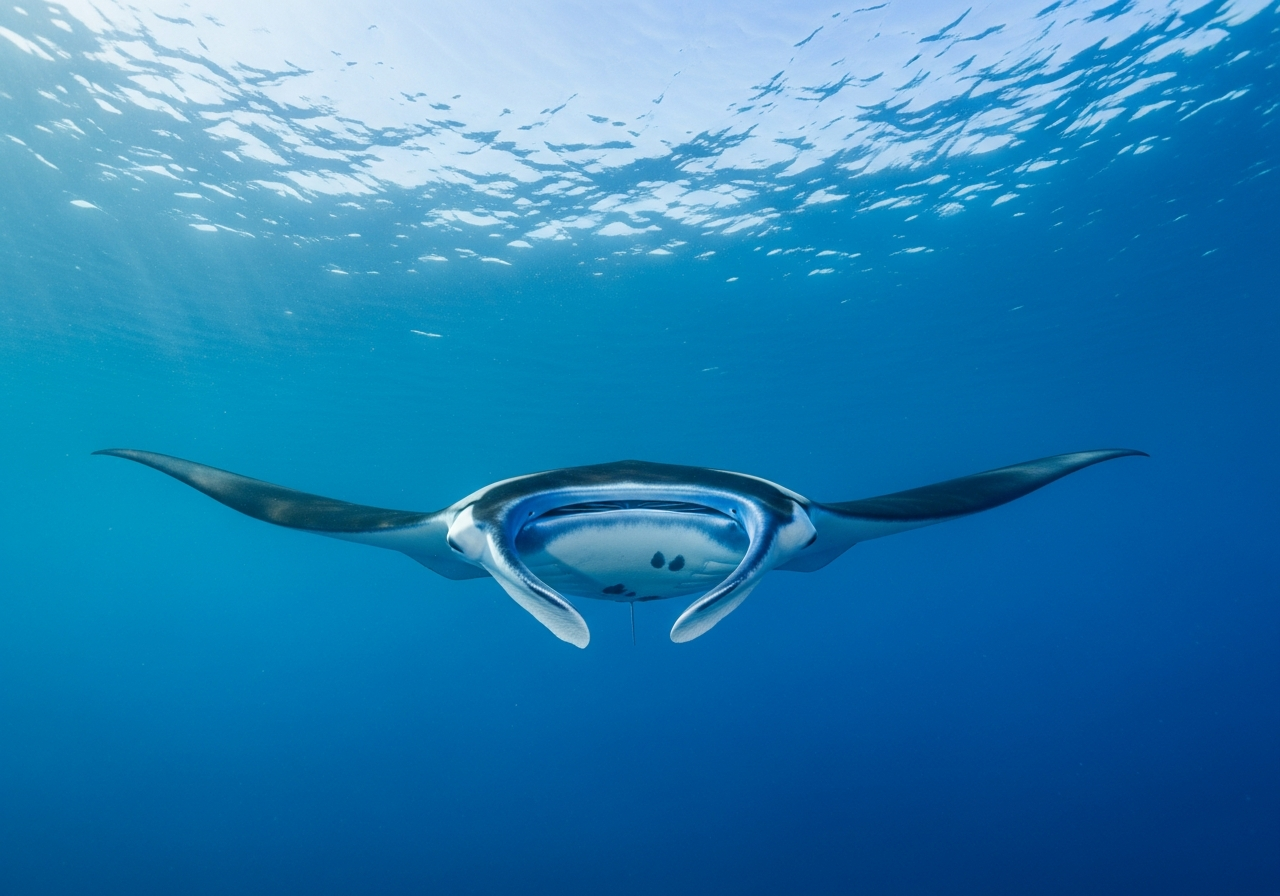
The manta ray is a huge but harmless filter-feeding fish related to sharks, with a wingspan that can reach 7 meters (23 ft). It glides through the open ocean by flapping its broad pectoral fins like wings and feeds by funneling tiny plankton into its mouth. Mantas have the largest brain of any fish and are curious, intelligent animals that pose no danger to people.
Manta Ray facts at a glance
| Scientific name | Mobula birostris |
|---|---|
| Diet | Filter feeder (plankton) |
| Habitat | Tropical and subtropical open ocean |
| Lifespan | Up to 40 years or more |
| Weight | Up to 1,400 kg (3,000 lb) |
| Wingspan | Up to 7 m (23 ft) across |
| Conservation status | Endangered (IUCN) |
| Kingdom | Animalia |
|---|---|
| Phylum | Chordata |
| Class | Chondrichthyes |
| Order | Myliobatiformes |
| Family | Mobulidae |
| Genus | Mobula |
Where it lives
Tropical and subtropical waters worldwide, near reefs, seamounts, and the open ocean.
Behavior and intelligence
Manta rays are graceful, curious animals that often approach divers and may circle them repeatedly. They have the largest brain-to-body ratio of any fish and have passed mirror tests that suggest a high level of awareness. Mantas sometimes leap clear of the water, though scientists are still unsure exactly why.
Filter feeding
Despite their size, manta rays eat some of the smallest food in the ocean. They swim with their mouths open, channeling water and plankton between flexible head fins called cephalic lobes, then strain out tiny shrimp and fish larvae with comb-like gill plates. Large groups sometimes gather where plankton is abundant.
Habitat and range
Manta rays live in warm tropical and subtropical waters around the world, often near reefs, seamounts, and coastlines where they visit cleaning stations to have parasites removed by smaller fish. They are strong swimmers that can travel long distances across the open ocean in search of food.
Conservation
The giant manta ray is listed as Endangered. Slow to reproduce, with females giving birth to a single pup every few years, mantas recover poorly from population losses. They are threatened by targeted and accidental fishing, especially demand for their gill plates, as well as boat strikes and entanglement.
Frequently asked questions about the Manta Ray
Are manta rays dangerous to humans?
No. Manta rays are harmless filter feeders with no stinging barb, unlike stingrays. They are gentle and curious, and they pose no threat to swimmers or divers.
What do manta rays eat?
Manta rays are filter feeders that eat tiny plankton such as shrimp and fish larvae. They swim with their mouths open and strain food from the water using comb-like plates on their gills.
How big do manta rays get?
Giant manta rays can reach a wingspan of about 7 m (23 ft) and weigh up to 1,400 kg (3,000 lb), making them the largest rays in the ocean.
Is a manta ray a fish?
Yes. Manta rays are cartilaginous fish, closely related to sharks. Their skeletons are made of cartilage rather than bone, and they breathe through gills like other fish.
Why are manta rays endangered?
Manta rays reproduce very slowly, often producing only one pup every few years, so they recover poorly from losses. Fishing for their gill plates, accidental catches, and boat strikes have pushed them to Endangered status.