Snowy Owl
Bubo scandiacus
Quick answer
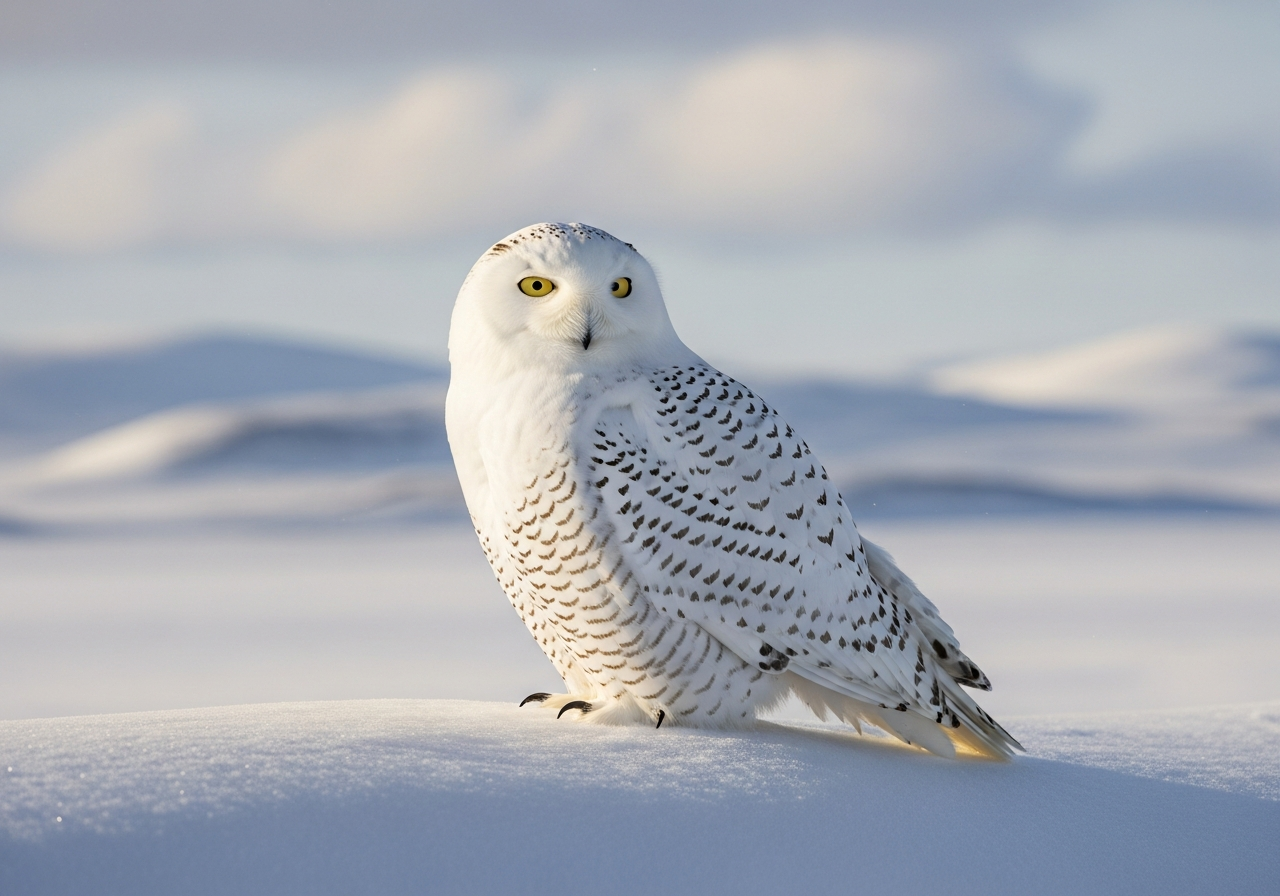
The snowy owl is a large white owl of the Arctic tundra, with adult males appearing almost pure white and females marked with dark barring. Unlike most owls, it hunts during the long daylight of the Arctic summer and feeds heavily on lemmings. Snowy owls are powerful, far-ranging birds that can live around 10 years in the wild.
Snowy Owl facts at a glance
| Scientific name | Bubo scandiacus |
|---|---|
| Diet | Carnivore (mainly lemmings) |
| Habitat | Arctic tundra and open fields |
| Lifespan | About 10 years in the wild |
| Wingspan | 1.2–1.5 m (4–5 ft) |
| Top speed | Up to 80 km/h (50 mph) |
| Conservation status | Vulnerable (IUCN) |
| Kingdom | Animalia |
|---|---|
| Phylum | Chordata |
| Class | Aves |
| Order | Strigiformes |
| Family | Strigidae |
| Genus | Bubo |
Where it lives
The Arctic tundra of North America, Europe, and Asia, wintering farther south.
Behavior and hunting
Snowy owls are unusual among owls in hunting by day, an adaptation to the round-the-clock daylight of the Arctic summer. They hunt from low perches or while flying low over open ground, using sharp eyesight and acute hearing to locate prey. Their thick plumage, including feathered feet, insulates them against extreme cold.
Diet and feeding
Lemmings are the snowy owl's main prey, and a single owl can eat several each day, with breeding adults catching far more to feed their chicks. When lemmings are scarce, they also take other rodents, birds, and even fish. Their breeding success rises and falls with the boom-and-bust cycles of lemming populations.
Habitat and range
Snowy owls breed on the open Arctic tundra across northern North America, Europe, and Asia. In winter they move south, sometimes appearing in fields, marshes, and shorelines well below their breeding range in events known as irruptions. They prefer wide, treeless landscapes that resemble their tundra home.
Conservation
The snowy owl is listed as Vulnerable, with global numbers lower and more variable than once thought. Climate change is altering the Arctic and disrupting the lemming cycles the owls depend on, while collisions and other hazards affect wintering birds. Long-term monitoring is helping clarify population trends.
Frequently asked questions about the Snowy Owl
Where do snowy owls live?
Snowy owls breed on the open Arctic tundra across North America, Europe, and Asia. In winter, some travel far south into open fields, marshes, and coastlines in search of food.
What do snowy owls eat?
Their main prey is lemmings, small Arctic rodents, and a single owl can eat several each day. When lemmings are scarce they also hunt other rodents, birds, and occasionally fish.
Are snowy owls active during the day?
Yes. Unlike most owls, snowy owls often hunt in daylight, an adaptation to the continuous summer sunlight of the Arctic where they breed.
Are male and female snowy owls different colors?
Yes. Older males can appear almost pure white, while females and young birds have noticeable dark barring across their white plumage, which helps with camouflage.
Are snowy owls endangered?
Snowy owls are listed as Vulnerable by the IUCN. Their numbers fluctuate with lemming cycles, and climate change in the Arctic is a growing concern for the species.
How long do snowy owls live?
In the wild, snowy owls live around 10 years, though some live longer. In captivity, protected from harsh conditions and predators, they can reach considerably older ages.