Quick answer
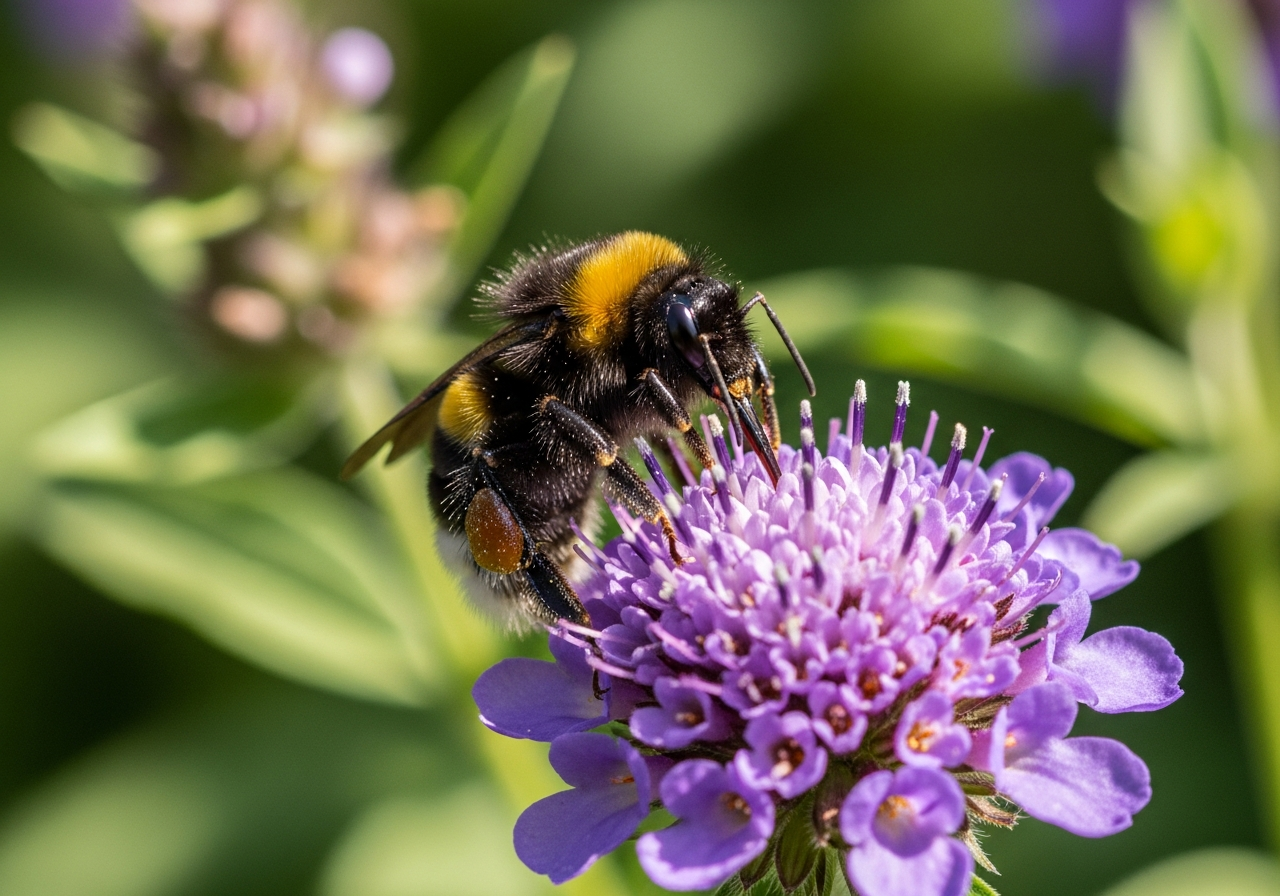
The buff-tailed bumblebee (Bombus terrestris) is a large, fuzzy, black-and-yellow bee found in meadows, gardens, and farmland. Measuring about 1.5 to 2.5 cm (0.6 to 1 in) long, it flies at up to around 24 km/h (15 mph) and feeds on nectar and pollen, making it one of the most important pollinators in temperate regions. Workers live only a few weeks, while a queen can live about a year. The IUCN lists the species as Least Concern.
Top questions about the Bumblebee
Bumblebee facts at a glance
- Weight 0 g
- Length 2 cm
- Top speed 24 km/h
- Lifespan 1 years
| Scientific name | Bombus terrestris |
|---|---|
| Diet | Herbivore (nectar and pollen) |
| Habitat | Meadows, gardens, farmland, and woodland edges |
| Lifespan | Workers a few weeks; queens about a year |
| Length | 1.5–2.5 cm (0.6–1 in) |
| Top speed | Up to ~24 km/h (15 mph) in flight |
| Conservation status | Least Concern (IUCN) |
| Kingdom | Animalia |
|---|---|
| Phylum | Arthropoda |
| Class | Insecta |
| Order | Hymenoptera |
| Family | Apidae |
| Genus | Bombus |
Where it lives
The bumblebee (Bombus terrestris) is native to Meadows, gardens, and farmland across the Northern Hemisphere and introduced elsewhere; key pollinators. — recorded across Europe, Asia, North America, South America, Africa in this guide’s range summary.
For occurrence records, see GBIF species search and sources below.
How big is a bumblebee?
An adult bumblebee measures 2 cm long — about 1% of the height of an average adult person (1.73 m) — and weighs around 0 g, a small fraction of an average adult’s body weight (70 kg).
Length vs an average adult’s height (to scale)
What is a group of bumblebees called?
Group name (collective noun)
A group of Bumblebees is called a swarm. It is also known as a colony.
Baby name
A baby Bumblebee is called a larva.
Explore more animal collective nouns and baby animal names .
Appearance and identification
Bumblebees are round, robust bees covered in dense fuzzy hair, which gives them their soft appearance and helps them stay warm. The buff-tailed bumblebee is one of the largest common species, about 1.5 to 2.5 cm (0.6 to 1 in) long, with bands of black and yellow and a pale buff-coloured tail on the queen. Their thick coat, called pile, also traps pollen as they visit flowers. Queens are noticeably larger than the workers and males of the colony.
Flight and foraging
Bumblebees are strong, agile fliers that can reach speeds of around 24 km/h (15 mph) as they move between flowers. They can warm up their flight muscles by shivering, which lets them fly in cooler and cloudier weather than most other bees. This gives them a long working day, foraging from early morning into the evening. A single bumblebee may visit hundreds of flowers on one trip, gathering nectar and pollen to carry back to the nest.
Pollination and diet
Bumblebees feed entirely on nectar and pollen, and in gathering them they pollinate a huge range of wild plants and crops. They are especially valuable because of "buzz pollination", in which they grip a flower and vibrate their muscles to shake loose pollen that many other insects cannot reach. This makes them key pollinators of tomatoes, blueberries, and other crops. Their work in gardens and farmland supports both wild plant communities and food production.
Colony life
Bumblebees are social insects that live in small colonies, usually of a few dozen to a few hundred individuals, far smaller than a honeybee hive. In spring a lone queen starts a new nest, often in an old rodent burrow or a tussock of grass, and raises the first workers herself. Those workers then take over foraging and brood care while the queen concentrates on laying eggs. Later in the year the colony produces new queens and males before the old colony dies off.
Life cycle and lifespan
The bumblebee colony follows a yearly rhythm. Only newly mated queens survive the winter, sheltering underground until spring, when each founds a fresh colony; a queen can live for about a year in total. Workers, by contrast, live just a few weeks during the active season. In late summer the new queens mate and go into hibernation while the rest of the colony, including the old queen and the workers, comes to an end.
Bumblebees and people
Bumblebees are gentle and rarely sting unless their nest is threatened, and unlike honeybees a female can sting more than once. They are widely valued by gardeners and farmers, and buff-tailed bumblebees are even reared commercially to pollinate greenhouse crops. While this particular species is common and listed as Least Concern, many other bumblebees have declined, so wildflower-rich gardens and hedgerows help support them all.
Dig deeper into the Bumblebee
- Bumblebee: Key Facts
Bumblebees (Bombus terrestris) are insects found across Europe, Asia, North America, South America, Africa.
- What Do Bumblebees Eat?
What bumblebees eat: Herbivore (nectar and pollen), foraging style, and seasonal shifts in Meadows, gardens, farmland, and woodland edges.
- Where Do Bumblebees Live?
Where bumblebees live: Meadows, gardens, farmland, and woodland edges, native range cues, and human overlap. Status Least Concern.
Explore the Bumblebee
Related Insects
Did you know? Bumblebee facts
- The bumblebee is a large, fuzzy, black-and-yellow bee that is one of the most important pollinators in temperate regions.
- Bumblebees make only small amounts of a honey-like food to feed the colony, not the large stores that honey bees produce. Their colonies last a single season, so they do not need big reserves to survive winter.
- Female bumblebees can sting and, unlike honey bees, can sting more than once because their stinger is not barbed. They are not aggressive, however, and usually sting only when their nest is threatened or they are handled roughly.
- Bumblebees feed on nectar for energy and collect pollen as a protein source for their larvae. They visit a wide range of flowers and are important pollinators of both wild plants and crops.
- Worker bumblebees usually live a few weeks, while a queen can live about a year. New queens are the only members of the colony that survive the winter to start a new nest in spring.
- Conservation: Least Concern (IUCN).
Diet & feeding
Bumblebee feeds primarily as a herbivore (nectar and pollen). Bumblebees feed on nectar for energy and collect pollen as protein for their developing young. They are superb pollinators, partly because they can perform buzz pollination, vibrating their flight muscles to shake pollen loose from flowers such as tomatoes a
Adaptations
- Bumblebees live in small annual colonies that usually number a few dozen to a few hundred individuals, far fewer than a honey bee hive. A single queen starts the nest in spring, often underground in an old rodent burrow, and raises the first workers herself. As the season progresses, workers take over foraging and brood care while the queen focuses on laying eggs.
- Bumblebees feed on nectar for energy and collect pollen as protein for their developing young. They are superb pollinators, partly because they can perform buzz pollination, vibrating their flight muscles to shake pollen loose from flowers such as tomatoes and blueberries. Their large, furry bodies pick up and carry pollen efficiently between plants.
Behaviour & ecology
- Bumblebees live in small annual colonies that usually number a few dozen to a few hundred individuals, far fewer than a honey bee hive. A single queen starts the nest in spring, often underground in an old rodent burrow, and raises the first workers herself. As the season progresses, workers take over foraging and brood care while the queen focuses on laying eggs.
- Bumblebees feed on nectar for energy and collect pollen as protein for their developing young. They are superb pollinators, partly because they can perform buzz pollination, vibrating their flight muscles to shake pollen loose from flowers such as tomatoes and blueberries. Their large, furry bodies pick up and carry pollen efficiently between plants.
- Unlike many insects, bumblebees can warm their flight muscles by shivering, letting them fly in cool, overcast conditions and early in the morning. This tolerance for cold allows them to thrive in temperate and even subarctic regions where other pollinators are less active. Their thick coat of hair also helps them retain heat.
Communication
- Bumblebee uses scent, posture, and vocal signals to mark territory and coordinate social behaviour.
- Communication intensity often peaks during breeding seasons and territorial disputes.
Habitat & range
Meadows, gardens, farmland, and woodland edges
Ecological role
Bumblebee shapes vegetation through grazing or browsing and serves as prey for larger predators where ranges overlap.
Conservation status of the Bumblebee
The bumblebee (Bombus terrestris) is listed as Least Concern on the IUCN Red List. Least Concern (LC) is the IUCN's lowest-risk category, assigned to widespread, abundant species that have been evaluated and found not to be threatened. It does not mean a species faces no pressures — only that it is not currently at risk of extinction.
The bumblebee (Bombus terrestris) is assessed on the IUCN Red List. Look up on the IUCN Red List .
Frequently asked questions about the Bumblebee
Do bumblebees sting?
Bumblebees can sting but are very gentle and rarely do so unless their nest is threatened. Unlike honeybees, a female bumblebee can sting more than once because her sting is not barbed.
What do bumblebees eat?
Bumblebees feed entirely on nectar and pollen from flowers. They use nectar for energy and collect pollen as protein-rich food for the growing larvae back in the nest.
How fast can a bumblebee fly?
Bumblebees are strong fliers that can reach speeds of around 24 km/h (15 mph). They can also warm their muscles by shivering, letting them fly in cooler weather than many other bees.
How long do bumblebees live?
Worker bumblebees live only a few weeks during the active season, while a queen can live for about a year. Only mated queens survive the winter to start new colonies in spring.
Why are bumblebees important pollinators?
Bumblebees pollinate many wild plants and crops, and they perform buzz pollination by vibrating flowers to release pollen other insects cannot reach. This makes them vital for crops such as tomatoes and blueberries.
How big are bumblebee colonies?
Bumblebee colonies are small, usually a few dozen to a few hundred individuals, far smaller than a honeybee hive. A single queen founds each colony in spring and it lasts a single season.
What is a group of bumblebees called?
A group of Bumblebees is called a swarm. It is also known as a colony.
What is a baby bumblebee called?
A baby Bumblebee is called a larva.
Sources & references
This guide is compiled and reviewed against established zoological and conservation references. Key sources for the Bumblebee:
-
IUCN Red List of Threatened Species
Conservation status (Least Concern) reflects the IUCN Red List category for Bombus terrestris.
-
iNaturalist — observations & photos
Search citizen-science observations and community IDs for Bombus terrestris. Useful for range checks and recent sightings — not a substitute for formal Red List status.
-
GBIF — occurrence data
Global Biodiversity Information Facility species search for Bombus terrestris. Explore published occurrence records used in range research.
- IUCN Red List — Bombus terrestris.
Conservation status (Least Concern) and population trends.
- Animal Diversity Web — Bombus terrestris. University of Michigan Museum of Zoology.
Life history, morphology, and range.
- Wikipedia — Bumblebee.
General taxonomy and overview (cross-check primary sources).
-
Global Animal Guide editorial standards
How we research, source, review, and update every guide for accuracy.