Camel
Camelus dromedarius
Quick answer
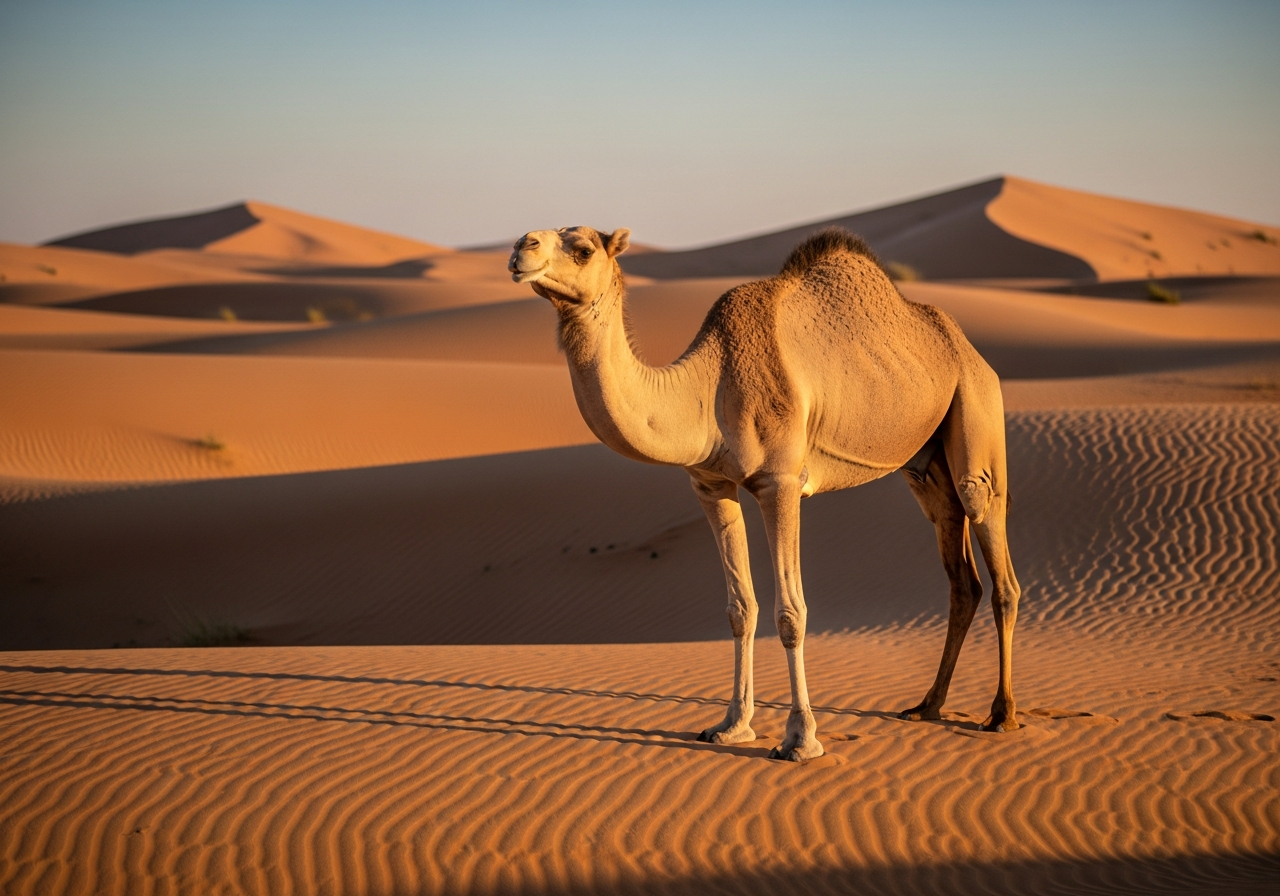
The camel is a large desert-adapted mammal famous for its humps, which store fat rather than water and let it survive long periods without food. The single-humped dromedary lives in the deserts of North Africa and the Middle East, while the two-humped Bactrian camel inhabits the cold deserts of Central Asia. Camels can go for weeks without drinking and then take in over 100 liters at once, and they have long served people as pack animals and a source of milk, meat, and wool. Domestic camels often live 40 to 50 years.
Camel facts at a glance
| Scientific name | Camelus dromedarius |
|---|---|
| Diet | Herbivore |
| Habitat | Deserts and arid plains |
| Lifespan | 40–50 years |
| Weight | 400–700 kg (880–1,540 lb) |
| Top speed | Up to 65 km/h (40 mph) in short bursts |
| Conservation status | Least Concern (IUCN) |
| Kingdom | Animalia |
|---|---|
| Phylum | Chordata |
| Class | Mammalia |
| Order | Artiodactyla |
| Family | Camelidae |
| Genus | Camelus |
Desert adaptations
Camels are superbly adapted to harsh deserts. Their humps store fat that can be broken down for energy and water when food is scarce, and they can tolerate large swings in body temperature to avoid sweating. They have thick lips for eating thorny plants, double rows of long eyelashes and closable nostrils to keep out blowing sand, and broad padded feet that spread their weight on loose ground. They can lose a third of their body water and recover rapidly when they drink.
Diet and feeding
Camels are herbivores that browse and graze on grasses, leaves, and tough, thorny desert shrubs that many animals avoid. Their leathery mouths and specialized digestion let them process dry, salty, and spiny vegetation. Like cattle, they are ruminants that chew cud to extract maximum nutrients from poor forage. When food and water are plentiful they build up the fat reserves stored in their humps.
Domestication and use
Camels were domesticated thousands of years ago and remain vital to people across arid regions as transport, pack animals, and a source of milk, meat, and wool. The dromedary, with one hump, is common in North Africa, the Middle East, and South Asia, while the Bactrian camel, with two humps, is suited to the cold deserts of Central Asia. Their ability to carry heavy loads across desert made them central to historic trade routes. A large feral dromedary population also lives in Australia.
Conservation
The domestic dromedary and Bactrian camel are common and listed as Least Concern, kept in large numbers by people. However, the truly wild Bactrian camel of Central Asia is a separate, Critically Endangered species with only a few hundred individuals remaining. Habitat loss and hunting threaten these wild camels. Conservation programs in Mongolia and China aim to protect the last wild herds.
Frequently asked questions about the Camel
Do camels store water in their humps?
No. Camel humps store fat, not water. The fat provides energy and can be metabolized when food is scarce, while special adaptations elsewhere help camels conserve water.
How long can a camel go without water?
Camels can survive a week or more without drinking, even in desert heat, and can lose a large fraction of their body water. When they reach water they can drink over 100 liters in a single session.
What is the difference between dromedary and Bactrian camels?
The dromedary has one hump and lives in the hot deserts of Africa and the Middle East, while the Bactrian camel has two humps and is adapted to the cold deserts of Central Asia.
What do camels eat?
Camels are herbivores that eat grasses, leaves, and tough, thorny desert plants other animals avoid. As ruminants, they chew cud to get the most from sparse, dry vegetation.
How long do camels live?
Domestic camels commonly live 40 to 50 years. Their longevity, strength, and endurance have made them valuable working animals in desert regions for thousands of years.
Are camels endangered?
Domestic camels are abundant and listed as Least Concern. However, the separate wild Bactrian camel of Central Asia is Critically Endangered, with only a few hundred left in the wild.