Nile Crocodile
Crocodylus niloticus
Quick answer
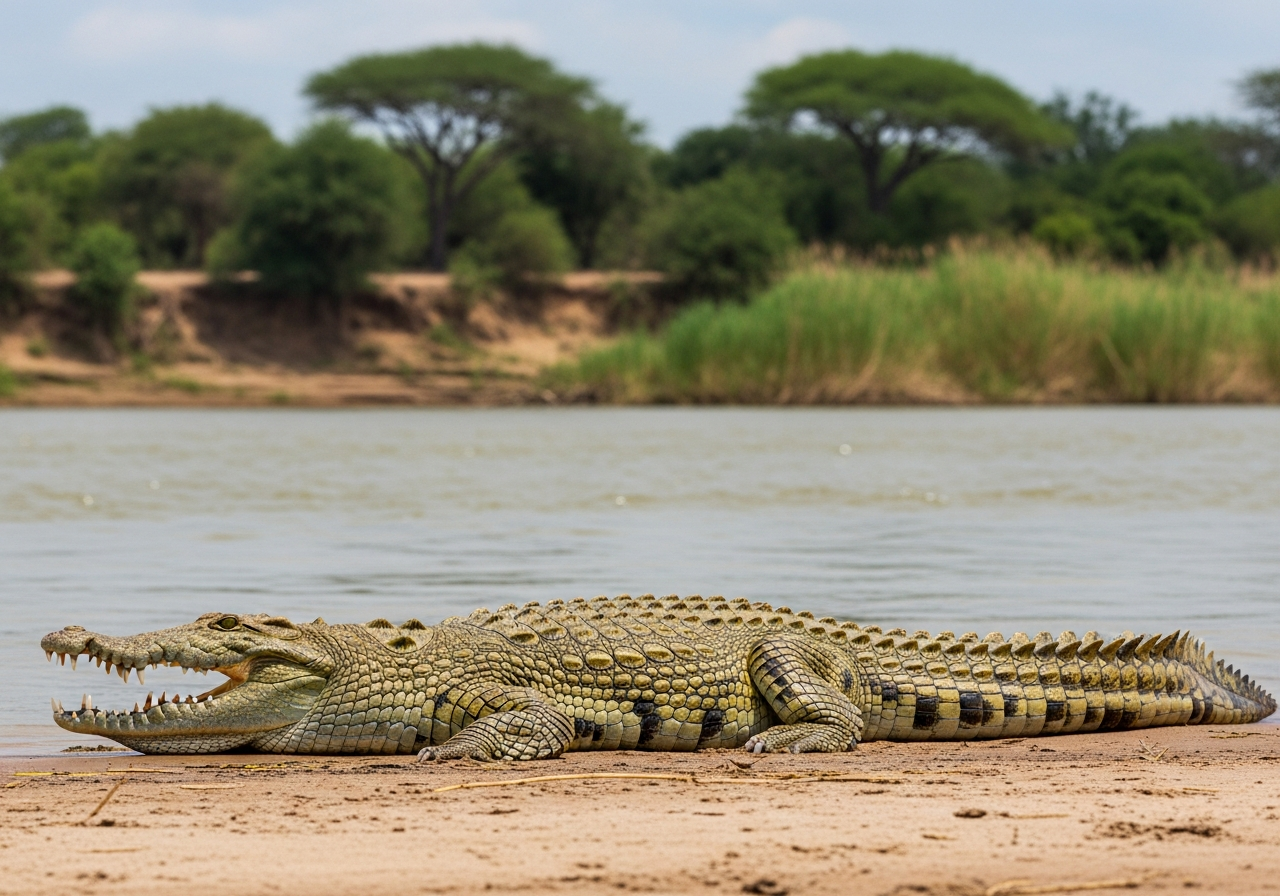
The Nile crocodile is Africa's largest freshwater predator, with big males reaching 5 m (16 ft) and weighing up to 750 kg (1,650 lb). It lives in rivers, lakes, and wetlands across sub-Saharan Africa and is an ambush hunter capable of taking prey as large as zebra and wildebeest. Nile crocodiles are powerful and dangerous to humans, and can live 70 to 100 years.
Nile Crocodile facts at a glance
| Scientific name | Crocodylus niloticus |
|---|---|
| Diet | Carnivore |
| Habitat | Rivers, lakes, and wetlands |
| Lifespan | 70–100 years |
| Length | Up to 5 m (16 ft) |
| Weight | Up to 750 kg (1,650 lb) |
| Conservation status | Least Concern (IUCN) |
| Kingdom | Animalia |
|---|---|
| Phylum | Chordata |
| Class | Reptilia |
| Order | Crocodilia |
| Family | Crocodylidae |
| Genus | Crocodylus |
Behavior and hunting
Nile crocodiles are ambush predators that lie still at the water's edge, exploding into action to seize animals that come to drink. They use a powerful bite and the spinning death roll to subdue and dismember large prey. They are also surprisingly social for reptiles, sometimes cooperating at kills and basking together in groups.
Diet and feeding
Young crocodiles eat insects, fish, and amphibians, while adults take fish, birds, and mammals up to the size of zebra and buffalo. They have one of the strongest bites measured in any animal but cannot chew, so they tear prey into chunks or swallow smaller animals whole. A large meal can last them for months.
Habitat and range
The Nile crocodile lives throughout much of sub-Saharan Africa and the Nile basin, in rivers, lakes, marshes, and even some brackish coastal areas. It needs water for hunting and cooling and dry banks for basking and nesting. Populations are densest in large river and lake systems with abundant prey.
Reproduction and parental care
Females lay their eggs in holes dug in sandy banks and guard the nest for around three months until the eggs hatch. The temperature of the nest determines whether the young develop as males or females. Unusually attentive among reptiles, the mother helps the hatchlings to the water and protects them in the early weeks of life.
Frequently asked questions about the Nile Crocodile
How big do Nile crocodiles get?
Large male Nile crocodiles can reach about 5 m (16 ft) in length and weigh up to 750 kg (1,650 lb), making them Africa's largest freshwater predator.
Are Nile crocodiles dangerous to humans?
Yes. Nile crocodiles are responsible for many attacks on people each year and are considered one of the most dangerous animals to humans in Africa. Caution near their waters is essential.
What do Nile crocodiles eat?
They are carnivores. Young eat insects, fish, and frogs, while adults take fish, birds, and large mammals such as zebra and wildebeest, ambushing them at the water's edge.
How long do Nile crocodiles live?
Nile crocodiles are long-lived, commonly reaching 70 to 100 years in the wild, with growth and age depending heavily on food supply and climate.
How strong is a Nile crocodile's bite?
The Nile crocodile has one of the most powerful bites ever measured in a living animal, enough to crush bone, though the muscles that open the jaws are comparatively weak.
Are Nile crocodiles endangered?
No. The Nile crocodile is listed as Least Concern overall, having recovered from past overhunting, though some local populations are still affected by habitat loss and persecution.