African Elephant
Loxodonta africana
Quick answer
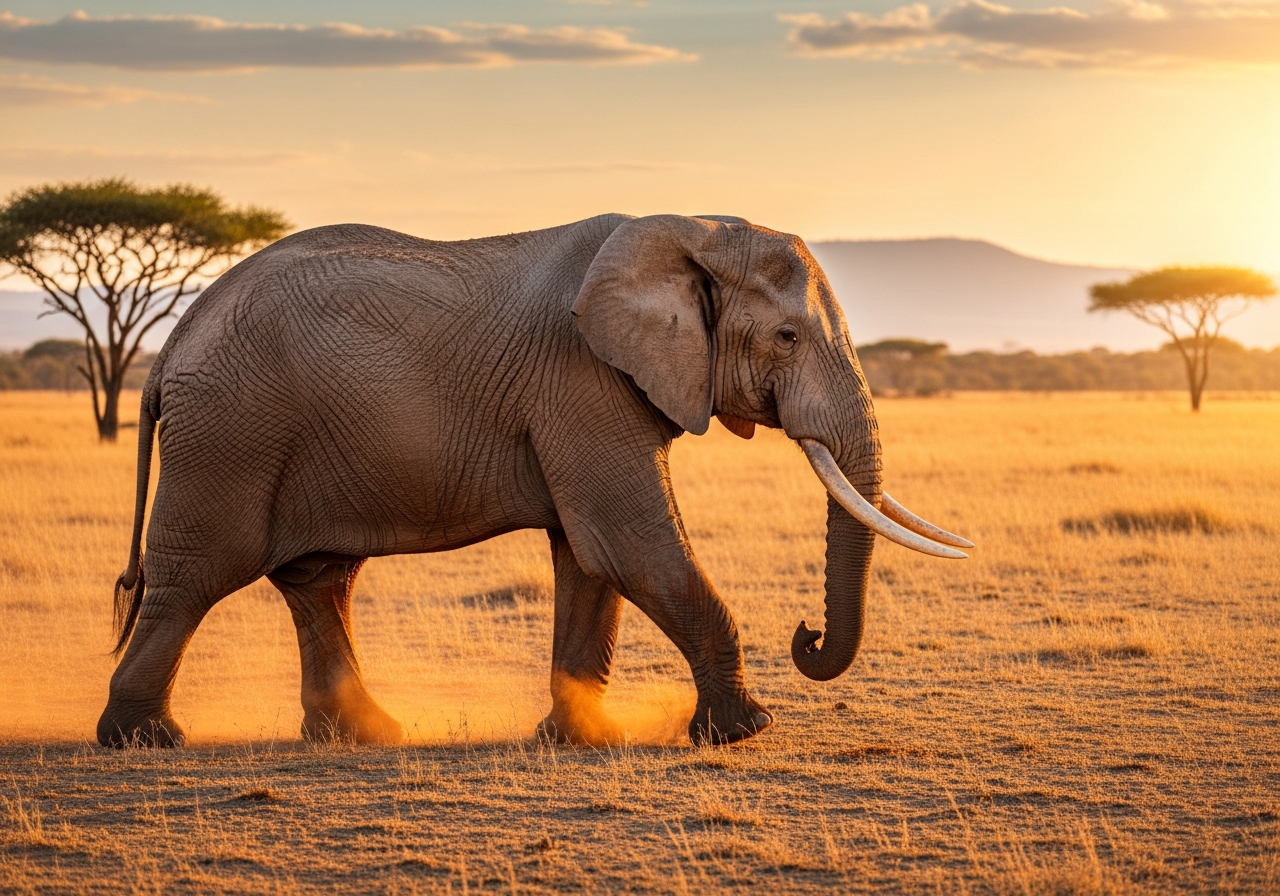
The African elephant is the largest living land animal, weighing up to 6,000 kg (13,200 lb) and standing up to 4 m (13 ft) at the shoulder. They are highly intelligent, deeply social, and use their trunks for breathing, drinking, grasping, and communication. Wild elephants can live 60 to 70 years.
African Elephant facts at a glance
| Scientific name | Loxodonta africana |
|---|---|
| Diet | Herbivore |
| Habitat | Savanna, forest, desert edge |
| Lifespan | 60–70 years in the wild |
| Weight | 2,700–6,000 kg (6,000–13,200 lb) |
| Height | Up to 4 m (13 ft) at the shoulder |
| Conservation status | Endangered (IUCN) |
| Kingdom | Animalia |
|---|---|
| Phylum | Chordata |
| Class | Mammalia |
| Order | Proboscidea |
| Family | Elephantidae |
| Genus | Loxodonta |
Diet
Elephants are herbivores that eat grasses, leaves, bark, roots, and fruit. An adult can consume up to 150 kg (330 lb) of vegetation and drink up to 190 liters (50 gallons) of water in a single day, spending up to 16 hours feeding.
The trunk and tusks
An elephant's trunk contains around 40,000 muscles and is used for breathing, smelling, drinking, grasping food, and social touch. Tusks are elongated incisor teeth used for digging, stripping bark, and defense, but they also make elephants a target for the ivory trade.
Conservation
African savanna elephants are Endangered and forest elephants are Critically Endangered, largely because of poaching for ivory and habitat fragmentation. As a keystone species, elephants shape entire ecosystems by clearing trees, spreading seeds, and digging waterholes.
Frequently asked questions about the African Elephant
What is the largest land animal?
The African elephant is the largest land animal on Earth. Large males can weigh up to 6,000 kg (13,200 lb) and stand up to 4 m (13 ft) tall at the shoulder.
What do elephants eat?
Elephants are herbivores that eat grasses, leaves, bark, roots, and fruit. An adult may eat up to 150 kg of plant matter and drink up to 190 liters of water each day.
How long do elephants live?
Wild elephants typically live 60 to 70 years, making them one of the longest-lived land mammals. Lifespan in captivity is often shorter.
Why are elephants endangered?
Elephants are endangered mainly because of poaching for ivory and the loss and fragmentation of their habitat. African forest elephants are now classified as Critically Endangered.
How many muscles are in an elephant's trunk?
An elephant's trunk contains an estimated 40,000 muscles, giving it the dexterity to pick up a single blade of grass or carry hundreds of kilograms.
Do elephants really have good memories?
Yes. Elephants have excellent long-term memory, which helps matriarchs remember distant water sources during droughts and recognize individuals after years apart.