Quick answer
Fleas feed on the blood of mammals and birds, adjusting with season, age, and what is abundant in On the bodies of host animals worldwide. That label is a preferred pattern, not every item an individual might sample.
Key takeaway
Fleas feed on blood of mammals and birds, adjusting with season, age, and what is abundant in On the bodies of host animals worldwide. That label is a preferred pattern, not every item an individual might sample.
Flea diet overview
Fleas (Siphonaptera) are best summarised as Hematophagous (blood of mammals and birds). Anatomy and habitat (On the bodies of host animals worldwide) decide whether they hunt, graze, filter, scavenge, or mix strategies across the year.
How fleas find food
Energy-rich foods are prioritised when available; lean seasons force broader diets or longer travel. Young animals may eat different items or receive food from parents.
Flea role in the food web
As consumers in their food web, fleas move nutrients and influence prey or vegetation.
Feeding and human conflict
Never feed wild fleas. Habituation raises injury risk and can lead to lethal management. Captive diets must match species needs, not generic pet food rules.
Built for jumping
Fleas are famous for their extraordinary jumps, able to leap distances and heights many times their own body length. The power comes from a rubber-like protein called resilin that stores energy and releases it like a spring. This lets a flea launch onto a passing host with explosive acceleration.
A parasitic lifestyle
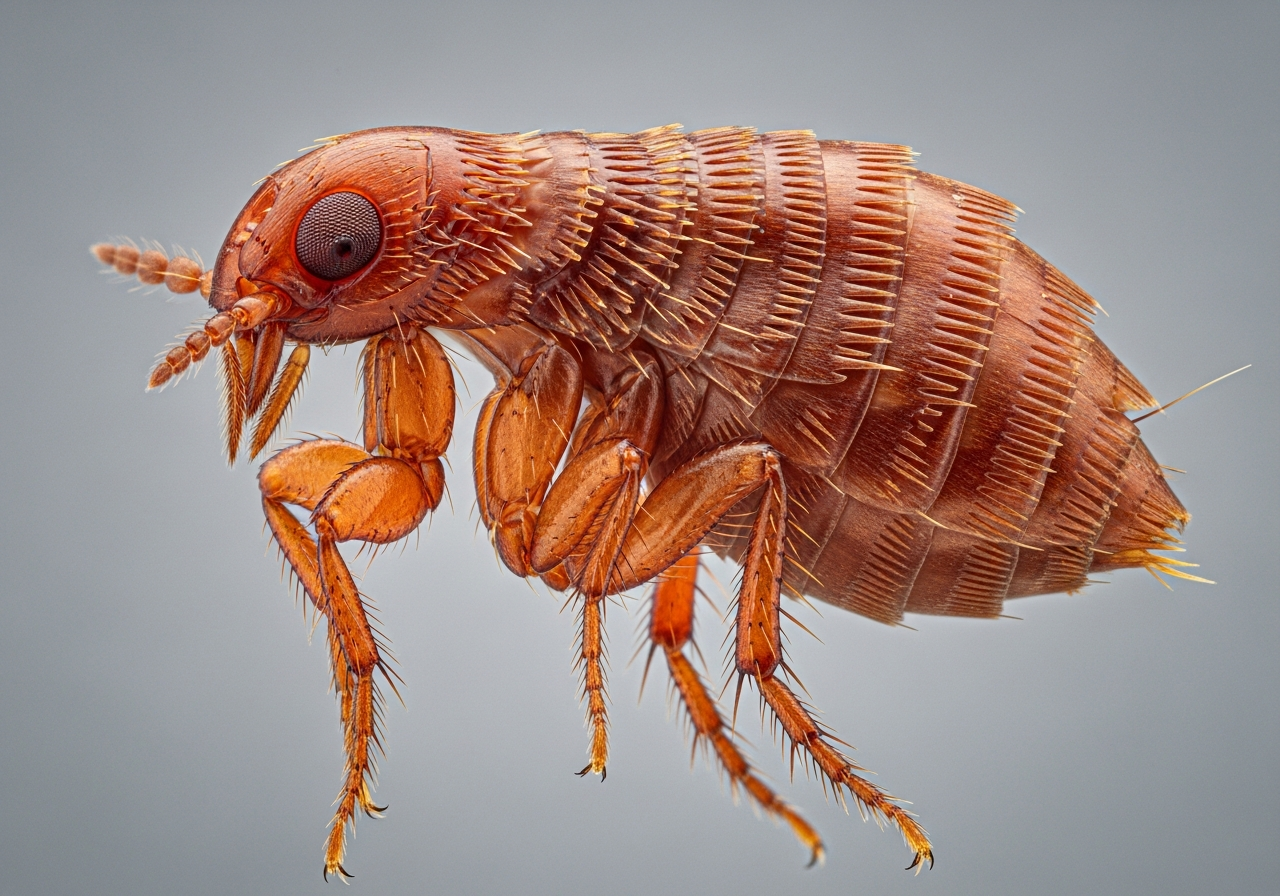
Fleas are external parasites that feed on the blood of mammals and birds, with each species often favoring particular hosts. Their bodies are flattened from side to side, helping them slip easily through fur and feathers, and backward-pointing bristles make them hard to remove. Mouthparts adapted for piercing skin let them feed on blood.
Sources
Flea FAQs
What do fleas eat?
Fleas feed on blood of mammals and birds, adjusting with season, age, and what is abundant in On the bodies of host animals worldwide. That label is a preferred pattern, not every item an individual might sample.
What is the scientific name of the flea?
Siphonaptera — used in research and conservation listings for fleas.
Where do fleas live?
They are associated with On the bodies of host animals worldwide. Local presence depends on food, cover, and human land use.
What is the conservation status of fleas?
Listed in our guides as Least Concern. Check the IUCN Red List and national assessments for the latest formal category.