Quick answer
Fleas live in On the bodies of host animals worldwide. Within that range they pick microhabitats that supply cover, food (Hematophagous (blood of mammals and birds)), water, and breeding sites — and they disappear where those features are lost.
Key takeaway
Fleas live in On the bodies of host animals worldwide. Within that range they pick microhabitats that supply cover, food (Hematophagous (blood of mammals and birds)), water, and breeding sites — and they disappear where those features are lost.
Flea native habitat
Fleas (Siphonaptera) are tied to On the bodies of host animals worldwide. Look for sites that match their diet (Hematophagous (blood of mammals and birds)) and movement style; seasonal rains or prey shifts can expand or shrink local occupancy.
Microhabitats fleas prefer
Cover for resting, access to food, and safe breeding sites decide day-to-day use. Edge habitats can help adaptable populations but fail specialists that need continuous wild land.
How people change Flea range
Farms, suburbs, and roads create opportunity for some individuals and lethal risk for others. Fragmentation without corridors isolates flea groups and raises local extinction risk.
Conservation geography for fleas
Status in our guides: <strong>Least Concern</strong>. Protecting linked habitat often beats a single fenced reserve. Watch from a distance and never feed wild fleas.
A parasitic lifestyle
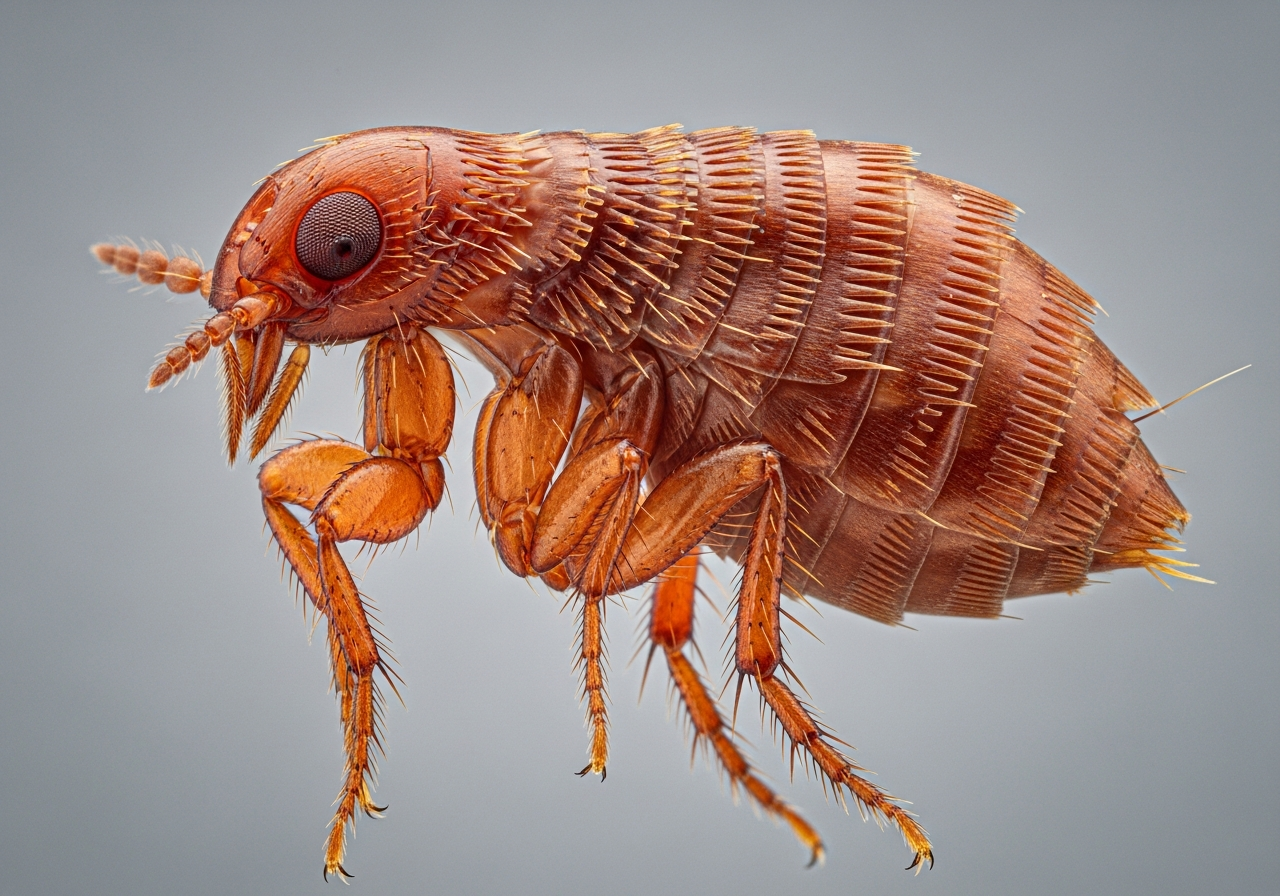
Fleas are external parasites that feed on the blood of mammals and birds, with each species often favoring particular hosts. Their bodies are flattened from side to side, helping them slip easily through fur and feathers, and backward-pointing bristles make them hard to remove. Mouthparts adapted for piercing skin let them feed on blood.
Life cycle
A flea's life cycle moves through egg, larva, pupa, and adult, much of it taking place off the host in bedding, carpets, or nests. Eggs laid on a host often fall into the surrounding environment, where the larvae feed on debris before pupating. Adults emerge ready to jump onto a host and feed, sometimes after waiting for the right cue such as warmth or vibration.
Sources
Flea FAQs
Where do fleas live?
Fleas live in On the bodies of host animals worldwide. Within that range they pick microhabitats that supply cover, food (Hematophagous (blood of mammals and birds)), water, and breeding sites — and they disappear where those features are lost.
What is the scientific name of the flea?
Siphonaptera — used in research and conservation listings for fleas.
What do fleas eat?
Fleas eat blood of mammals and birds, with seasonal and regional variation in On the bodies of host animals worldwide.
What is the conservation status of fleas?
Listed in our guides as Least Concern. Check the IUCN Red List and national assessments for the latest formal category.