Quick answer
Giant Clams (Tridacna gigas) are listed in our guides as Vulnerable. That IUCN-style label describes global extinction risk and can differ from national lists — habitat loss and human pressure still decide local survival.
Key takeaway
Giant Clams (Tridacna gigas) are listed in our guides as Vulnerable. That IUCN-style label describes global extinction risk and can differ from national lists — habitat loss and human pressure still decide local survival.
Giant Clam conservation status
Giant Clam (Tridacna gigas) is recorded here as Vulnerable. Global categories summarise extinction risk; regional populations can be safer or worse than the headline label.
Threats facing giant clams
Habitat loss around Coral reefs of the warm Indo-Pacific, hunting or persecution, climate pressure, and conflict with people are common drivers. Exact ranking of threats varies by region.
Outlook for Giant Clam populations
Where monitoring exists, trends track protected-area quality and enforcement. Fragmented groups need corridors and genetic exchange to avoid local extinction.
What actually helps
Support verified conservation programmes, cut demand for illegal wildlife products, and protect habitat. Tourism helps only when operators follow ethical wildlife standards.
Colorful and harmless
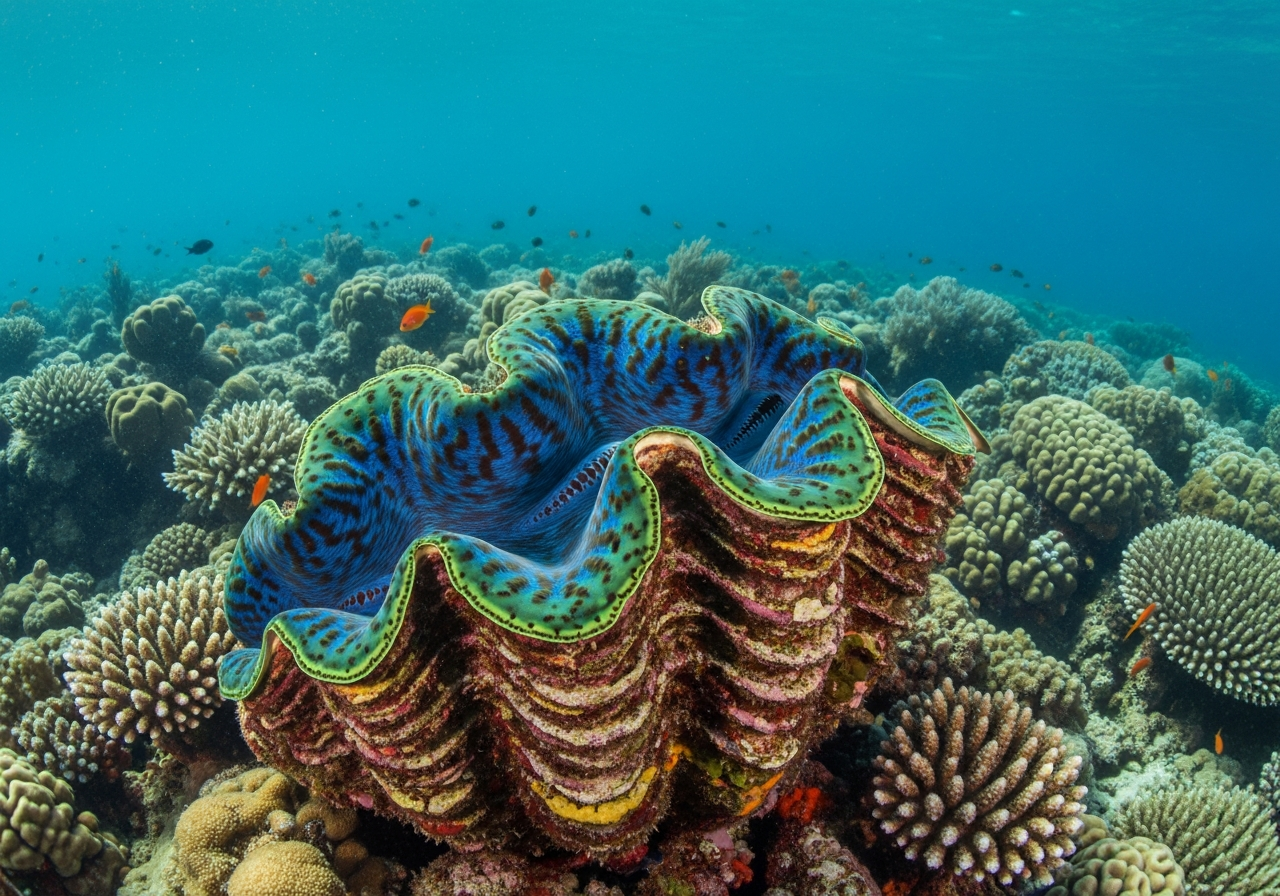
The exposed mantle of a giant clam can be vivid blue, green, gold, or brown, with patterns created partly by the algae and by light-sensing cells. Despite old myths about clams trapping divers, giant clams close too slowly to be a danger and cannot hold a person. They simply pull their mantle in and shut gradually when disturbed.
Conservation
Giant clams grow slowly and are threatened by overharvesting for food, shells, and the aquarium trade, as well as by reef damage. They are listed as Vulnerable and protected under international trade rules, with farming and reef restocking helping some populations recover. Healthy reefs are essential to their survival.
Sources
Giant Clam FAQs
Are giant clams endangered?
Giant Clams (Tridacna gigas) are listed in our guides as Vulnerable. That IUCN-style label describes global extinction risk and can differ from national lists — habitat loss and human pressure still decide local survival.
What is the scientific name of the giant clam?
Tridacna gigas — used in research and conservation listings for giant clams.
What do giant clams eat?
Giant Clams are filter feeders that also rely on algae symbionts, with seasonal and regional variation in Coral reefs of the warm Indo-Pacific.
Where do giant clams live?
They are associated with Coral reefs of the warm Indo-Pacific. Local presence depends on food, cover, and human land use.
What is the conservation status of giant clams?
Listed in our guides as Vulnerable. Check the IUCN Red List and national assessments for the latest formal category.