Great Horned Owl
Bubo virginianus
Quick answer
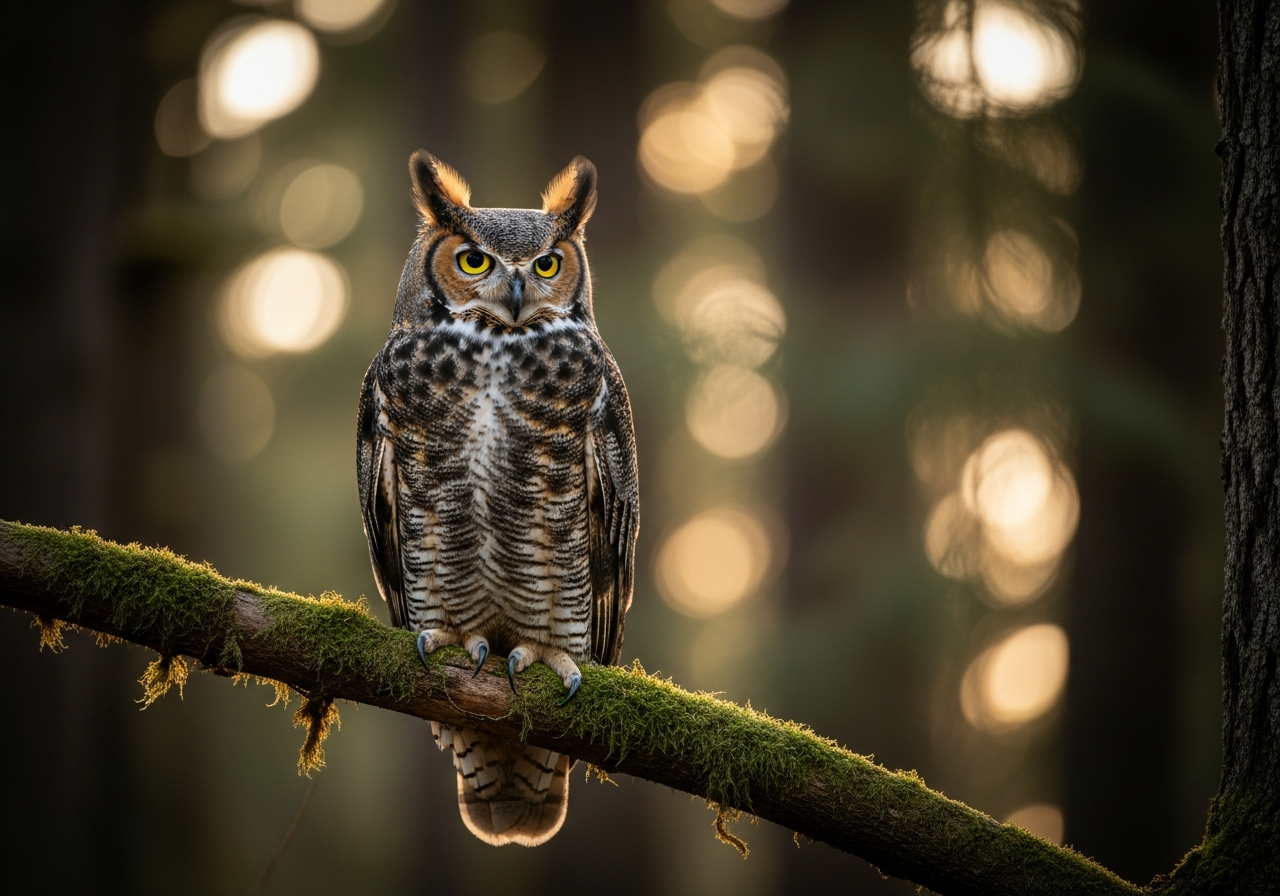
The great horned owl is a large, powerful owl found throughout the Americas, named for the tufts of feathers on its head that look like horns or ears. A fierce nocturnal predator with crushing talons, it hunts a wide range of prey, even skunks and other raptors. Known for its deep hooting call, it usually lives 10 to 15 years in the wild.
Great Horned Owl facts at a glance
| Scientific name | Bubo virginianus |
|---|---|
| Diet | Carnivore (mammals, birds, reptiles) |
| Habitat | Forests, deserts, wetlands, and cities |
| Lifespan | 10–15 years in the wild |
| Wingspan | 1.0–1.5 m (3.3–4.8 ft) |
| Top speed | Up to 64 km/h (40 mph) |
| Conservation status | Least Concern (IUCN) |
| Kingdom | Animalia |
|---|---|
| Phylum | Chordata |
| Class | Aves |
| Order | Strigiformes |
| Family | Strigidae |
| Genus | Bubo |
Where it lives
Almost every habitat throughout the Americas, from subarctic North America to the tip of South America.
A formidable night hunter
The great horned owl is one of the most powerful birds of prey in the Americas, with a grip strong enough to crush the spine of its prey. It hunts at night using exceptional hearing and large, light-gathering eyes, gliding silently on soft-edged feathers that muffle the sound of its wings so prey never hears it coming.
Diet and fearless appetite
Few predators have such a varied diet. Great horned owls take rabbits, rodents, and other mammals, as well as birds up to the size of geese and other owls and hawks. They are one of the only animals that regularly hunt skunks, apparently untroubled by the spray, and they will also eat reptiles, amphibians, and large insects.
The tufts and the hoot
The "horns" are not ears but tufts of feathers that may help with camouflage and communication; the owl's actual ears are hidden at the sides of its head and are set unevenly to pinpoint sound. Its deep, soft "hoo-hoo-hoo" is a classic sound of the night and is often the call people picture when they imagine an owl.
Habitat and range
Great horned owls are found from the Arctic edge of North America down through Central and South America, living in almost every habitat, including forests, deserts, swamps, farmland, and city parks. This adaptability and their broad diet make them one of the most widespread and successful owls in the New World.
Frequently asked questions about the Great Horned Owl
What do great horned owls eat?
They are carnivores with a remarkably broad diet, including rabbits, rodents, birds as large as geese, other owls and hawks, reptiles, and even skunks, which few other predators will tackle.
Do great horned owls really have horns?
No. The "horns" are tufts of feathers on the head, not horns or ears. They may aid camouflage and communication, while the owl's real ears are hidden on the sides of its head.
How strong is a great horned owl's grip?
Their talons can clamp with great force, strong enough to subdue prey larger than themselves. This crushing grip is one reason they can take animals as formidable as skunks and other raptors.
How long do great horned owls live?
In the wild great horned owls usually live 10 to 15 years, while protected birds in captivity have lived 20 to 30 years or more.
Why are great horned owls associated with the classic owl hoot?
Their deep, resonant "hoo-hoo-hoo" carries far through the night and is the sound many people picture when they think of an owl, making them one of the most recognizable owls by voice.
Are great horned owls dangerous to people?
They rarely bother people but can be very defensive near their nests and have been known to strike intruders who come too close. Away from the nest they avoid humans and pose little risk.