Grizzly Bear
Ursus arctos horribilis
Quick answer
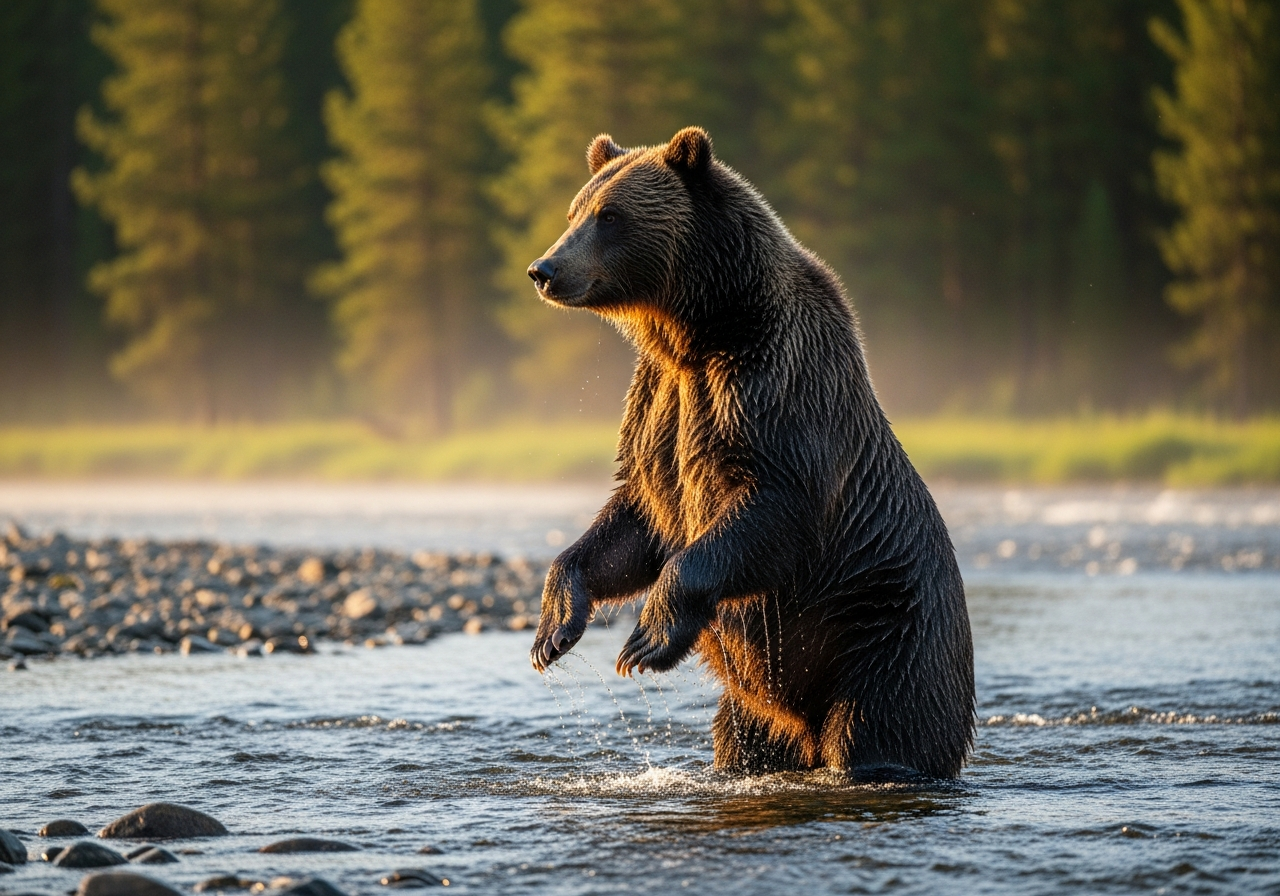
The grizzly bear is a large North American subspecies of brown bear, named for the grizzled, silver-tipped fur on its back. Grizzlies are powerful omnivores that can weigh up to 360 kg (800 lb), run as fast as 56 km/h (35 mph), and live around 20 to 25 years in the wild. They hibernate through winter in dens.
Grizzly Bear facts at a glance
| Scientific name | Ursus arctos horribilis |
|---|---|
| Diet | Omnivore |
| Habitat | Forests, meadows, and mountains |
| Lifespan | 20–25 years in the wild |
| Weight | 130–360 kg (290–800 lb) |
| Top speed | 56 km/h (35 mph) |
| Conservation status | Least Concern (IUCN) |
| Kingdom | Animalia |
|---|---|
| Phylum | Chordata |
| Class | Mammalia |
| Order | Carnivora |
| Family | Ursidae |
| Genus | Ursus |
Diet and feeding
Despite their fearsome reputation, grizzlies are omnivores that eat far more plants than meat. They feast on berries, roots, nuts, insects, fish, and carrion, and famously gather at rivers to catch salmon during the run. In autumn a grizzly may eat for up to 20 hours a day, packing on fat before winter.
Hibernation
Grizzlies spend the harshest months in a den in a state of deep dormancy, living off the fat reserves they built up in autumn. Females give birth during this time, and tiny cubs nurse and grow in the den before emerging in spring. A bear's heart rate and metabolism slow dramatically while it sleeps.
Power and the body
A grizzly is built for strength, with a distinctive shoulder hump of muscle that powers its digging and a bite strong enough to crush bone. Despite their bulk, grizzlies can sprint at 56 km/h (35 mph) over short distances, faster than any human, and they are strong swimmers and capable climbers when young.
Conservation
Brown bears as a whole are listed as Least Concern, but grizzlies were driven out of much of their former range in the lower United States. They survive today mainly in protected areas such as Yellowstone and the northern Rockies, and recovery efforts continue to manage human-bear conflict.
Frequently asked questions about the Grizzly Bear
What is the difference between a grizzly bear and a brown bear?
All grizzlies are brown bears, but not all brown bears are grizzlies. Grizzly refers to the inland North American subspecies, while coastal brown bears that eat more salmon grow larger. The grizzled, silver-tipped fur gives the grizzly its name.
How fast can a grizzly bear run?
Grizzly bears can run up to about 56 km/h (35 mph) in short bursts, which is faster than the fastest human sprinter. You cannot outrun a bear, so wildlife agencies advise other safety measures instead.
Do grizzly bears really hibernate?
Yes. Grizzlies enter a deep winter dormancy for several months, living off stored body fat without eating, drinking, or passing waste. Their body temperature and heart rate drop, and females even give birth during this period.
How big do grizzly bears get?
Male grizzlies typically weigh 180 to 360 kg (400 to 800 lb) and stand around 2 m (6.5 ft) tall on their hind legs. Females are smaller. Coastal brown bears with rich salmon diets can grow even larger.
What do grizzly bears eat?
Grizzlies are omnivores. Their diet is mostly plants such as berries, roots, and nuts, supplemented with insects, fish like salmon, small mammals, and carrion, depending on the season.