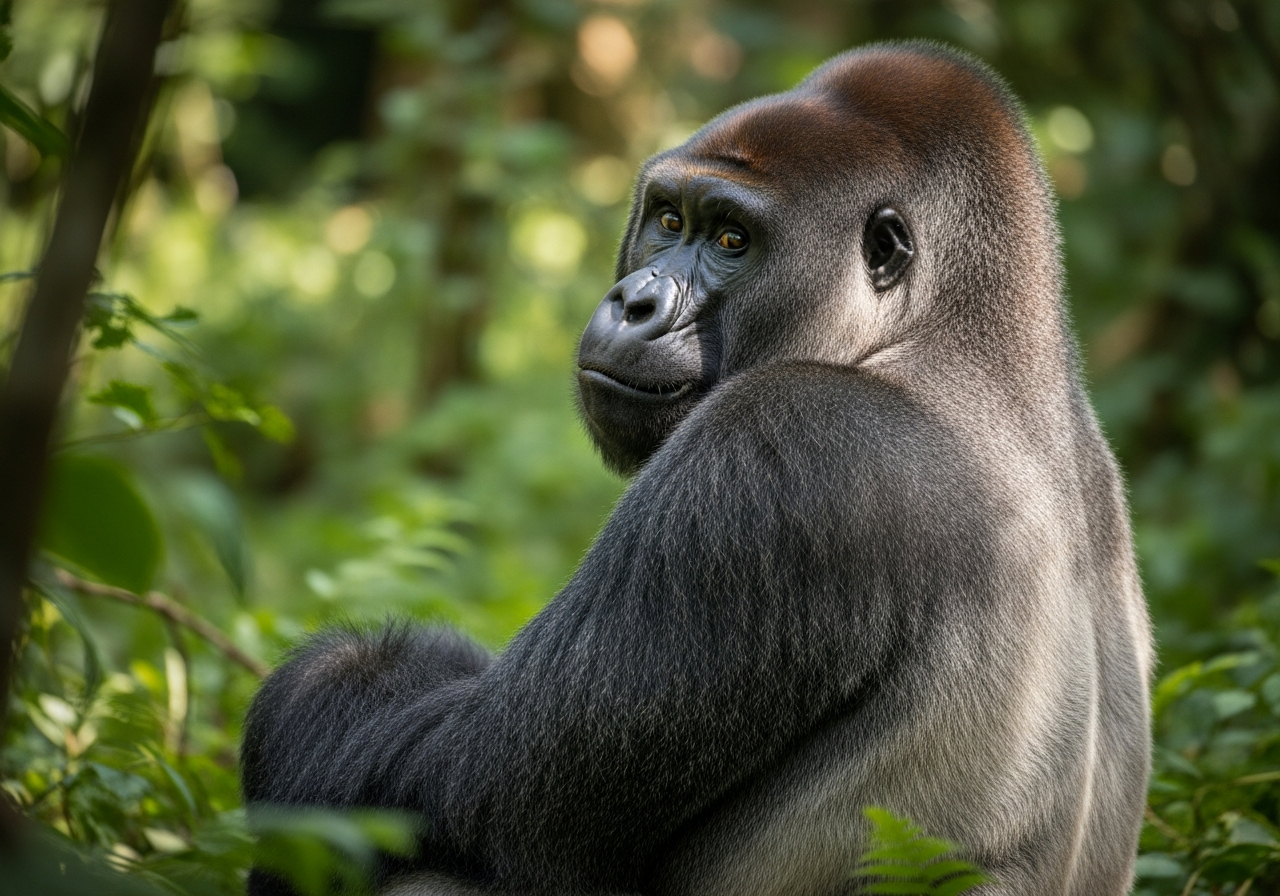
Gorilla
Gorilla gorilla
Quick answer
Gorillas are the largest living primates, with dominant males (silverbacks) weighing up to 200 kg (440 lb). They are gentle, highly intelligent herbivores native to the forests of central Africa, living in close-knit family groups. Wild gorillas typically live 35 to 40 years.
Gorilla facts at a glance
| Scientific name | Gorilla gorilla |
|---|---|
| Diet | Herbivore (mostly) |
| Habitat | Tropical and montane forest |
| Lifespan | 35–40 years in the wild |
| Weight | 70–200 kg (150–440 lb) |
| Height | Up to 1.8 m (6 ft) standing |
| Conservation status | Critically Endangered (IUCN) |
| Kingdom | Animalia |
|---|---|
| Phylum | Chordata |
| Class | Mammalia |
| Order | Primates |
| Family | Hominidae |
| Genus | Gorilla |
Diet and strength
Gorillas are mostly herbivores, eating leaves, stems, shoots, fruit, and occasionally insects. An adult can eat up to 18 kg (40 lb) of vegetation a day. Despite their plant-based diet, silverbacks are extraordinarily strong, capable of lifting many times their own body weight, though they rarely use that strength aggressively.
Habitat and range
Gorillas live only in the tropical and montane forests of central Africa, split into western and eastern species. They build a fresh nest of branches and leaves to sleep in each night, on the ground or in trees, and travel through their home range feeding as they go.
Conservation
Both gorilla species are endangered, and the western lowland gorilla is Critically Endangered, threatened by poaching, disease such as Ebola, and habitat loss from logging and mining. Conservation programs, protected parks, and carefully managed gorilla tourism are central to their survival.
Frequently asked questions about the Gorilla
How strong is a gorilla?
Gorillas are among the strongest primates on Earth. A silverback can lift several times its own body weight, with estimates often cited around 800 to 900 kg, far beyond what a trained human can manage.
What do gorillas eat?
Gorillas are mainly herbivores, eating leaves, shoots, stems, bark, and fruit, plus the occasional insect. An adult can consume up to 18 kg (40 lb) of vegetation in a single day.
Are gorillas dangerous to humans?
Gorillas are generally shy and peaceful and avoid conflict. A silverback may charge to defend its family, but this is usually a bluff. Attacks on humans are rare and almost always defensive.
How long do gorillas live?
Wild gorillas typically live 35 to 40 years. In captivity, with veterinary care and a steady food supply, some gorillas have lived into their 50s.
Why are gorillas endangered?
Gorillas are endangered mainly because of poaching, disease such as Ebola, and habitat loss from logging, mining, and farming. The western lowland gorilla is listed as Critically Endangered by the IUCN.