Polar Bear
Ursus maritimus
Quick answer
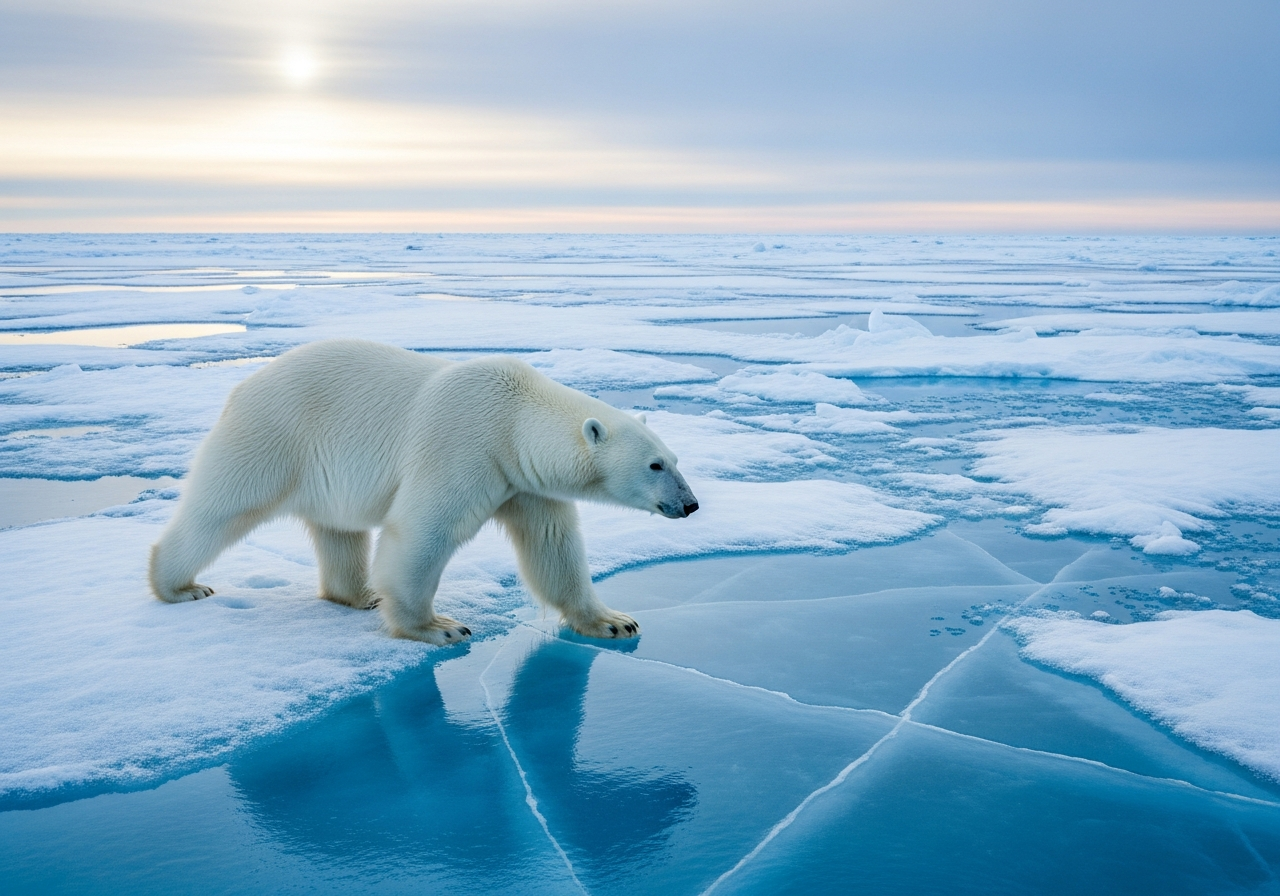
The polar bear is the largest land carnivore, perfectly adapted to life on Arctic sea ice. It hunts seals from the ice, has black skin under white-looking translucent fur, and is classified as a marine mammal because it depends on the ocean. Polar bears live around 25 years and are threatened by melting sea ice.
Polar Bear facts at a glance
| Scientific name | Ursus maritimus |
|---|---|
| Diet | Carnivore (mainly seals) |
| Habitat | Arctic sea ice and coasts |
| Lifespan | ~25 years in the wild |
| Weight | 300–700 kg (660–1,540 lb) |
| Top speed | 40 km/h (25 mph) on land |
| Conservation status | Vulnerable (IUCN) |
| Kingdom | Animalia |
|---|---|
| Phylum | Chordata |
| Class | Mammalia |
| Order | Carnivora |
| Family | Ursidae |
| Genus | Ursus |
Where it lives
Across the Arctic — Canada, Alaska, Greenland, Norway (Svalbard), and Russia.
Built for the Arctic
Polar bears are superbly adapted to extreme cold, with a thick layer of fat, dense insulating fur, and large paws that spread their weight on thin ice and act as paddles when swimming. Their fur appears white but is actually translucent, and their skin underneath is black.
Hunting on the ice
Polar bears mainly hunt ringed and bearded seals, waiting patiently beside breathing holes in the sea ice. The fat-rich seal blubber provides the energy they need to survive, which is why access to sea ice is essential to their survival.
Marine mammals
Although they live and travel on land and ice, polar bears are classified as marine mammals because they depend on the ocean for food. They are powerful long-distance swimmers, capable of crossing many kilometers of open water.
Conservation
Polar bears are Vulnerable and have become a global symbol of climate change. As the Arctic warms and sea ice forms later and melts earlier, bears have less time to hunt seals, leading to poorer body condition and lower cub survival.
Frequently asked questions about the Polar Bear
What do polar bears eat?
Polar bears are carnivores that primarily eat seals, especially ringed and bearded seals. The fat-rich blubber provides the energy they need to survive in the Arctic.
Is polar bear skin really black?
Yes. Beneath their translucent fur, polar bears have black skin, which helps absorb and retain heat from sunlight in the cold Arctic environment.
Are polar bears marine mammals?
Polar bears are classified as marine mammals because they rely on the ocean and sea ice for hunting. They are also strong swimmers capable of covering long distances in open water.
Why are polar bears endangered?
Polar bears are threatened mainly by climate change. Melting sea ice shortens their hunting season for seals, reducing their body condition and the survival of their cubs.
How big are polar bears?
Polar bears are the largest land carnivores. Adult males can weigh between 300 and 700 kg (660–1,540 lb) and stand over 3 m (10 ft) tall on their hind legs.
How long do polar bears live?
Polar bears typically live around 25 years in the wild, though many do not survive their first few years. In captivity they can live into their thirties.