Leopard
Panthera pardus
Quick answer
The leopard is a powerful, secretive big cat found across Africa and parts of Asia, recognized by its golden coat covered in rosette spots. Leopards are exceptional climbers that often haul prey heavier than themselves into trees to keep it from lions and hyenas. They are highly adaptable, can run up to 58 km/h (36 mph), and typically live 12 to 17 years in the wild.
Leopard facts at a glance
| Scientific name | Panthera pardus |
|---|---|
| Diet | Carnivore |
| Habitat | Forest, savanna, mountains, and scrub |
| Lifespan | 12–17 years in the wild |
| Weight | 30–90 kg (66–200 lb) |
| Top speed | 58 km/h (36 mph) |
| Conservation status | Vulnerable (IUCN) |
| Kingdom | Animalia |
|---|---|
| Phylum | Chordata |
| Class | Mammalia |
| Order | Carnivora |
| Family | Felidae |
| Genus | Panthera |
The ultimate generalist
Leopards are the most adaptable of all the big cats, living everywhere from rainforest and savanna to deserts and snowy mountains, and from deep wilderness to the edges of cities. They will eat almost anything they can catch, from insects and birds to antelope, which is a big reason they survive where other big cats vanish.
Climbing and caching
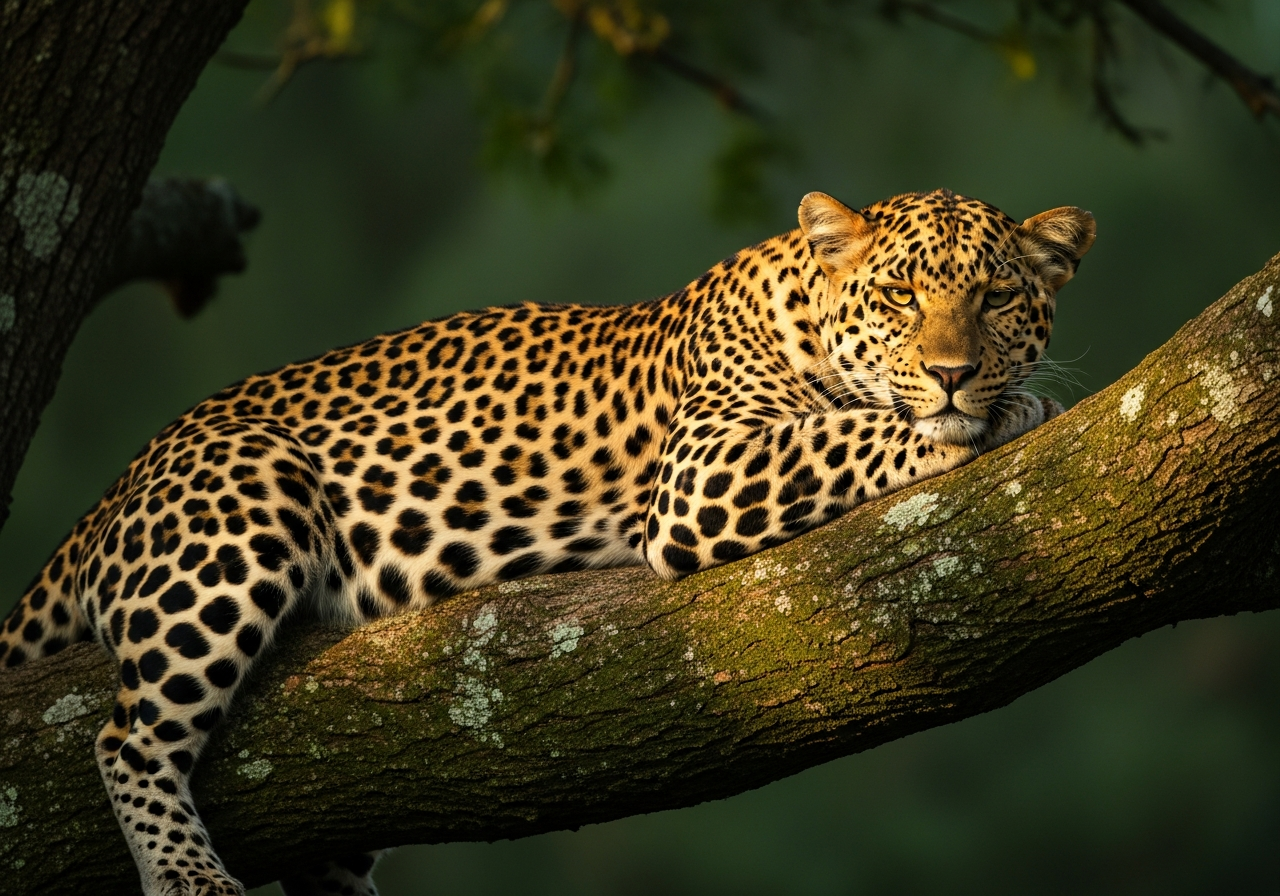
Immensely strong for their size, leopards routinely drag carcasses up into trees, sometimes lifting prey heavier than themselves. Storing a kill in the branches keeps it safe from scavenging lions and hyenas and lets the leopard feed in peace over several days.
Solitary hunters
Leopards are solitary and largely nocturnal, relying on stealth rather than speed. They stalk to within a few meters of prey before a final explosive rush, then dispatch it with a precise bite. Each leopard's rosette pattern is unique, helping it stay camouflaged in dappled light.
Conservation
Leopards are listed as Vulnerable, with several subspecies far more endangered, such as the critically endangered Amur leopard of the Russian Far East. Habitat loss, prey decline, poaching for skins and bones, and conflict with farmers are the main threats across their wide range.
Frequently asked questions about the Leopard
What is the difference between a leopard and a jaguar?
Leopards live in Africa and Asia and have smaller rosettes without central spots, while jaguars live in the Americas, are bulkier, and have rosettes with spots inside them. Jaguars also have a stronger bite.
Can leopards really climb trees with their prey?
Yes. Leopards are powerful climbers and often haul carcasses, sometimes heavier than themselves, high into trees to protect their kills from lions and hyenas.
How fast can a leopard run?
Leopards can sprint up to about 58 km/h (36 mph), but they rely far more on stealth, stalking close to prey before a short, explosive charge.
What is a black panther?
A black panther is not a separate species. It is usually a leopard (in Africa or Asia) or a jaguar (in the Americas) with a genetic condition called melanism that makes its coat very dark, though the rosettes are still faintly visible.
Are leopards endangered?
Leopards are listed as Vulnerable overall, and some subspecies, such as the Amur leopard, are Critically Endangered. Habitat loss, poaching, and prey decline threaten them across Africa and Asia.