Hammerhead Shark
Sphyrnidae
Quick answer
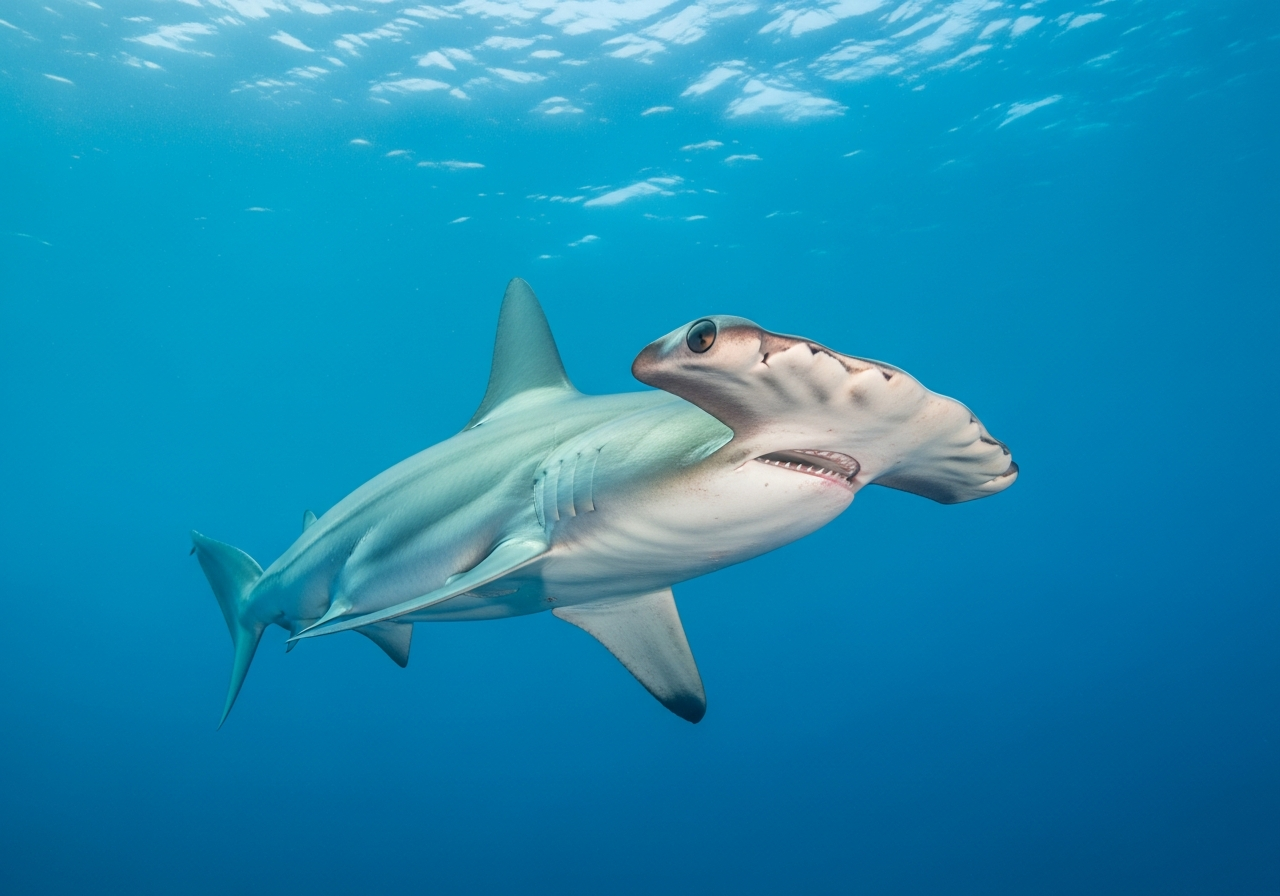
Hammerhead sharks are a family of sharks instantly recognizable by their wide, flattened, hammer-shaped heads, which spread their eyes and sensory organs far apart. This shape gives them excellent vision and a heightened ability to detect the faint electrical signals of hidden prey such as stingrays. Hammerheads range from small species to the great hammerhead, which can exceed 6 meters (20 ft) long.
Hammerhead Shark facts at a glance
| Scientific name | Sphyrnidae (family) |
|---|---|
| Diet | Carnivore |
| Habitat | Warm coastal and open oceans worldwide |
| Lifespan | 20–30 years or more |
| Length | 0.9 m to over 6 m by species |
| Top speed | Around 40 km/h (25 mph) in bursts |
| Conservation status | Critically Endangered (great hammerhead) |
| Kingdom | Animalia |
|---|---|
| Phylum | Chordata |
| Class | Chondrichthyes |
| Order | Carcharhiniformes |
| Family | Sphyrnidae |
| Genus | Sphyrna |
Where it lives
Warm coastal and open waters worldwide, in temperate and tropical seas of all major oceans.
The hammer-shaped head
The wide, flattened head, called a cephalofoil, sets eyes and nostrils far apart, giving hammerheads a broad field of vision and a strong sense of smell. The underside is packed with electroreceptors that detect the tiny electric fields of animals buried in the sand. Sweeping the head over the seafloor like a metal detector, the shark sniffs out hidden prey.
Diet and hunting
Hammerheads are skilled predators that hunt fish, squid, octopuses, crustaceans, and especially stingrays. Some use the broad head to pin a stingray against the seafloor before eating it, and they seem largely unbothered by the rays' venomous barbs. They often feed near the bottom in shallow coastal waters.
Behavior and range
Hammerheads live in warm coastal and open waters around the world. Some species, such as the scalloped hammerhead, famously gather in large schools by day near seamounts and islands, then disperse at night to hunt. Many undertake seasonal migrations to cooler waters.
Conservation
Several hammerhead species are in serious trouble, with the great and scalloped hammerheads listed as Critically Endangered. They are heavily targeted and accidentally caught for their large fins, which are prized in the shark-fin trade, and they reproduce slowly. International trade restrictions now aim to reduce the pressure on them.
Frequently asked questions about the Hammerhead Shark
Why do hammerhead sharks have hammer-shaped heads?
The wide head spreads the eyes and sensory organs far apart, giving hammerheads better all-around vision and a greater ability to detect the faint electrical signals of prey hidden in the sand.
Are hammerhead sharks dangerous to humans?
Hammerheads can be large predators, but attacks on people are very rare. They generally avoid humans, and only a few of the larger species are considered potentially dangerous.
What do hammerhead sharks eat?
Hammerheads are carnivores that eat fish, squid, octopuses, and crustaceans, and they are especially fond of stingrays, sometimes pinning them to the seafloor before feeding.
How big do hammerhead sharks get?
Hammerheads range widely by species, from under 1 m to the great hammerhead, which can grow more than 6 m (20 ft) long and weigh several hundred kilograms.
Are hammerhead sharks endangered?
Yes, several are. The great and scalloped hammerheads are listed as Critically Endangered, largely due to the shark-fin trade and accidental catches combined with their slow reproduction.