African Grey Parrot
Psittacus erithacus
Quick answer
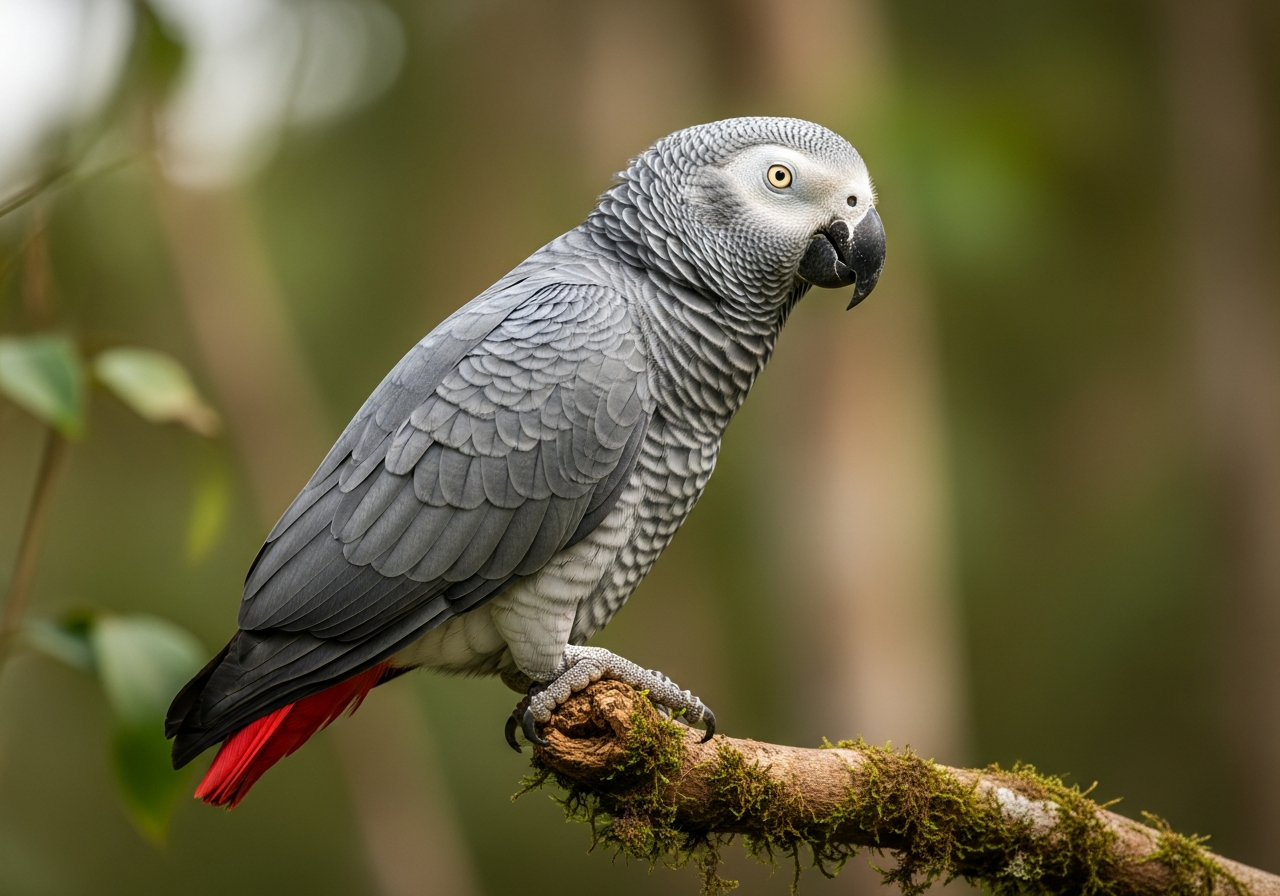
The African grey parrot is a medium-sized grey parrot from the rainforests of central Africa, widely regarded as one of the most intelligent birds. It is an exceptional mimic that can learn hundreds of words and, in some studies, use them in context. These long-lived parrots can reach 40 to 60 years and are popular but demanding companion birds.
African Grey Parrot facts at a glance
| Scientific name | Psittacus erithacus |
|---|---|
| Diet | Herbivore (seeds, nuts, fruit) |
| Habitat | Lowland tropical rainforest |
| Lifespan | 40–60 years |
| Weight | 400–500 g (0.9–1.1 lb) |
| Top speed | 50 km/h (30 mph) in flight |
| Conservation status | Endangered (IUCN) |
| Kingdom | Animalia |
|---|---|
| Phylum | Chordata |
| Class | Aves |
| Order | Psittaciformes |
| Family | Psittacidae |
| Genus | Psittacus |
Where it lives
The lowland rainforests of central and western Africa, across the Congo Basin.
Intelligence and communication
African grey parrots are considered among the smartest of all birds, with cognitive abilities sometimes compared to those of a young child. They are renowned mimics that can learn hundreds of words and sounds, and famous study birds have appeared to use words to count, identify colors, and understand simple concepts. They need constant mental stimulation and can develop problems if bored or isolated.
Diet and feeding
In the wild, African grey parrots eat a varied plant diet of seeds, nuts, fruits, and berries, often foraging high in the rainforest canopy. They use a strong hooked beak and dexterous feet to crack hard shells and manipulate food. Pet greys need a balanced diet of pellets, vegetables, and limited nuts to stay healthy.
Habitat and range
These parrots live in the lowland rainforests and forest edges of central and western Africa, from the Gulf of Guinea across the Congo Basin. They gather in large, noisy flocks and roost together at night. They favor primary forest but also visit mangroves and cultivated areas.
Conservation
The African grey is listed as Endangered, driven mainly by intense trapping for the pet trade and by loss of rainforest habitat. International trade in wild-caught birds is now banned under CITES, but illegal capture remains a serious threat. Captive breeding helps meet demand and reduce pressure on wild populations.
Frequently asked questions about the African Grey Parrot
Are African grey parrots good pets?
They can be rewarding companions for experienced owners, but they are demanding pets that need daily interaction, mental stimulation, and decades of commitment. Neglected greys often develop stress behaviors such as feather plucking.
How smart are African grey parrots?
African greys are among the most intelligent birds known. In research settings they have shown the ability to associate words with objects, count small numbers, and grasp simple concepts, suggesting cognition comparable to a young child.
How long do African grey parrots live?
African grey parrots commonly live 40 to 60 years, and some reach even older ages in captivity. Their long lifespan means owning one is a lifelong commitment.
Can African grey parrots really talk?
Yes. African greys are exceptional mimics that can learn hundreds of words and sounds, and some individuals appear to use words appropriately in context rather than simply repeating them.
Are African grey parrots endangered?
Yes. The species is listed as Endangered by the IUCN, largely because of heavy trapping for the pet trade and rainforest habitat loss. Wild-caught trade is now banned internationally.
What do African grey parrots eat?
In the wild they eat seeds, nuts, fruit, and berries from the rainforest canopy. Pet greys do best on a balanced diet of formulated pellets, fresh vegetables, and a small amount of nuts.