Jaguar
Panthera onca
Quick answer
The jaguar is the largest cat in the Americas and the third largest in the world, weighing up to 120 kg (265 lb). Found from Mexico through Central and South America, it has the strongest bite relative to size of any big cat and often kills by piercing the skull. Wild jaguars typically live 12 to 15 years.
Jaguar facts at a glance
| Scientific name | Panthera onca |
|---|---|
| Diet | Carnivore |
| Habitat | Rainforest, wetland, grassland |
| Lifespan | 12–15 years in the wild |
| Weight | 55–120 kg (120–265 lb) |
| Top speed | 80 km/h (50 mph) in short bursts |
| Conservation status | Near Threatened (IUCN) |
| Kingdom | Animalia |
|---|---|
| Phylum | Chordata |
| Class | Mammalia |
| Order | Carnivora |
| Family | Felidae |
| Genus | Panthera |
Where it lives
Rainforests and wetlands from Mexico and Central America through South America, with the Amazon and Pantanal as strongholds.
Bite and hunting style
The jaguar has the most powerful bite of any big cat relative to its size. Unlike lions or tigers, which usually go for the throat, jaguars often kill by biting directly through the skull or the back of the neck. They are ambush hunters and will take prey as varied as capybara, deer, caiman, and turtles.
A cat that loves water
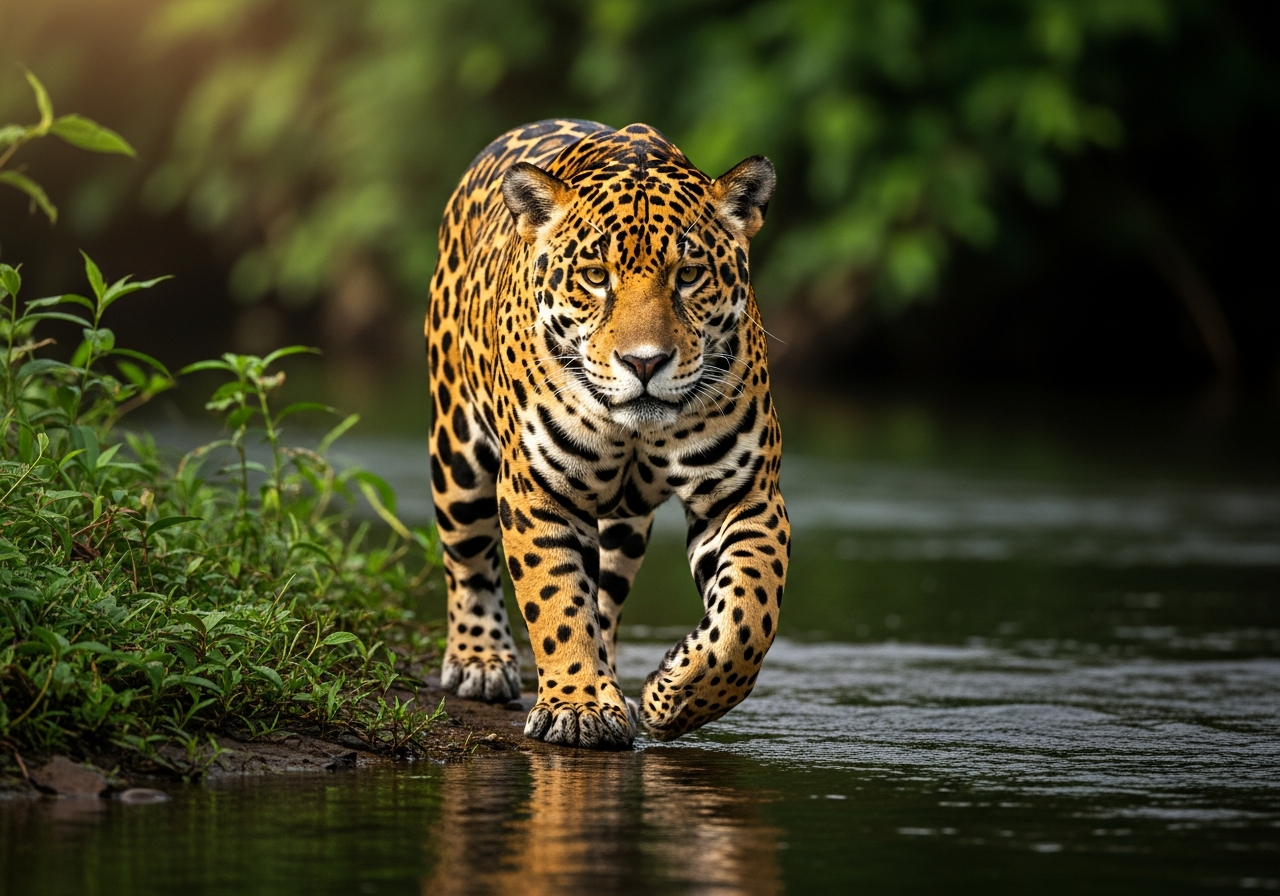
Jaguars are strong swimmers and are far more comfortable in water than most cats. They often hunt along rivers and in wetlands such as the Pantanal, preying on fish, caimans, and turtles, and will readily cross large rivers within their territory.
Habitat and range
Jaguars range across the Americas, from Mexico and Central America down through South America, with the Amazon basin and the Pantanal wetlands as their strongholds. They prefer dense forest and water-rich habitats with plenty of cover, and each adult patrols a large territory that it marks and defends.
Conservation
Jaguars are listed as Near Threatened, with numbers declining due to deforestation, habitat fragmentation, and conflict with ranchers. Protecting connected corridors of rainforest and wetland is essential so populations can move, hunt, and breed.
Frequently asked questions about the Jaguar
How strong is a jaguar's bite?
The jaguar has the strongest bite of any big cat relative to its body size. It is powerful enough to pierce a skull or crack a turtle shell, which is why jaguars often kill prey with a single bite to the head.
What do jaguars eat?
Jaguars are carnivores with a varied diet, including capybara, deer, peccaries, caimans, fish, and turtles. As strong swimmers, they hunt both on land and in the water.
Where do jaguars live?
Jaguars range across the Americas, from Mexico and Central America through South America. Their strongholds are the Amazon rainforest and the Pantanal wetlands, where they favor dense forest and water-rich habitats with plenty of cover.
What is the difference between a jaguar and a leopard?
Jaguars live in the Americas and are larger and more heavily built, with rosettes that have spots inside them. Leopards live in Africa and Asia and are slimmer, with rosettes that lack the central spots.
Are jaguars endangered?
Jaguars are classified as Near Threatened by the IUCN. Their numbers are falling because of deforestation, habitat fragmentation, and conflict with livestock farmers.