Pufferfish
Tetraodontidae
Quick answer
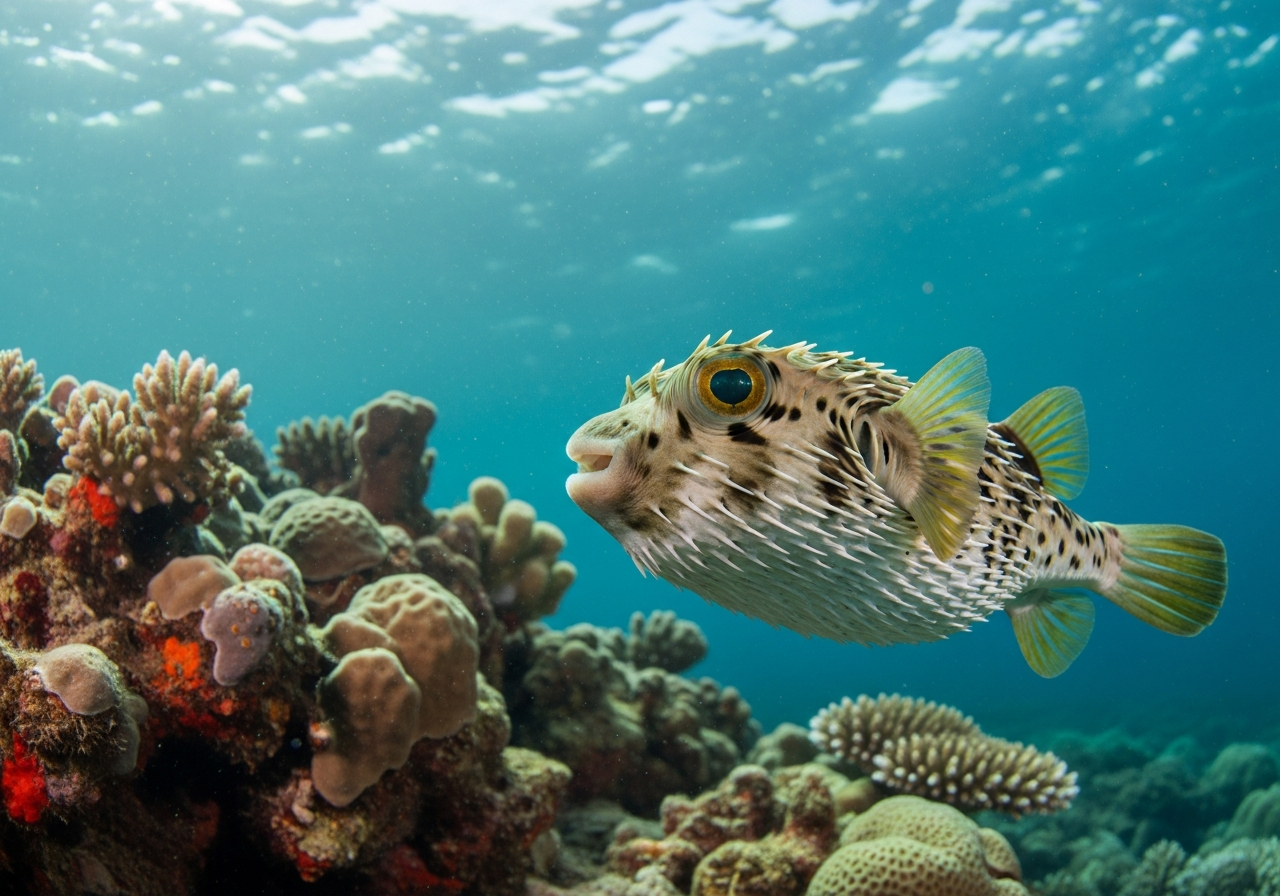
Pufferfish are a family of fish famous for inflating into a round, often spiny ball when threatened by gulping water to make themselves hard to swallow. Many species also contain a powerful toxin called tetrodotoxin, which makes them one of the most poisonous animals in the sea. Despite this, carefully prepared pufferfish, known as fugu, is eaten as a delicacy in Japan.
Pufferfish facts at a glance
| Scientific name | Tetraodontidae (family) |
|---|---|
| Diet | Carnivore / omnivore |
| Habitat | Tropical and subtropical seas, some freshwater |
| Lifespan | Around 10 years for many species |
| Length | 2.5 cm to over 60 cm by species |
| Top speed | Slow, maneuverable swimmer |
| Conservation status | Varies by species (most Least Concern) |
| Kingdom | Animalia |
|---|---|
| Phylum | Chordata |
| Class | Actinopterygii |
| Order | Tetraodontiformes |
| Family | Tetraodontidae |
Inflating defense
When threatened, a pufferfish rapidly swallows water, or sometimes air, to swell into a round ball several times its normal size. This makes it awkward to bite and, in spiny species, presents a wall of sharp spines. Inflating is stressful and is used only as a last resort when the fish cannot escape.
A potent toxin
Many pufferfish carry tetrodotoxin, a poison far more potent than cyanide that the fish accumulate from their diet and gut bacteria. It is concentrated in organs such as the liver, ovaries, and skin, and there is no antidote. This chemical defense makes most predators avoid them entirely.
Diet and behavior
Pufferfish have strong, beak-like fused teeth that keep growing and are used to crush hard-shelled prey such as clams, mussels, crabs, and snails. Some also eat algae and invertebrates. They are generally slow swimmers but are very maneuverable, steering precisely with their fins to hover and dart.
Pufferfish and people
In Japan, pufferfish prepared as fugu is a prized but risky delicacy that only licensed chefs are allowed to serve, because mishandling the toxic organs can be fatal. Smaller freshwater and marine puffers are also kept by experienced aquarium hobbyists. Most pufferfish species are listed as Least Concern, though some face pressure from fishing and habitat loss.
Frequently asked questions about the Pufferfish
Why do pufferfish puff up?
Pufferfish inflate by gulping water to turn themselves into a large, round, hard-to-swallow ball when a predator threatens them. In spiny species this also exposes sharp spines for extra protection.
Are pufferfish poisonous?
Many pufferfish contain tetrodotoxin, a powerful poison with no known antidote, concentrated in organs like the liver and ovaries. This makes them one of the most poisonous animals in the ocean.
Can you eat pufferfish?
Yes, but only when prepared by trained, licensed chefs. In Japan the dish is called fugu, and the toxic organs must be removed precisely because eating them can be deadly.
What do pufferfish eat?
Pufferfish use strong, beak-like teeth to crush hard-shelled prey such as clams, crabs, mussels, and snails. Some species also feed on algae and other small invertebrates.
How big do pufferfish get?
Pufferfish vary widely by species, from tiny puffers just a few centimeters long to species that exceed 60 cm (24 in) in length.