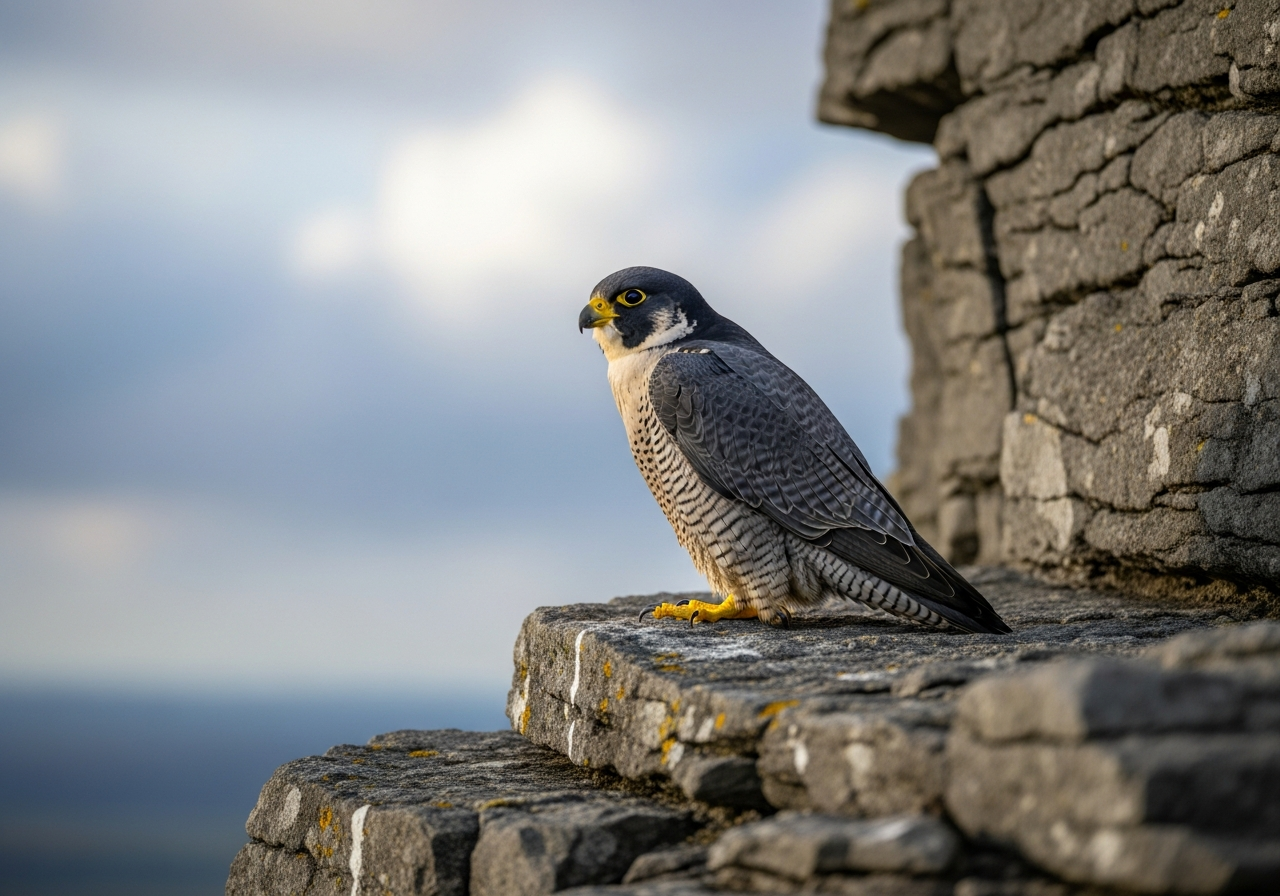
Peregrine Falcon
Falco peregrinus
Quick answer
The peregrine falcon is a crow-sized bird of prey famous as the fastest animal in the world, reaching over 380 km/h (240 mph) in its hunting dive. Found on every continent except Antarctica, it preys mainly on other birds, striking them in mid-air. Once endangered by the pesticide DDT, peregrines have made a remarkable recovery and now even nest on city skyscrapers.
Peregrine Falcon facts at a glance
| Scientific name | Falco peregrinus |
|---|---|
| Diet | Carnivore (mainly birds) |
| Habitat | Cliffs, coasts, open country, and cities |
| Lifespan | Up to 15 years in the wild |
| Wingspan | 0.9–1.1 m (3–3.6 ft) |
| Top speed | Over 380 km/h (240 mph) in a dive |
| Conservation status | Least Concern (IUCN) |
| Kingdom | Animalia |
|---|---|
| Phylum | Chordata |
| Class | Aves |
| Order | Falconiformes |
| Family | Falconidae |
| Genus | Falco |
Where it lives
Found on every continent except Antarctica, from Arctic cliffs to tropical coasts and modern cities.
The record-breaking dive
The peregrine falcon is the fastest member of the animal kingdom. When hunting, it climbs to a great height and then folds its wings into a steep dive called a stoop, reaching speeds of more than 380 km/h (240 mph). Special baffles in its nostrils let it breathe at such speeds, and a clear third eyelid protects and cleans its eyes mid-dive.
Hunting on the wing
Peregrines hunt mainly other birds, from pigeons and ducks to songbirds, almost always catching them in flight. The falcon usually strikes its prey with a clenched foot at high speed, stunning or killing it on impact, then circles back to catch the falling bird. Its eyesight is extraordinary, able to spot prey from many kilometers away.
Habitat and city life
Peregrine falcons live on every continent except Antarctica, one of the most widespread birds in the world. They traditionally nest on cliffs and rocky ledges, but many have adapted to cities, where tall buildings and bridges mimic cliffs and pigeons provide abundant food. Urban peregrines are now a common and welcome sight in many large cities.
Decline and recovery
In the mid-20th century, the pesticide DDT caused peregrine eggshells to thin and break, and populations crashed across North America and Europe. After DDT was banned and captive-bred birds were released, the species recovered dramatically, becoming a celebrated success story for conservation and the power of reversing environmental harm.
Frequently asked questions about the Peregrine Falcon
How fast can a peregrine falcon fly?
In level flight peregrines reach around 65 to 95 km/h (40 to 60 mph), but in a hunting dive, or stoop, they exceed 380 km/h (240 mph), making them the fastest animals on Earth.
What do peregrine falcons eat?
Peregrines are carnivores that feed almost entirely on other birds, such as pigeons, doves, ducks, and songbirds, which they usually catch in mid-air during a high-speed dive.
Why do peregrine falcons live in cities?
Tall buildings and bridges resemble the cliffs peregrines naturally nest on, and cities offer plentiful prey like pigeons. As a result many peregrines now thrive in urban areas around the world.
How did peregrine falcons recover from near extinction?
The pesticide DDT once devastated peregrines by thinning their eggshells. After DDT was banned and captive-bred birds were released into the wild, populations rebounded strongly in one of conservation's great success stories.
How does a peregrine falcon survive its high-speed dives?
Bony baffles in its nostrils slow the rushing air so it can breathe, and a transparent third eyelid protects and moistens its eyes, letting the falcon see and breathe even at extreme speeds.
How long do peregrine falcons live?
Wild peregrine falcons typically live up to about 15 years, though many die young. Birds in captivity or protected urban sites can live longer.