Atlantic Puffin
Fratercula arctica
Quick answer
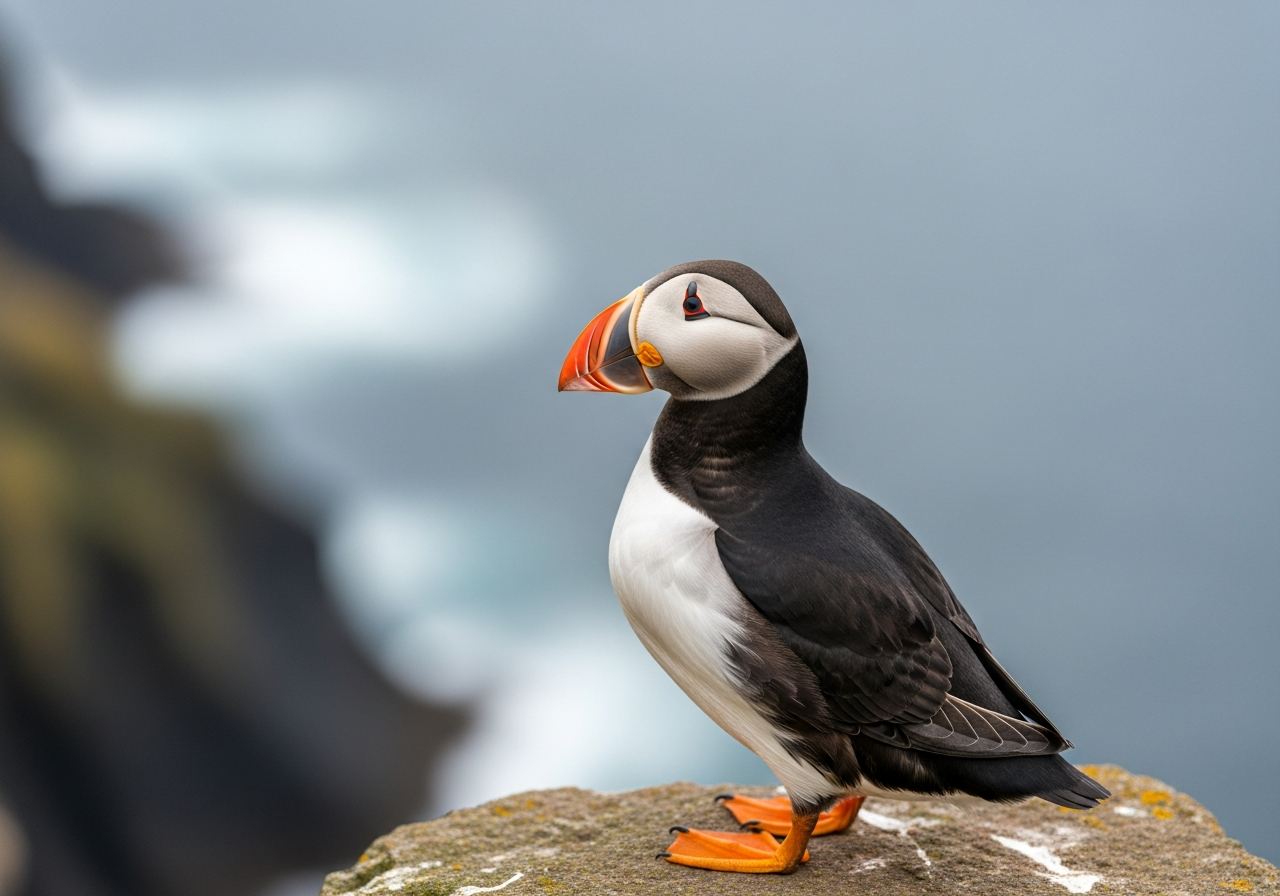
The Atlantic puffin is a small seabird of the North Atlantic, famous for its brightly colored bill during the breeding season, which gives it the nickname "sea parrot." It spends most of its life at sea, diving for fish, and comes ashore on cliffs and islands only to breed. Puffins can carry many fish in their bills at once and may live 20 years or more.
Atlantic Puffin facts at a glance
| Scientific name | Fratercula arctica |
|---|---|
| Diet | Carnivore (small fish) |
| Habitat | Open ocean; coastal cliffs to breed |
| Lifespan | 20+ years |
| Weight | 300–500 g (0.7–1.1 lb) |
| Top speed | Up to 88 km/h (55 mph) in flight |
| Conservation status | Vulnerable (IUCN) |
| Kingdom | Animalia |
|---|---|
| Phylum | Chordata |
| Class | Aves |
| Order | Charadriiformes |
| Family | Alcidae |
| Genus | Fratercula |
Where it lives
The open North Atlantic, breeding on coastal cliffs and islands from Canada to Norway.
Behavior and flight
Atlantic puffins are strong but frantic fliers, beating their small wings up to 400 times a minute to stay aloft. Those same wings double as flippers underwater, letting them swim down to catch fish. The bright colors of the bill develop for the breeding season and fade to a duller grey in winter at sea.
Diet and feeding
Puffins feed mainly on small fish such as sand eels, herring, and capelin, which they catch by diving and pursuing underwater. A puffin can hold many small fish crosswise in its bill at once, thanks to a hinged jaw and a raspy tongue, allowing it to carry a full load back to its chick. Their breeding success depends heavily on healthy fish stocks.
Habitat and breeding
Atlantic puffins spend most of the year out on the open ocean, coming ashore only to breed in large colonies on coastal cliffs and offshore islands. They nest in burrows dug into turf or among rocks, where a single chick is raised each season. Major colonies are found in Iceland, Norway, the British Isles, and eastern North America.
Conservation
The Atlantic puffin is listed as Vulnerable, with declines in parts of its range linked to overfishing of its prey, warming seas shifting fish distributions, and introduced predators on some islands. Protecting nesting islands and managing fisheries are key to their recovery. Some colonies have been re-established through dedicated restoration projects.
Frequently asked questions about the Atlantic Puffin
Why are puffins called sea parrots?
The nickname comes from their large, brightly colored bills during the breeding season, which are striped orange, red, and blue and resemble a parrot's beak. The colors fade after breeding.
What do puffins eat?
Puffins eat small fish such as sand eels, herring, and capelin, which they catch by diving underwater. They can carry many fish crosswise in their bills at once to feed their chick.
Can puffins fly?
Yes. Puffins are capable fliers, beating their wings extremely fast to stay airborne, and they also use those wings to swim underwater when hunting fish.
Where do puffins live?
Atlantic puffins live across the North Atlantic, spending most of the year at sea and coming ashore to breed on cliffs and islands in places like Iceland, Norway, Britain, and eastern Canada.
How long do puffins live?
Atlantic puffins often live 20 years or more, and some banded birds have exceeded 30 years. They are slow to mature, usually breeding for the first time at around five years old.
Are puffins endangered?
The Atlantic puffin is listed as Vulnerable. Overfishing, warming oceans, and introduced predators on nesting islands have caused declines in parts of its range.