Western Diamondback Rattlesnake
Crotalus atrox
Quick answer
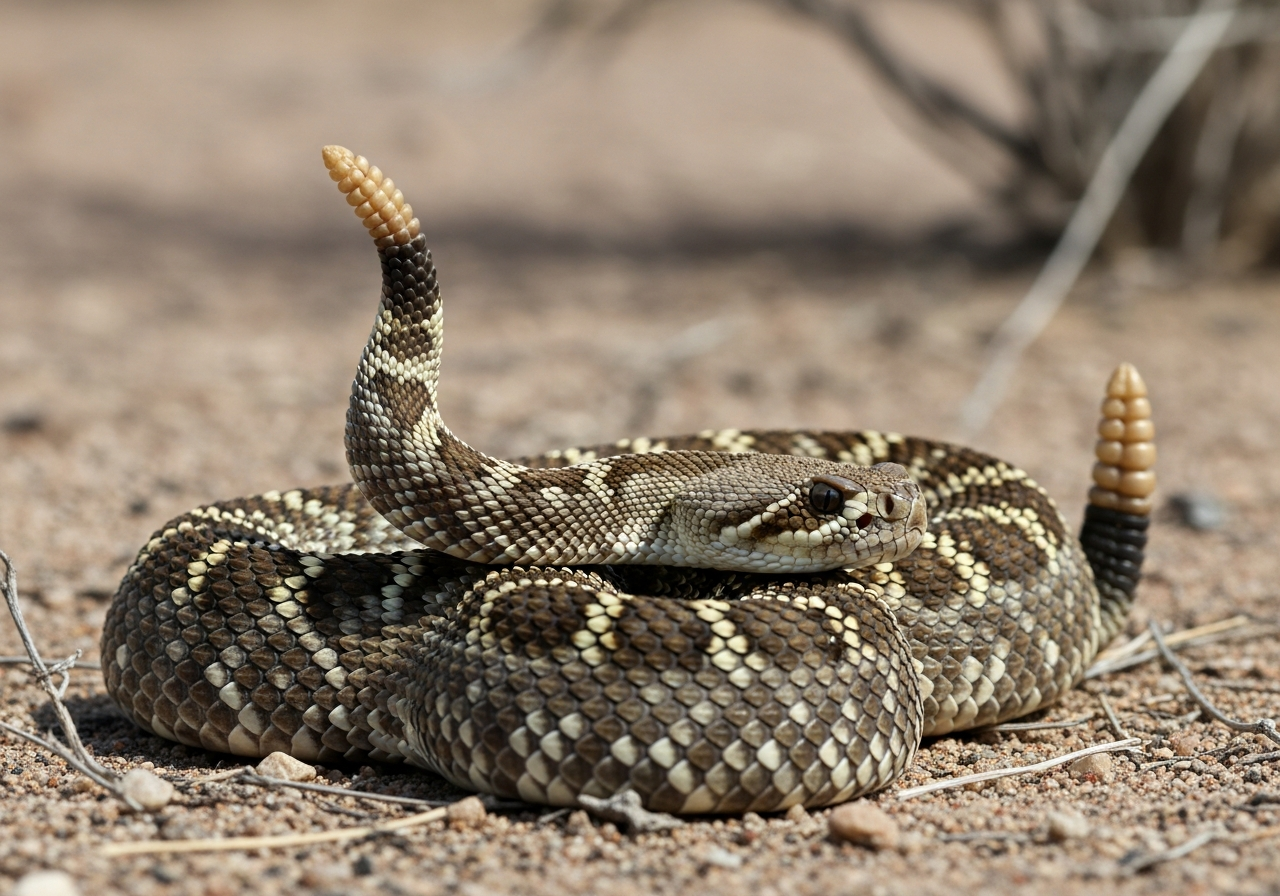
The western diamondback rattlesnake is a large venomous pit viper of the deserts and scrublands of the southwestern United States and northern Mexico. It is named for the diamond pattern along its back and the rattle on its tail, which it shakes as a warning. Its venom is medically significant, but bites are rarely fatal when treated; wild individuals typically live around 15 to 20 years.
Western Diamondback Rattlesnake facts at a glance
| Scientific name | Crotalus atrox |
|---|---|
| Diet | Carnivore |
| Habitat | Deserts, scrubland, and rocky slopes |
| Lifespan | 15–20 years in the wild |
| Length | 1–1.5 m (3–5 ft) |
| Top speed | Up to 8 km/h (5 mph) |
| Conservation status | Least Concern (IUCN) |
| Kingdom | Animalia |
|---|---|
| Phylum | Chordata |
| Class | Reptilia |
| Order | Squamata |
| Family | Viperidae |
| Genus | Crotalus |
Where it lives
Deserts and scrublands of the southwestern United States, including Texas and Arizona, and into northern Mexico.
Behavior and the rattle
The rattle is made of loose, interlocking segments of keratin that click together when the snake vibrates its tail, producing the familiar buzzing warning. A new segment is added each time the snake sheds its skin, so the rattle grows over time. The snake uses this signal to warn larger animals away rather than wasting venom in defense.
Diet and hunting
Western diamondbacks are ambush predators that feed mainly on rodents, rabbits, birds, and lizards. Heat-sensing pits between the eyes and nostrils let them detect warm-blooded prey in darkness, and they strike quickly to inject venom before tracking the animal down. The venom both subdues prey and begins breaking down tissue for digestion.
Habitat and range
This species ranges across the southwestern United States, including Texas, Arizona, and New Mexico, and into northern Mexico. It favors dry, open country such as deserts, grasslands, rocky canyons, and scrub. During cold weather it shelters in burrows and rock crevices, sometimes gathering with other snakes.
Venom and safety
The venom of the western diamondback is medically significant and can cause severe pain, swelling, and tissue damage. Bites are a serious emergency, but deaths are uncommon when antivenom and medical care are available. Most bites happen when snakes are accidentally stepped on or deliberately handled, so giving them space is the best protection.
Frequently asked questions about the Western Diamondback Rattlesnake
How dangerous is a western diamondback rattlesnake?
Its venom is medically significant and a bite is a genuine emergency that can cause severe pain, swelling, and tissue damage. With prompt antivenom and medical care, however, deaths are uncommon.
Why do rattlesnakes rattle?
Rattlesnakes shake their tail to produce a buzzing sound that warns larger animals to keep away. It is a defensive signal that lets the snake avoid a costly confrontation rather than striking.
What do rattlesnakes eat?
Western diamondbacks are carnivores that mainly eat rodents, rabbits, birds, and lizards. They ambush prey and use venom to subdue it before swallowing it whole.
How long do rattlesnakes live?
Western diamondback rattlesnakes typically live around 15 to 20 years in the wild, and they can live longer in captivity with consistent food and shelter.
Does a rattle tell you the snake's age?
Not reliably. A new rattle segment is added with each shed, and snakes shed more than once a year and also lose segments, so the number of segments does not give an accurate age.
What should you do if you see a rattlesnake?
Stop, stay calm, and slowly back away to give the snake plenty of room. Most bites happen when people try to handle or kill a snake, so the safest response is to leave it alone.