Image sourcing: see credits & licences
Quick answer
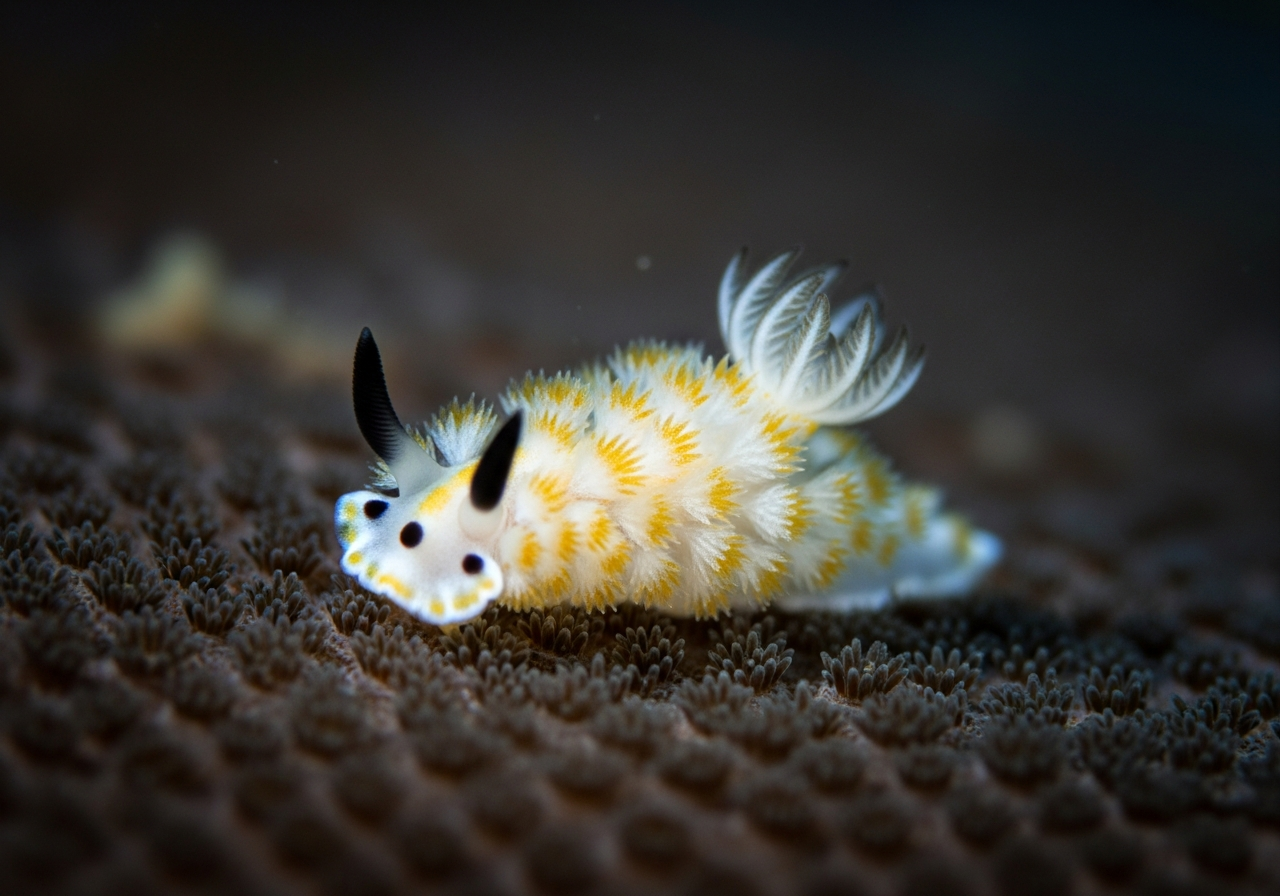
The sea bunny (Jorunna parva) is a tiny sea slug, a type of nudibranch, that grows to just 1 to 2.5 cm long. It lives on shallow reefs and rocky seabeds across the western Pacific and Indian Oceans, where it crawls slowly over the bottom feeding on sponges. Its fuzzy black-speckled body and two upright rhinophores give it an uncanny resemblance to a miniature rabbit. Most live only about a year.
Top questions about the Sea Bunny
Sea Bunny facts at a glance
- Weight 1 g
- Length 3 cm
- Top speed 0 km/h
- Lifespan 1 years
| Scientific name | Jorunna parva |
|---|---|
| Diet | Carnivore (sponges) |
| Habitat | Shallow reefs and rocky seabeds |
| Lifespan | Around 1 year (typical of nudibranchs) |
| Length | Usually 1–2.5 cm (under 1 in) |
| Range | Western Pacific and Indian Oceans |
| Conservation status | Least Concern |
| Kingdom | Animalia |
|---|---|
| Phylum | Mollusca |
| Class | Gastropoda |
| Order | Nudibranchia |
| Family | Discodorididae |
| Genus | Jorunna |
Where it lives
The sea bunny (Jorunna parva) is native to Shallow reefs and rocky seabeds in the western Pacific and Indian Oceans, including Japan and the Philippines. — recorded across Asia, Oceans in this guide’s range summary.
For occurrence records, see GBIF species search and sources below.
How big is a sea bunny?
An adult sea bunny measures 3 cm long — about 1% of the height of an average adult person (1.73 m) — and weighs around 1 g, a small fraction of an average adult’s body weight (70 kg).
Length vs an average adult’s height (to scale)
What is a baby sea bunny called?
Baby name
A baby Sea Bunny is called a veliger.
Explore more animal collective nouns and baby animal names .
What the sea bunny actually is
Despite the cute nickname, the sea bunny is not a mammal but a nudibranch, a shell-less marine snail known as a sea slug. It belongs to the dorid group of nudibranchs and rarely exceeds 2.5 cm in length. The 'ears' that make it look rabbit-like are actually rhinophores, sensory organs it uses to detect chemicals in the water. The 'fur' is a dense covering of tiny bristle-like structures called caryophyllidia scattered across its back.
How it moves and senses the world
The sea bunny has no fins and cannot swim in any meaningful sense; it crawls slowly along the seabed on a muscular foot, gliding over sponges and rock at a fraction of a centimetre per second. Its two rhinophores work like chemical antennae, sampling the water to locate food and potential mates. A feathery gill plume sits toward the rear of the body and handles breathing. Because it moves so little and so slowly, it relies on chemical defences rather than speed to survive.
Diet and chemical defence
Sea bunnies are carnivores that graze almost exclusively on sponges. As they feed, they absorb toxic compounds from their prey and store these chemicals in their own tissues, making themselves distasteful or poisonous to would-be predators. Their bright colouring is a warning signal advertising that toxicity. This strategy of borrowing defences from their food is common across nudibranchs.
Where it lives
Jorunna parva is found in warm, shallow waters of the western Pacific and Indian Oceans, including reefs around Japan, the Philippines, and other parts of the Indo-Pacific. It favours shallow reefs and rocky seabeds where sponges are plentiful. Divers usually spot it in the same habitats where its food grows, tucked among rocks and coral rubble. It is a bottom-dweller and does not venture into open water.
Reproduction and short life
Like nearly all nudibranchs, sea bunnies are hermaphrodites, meaning each individual carries both male and female organs. When two meet, they can fertilise one another and both may lay eggs, which are deposited in delicate coiled ribbons on the seabed. Their lifespan is short, typically around a year, which is normal for small nudibranchs. This quick turnover means populations depend on frequent breeding.
How it became internet famous
The sea bunny shot to viral fame in 2015 when photographs circulated online showing its rabbit-like face and fuzzy body. Social media users were charmed by an animal that looked like a tiny bunny hopping across the reef, even though it is a slug that barely moves. That surge of attention introduced millions of people to nudibranchs for the first time. It remains listed as Least Concern and faces no notable conservation threat.
Dig deeper into the Sea Bunny
- Sea Bunny: Key Facts
Sea Bunnys (Jorunna parva) are invertebrates found across Asia. The tiny nudibranch that went viral for looking like a miniature rabbit.
- What Do Sea Bunnys Eat?
What sea bunnys eat: Carnivore (sponges), foraging style, and seasonal shifts in Shallow reefs and rocky seabeds.
- Where Do Sea Bunnys Live?
Where sea bunnys live: Shallow reefs and rocky seabeds, native range cues, and human overlap. Status Least Concern.
Explore the Sea Bunny
Related Invertebrates
Range & geography
Did you know? Sea Bunny facts
- The 'sea bunny' is Jorunna parva, a small dorid nudibranch (sea slug) found in the Indo-Pacific, typically 1–2.5 cm long.
- No. What looks like soft fur is caryophyllidia — firm, spiked sensory projections. They look soft in photographs but are not hair-like in texture.
- Sea bunnies are tiny — most individuals are between 1 and 2.5 cm long. They are easily overlooked on the reef despite their striking appearance.
- Practically, no. Nudibranchs have highly specialised diets and require specific sponge species that are extremely difficult to replicate in captivity. Most nudibranchs survive only briefly in aquariums even under expert care.
- Sea bunnies are found in the western Pacific and Indian Oceans, including waters around Japan, the Philippines, and other Indo-Pacific regions. They live on shallow reefs, rocky seabeds, and coral rubble where sponges grow.
- Conservation: Least Concern.
Diet & feeding
Sea Bunny feeds primarily as a carnivore (sponges). The sea bunny's fuzzy texture comes from caryophyllidia — clusters of minute, spiked sensory projections scattered across its back. These are not soft hair but firm sensory tissue that helps the animal detect environmental cues. The two 'bunny ears' are rhinophores, c
Adaptations
- The sea bunny's fuzzy texture comes from caryophyllidia — clusters of minute, spiked sensory projections scattered across its back. These are not soft hair but firm sensory tissue that helps the animal detect environmental cues. The two 'bunny ears' are rhinophores, chemosensory organs that detect dissolved chemicals in the water to help the animal find food and potential mates. Both features are common in nudibranchs, but in Jorunna parva they are particularly large and white, giving the animal its distinctive bunny-like silhouette.
- Nudibranchs (pronounced noo-dee-branks) are a group of soft-bodied, shell-less marine molluscs found throughout the world's oceans, from shallow reefs to the deep sea. The name means 'naked gills' and refers to their exposed gill structures. There are over 3,000 known species in a remarkable range of colours and shapes. Many are brightly coloured to warn predators that they are toxic or distasteful, a strategy called aposematism.
Behaviour & ecology
- The sea bunny's fuzzy texture comes from caryophyllidia — clusters of minute, spiked sensory projections scattered across its back. These are not soft hair but firm sensory tissue that helps the animal detect environmental cues. The two 'bunny ears' are rhinophores, chemosensory organs that detect dissolved chemicals in the water to help the animal find food and potential mates. Both features are common in nudibranchs, but in Jorunna parva they are particularly large and white, giving the animal its distinctive bunny-like silhouette.
- Nudibranchs (pronounced noo-dee-branks) are a group of soft-bodied, shell-less marine molluscs found throughout the world's oceans, from shallow reefs to the deep sea. The name means 'naked gills' and refers to their exposed gill structures. There are over 3,000 known species in a remarkable range of colours and shapes. Many are brightly coloured to warn predators that they are toxic or distasteful, a strategy called aposematism.
- The sea bunny grazes on sponges, which it scrapes from rocky and reef surfaces. Like many dorid nudibranchs, it can absorb and repurpose chemical defences from the sponges it eats, concentrating noxious compounds in its own skin. This makes it unpalatable to many predators, and its colouring may signal this toxicity to fish and other hunters in the area.
Communication
- Sea Bunny uses scent, posture, and vocal signals to mark territory and coordinate social behaviour.
- Communication intensity often peaks during breeding seasons and territorial disputes.
Habitat & range
Shallow reefs and rocky seabeds
Ecological role
Sea Bunny acts as a predator that helps regulate prey populations and maintain balance in shallow reefs and rocky seabeds.
Conservation status of the Sea Bunny
The sea bunny (Jorunna parva) is listed as Least Concern on the IUCN Red List. Least Concern (LC) is the IUCN's lowest-risk category, assigned to widespread, abundant species that have been evaluated and found not to be threatened. It does not mean a species faces no pressures — only that it is not currently at risk of extinction.
The sea bunny (Jorunna parva) is assessed on the IUCN Red List. Look up on the IUCN Red List .
Frequently asked questions about the Sea Bunny
Is a sea bunny a real animal?
Yes. The sea bunny is a genuine marine animal, a nudibranch or sea slug with the scientific name Jorunna parva. It is not related to actual rabbits; the resemblance comes from its fuzzy body and two upright rhinophores that look like ears.
How big is a sea bunny?
Sea bunnies are tiny, usually just 1 to 2.5 cm long, smaller than a coin. They weigh only a fraction of a gram, so they are easy to overlook on a reef.
What do sea bunnies eat?
Sea bunnies are carnivores that feed almost entirely on sponges. As they eat, they store toxic chemicals from the sponges in their own bodies, which makes them poisonous to predators.
Are sea bunnies poisonous to touch?
Sea bunnies carry toxins absorbed from the sponges they eat, which serve as a defence against predators. They are not aggressive and pose little risk if left undisturbed, but like all nudibranchs they are delicate and best observed rather than handled.
How long do sea bunnies live?
Sea bunnies have a very short life, typically around one year. This brief lifespan is normal for small nudibranchs, which grow, breed, and die within a single season or two.
Where do sea bunnies live?
They live on shallow reefs and rocky seabeds in the warm waters of the western Pacific and Indian Oceans, including areas around Japan and the Philippines. They stay on the bottom near the sponges they feed on.
What is a baby sea bunny called?
A baby Sea Bunny is called a veliger.
Sources & references
This guide is compiled and reviewed against established zoological and conservation references. Key sources for the Sea Bunny:
-
IUCN Red List of Threatened Species
Conservation status (Least Concern) reflects the IUCN Red List category for Jorunna parva.
-
iNaturalist — observations & photos
Search citizen-science observations and community IDs for Jorunna parva. Useful for range checks and recent sightings — not a substitute for formal Red List status.
-
GBIF — occurrence data
Global Biodiversity Information Facility species search for Jorunna parva. Explore published occurrence records used in range research.
- IUCN Red List — Jorunna parva.
Conservation status (Least Concern) and population trends.
- Animal Diversity Web — Jorunna parva. University of Michigan Museum of Zoology.
Life history, morphology, and range.
- Wikipedia — Sea Bunny.
General taxonomy and overview (cross-check primary sources).
-
Global Animal Guide editorial standards
How we research, source, review, and update every guide for accuracy.