Image sourcing: see credits & licences
Quick answer
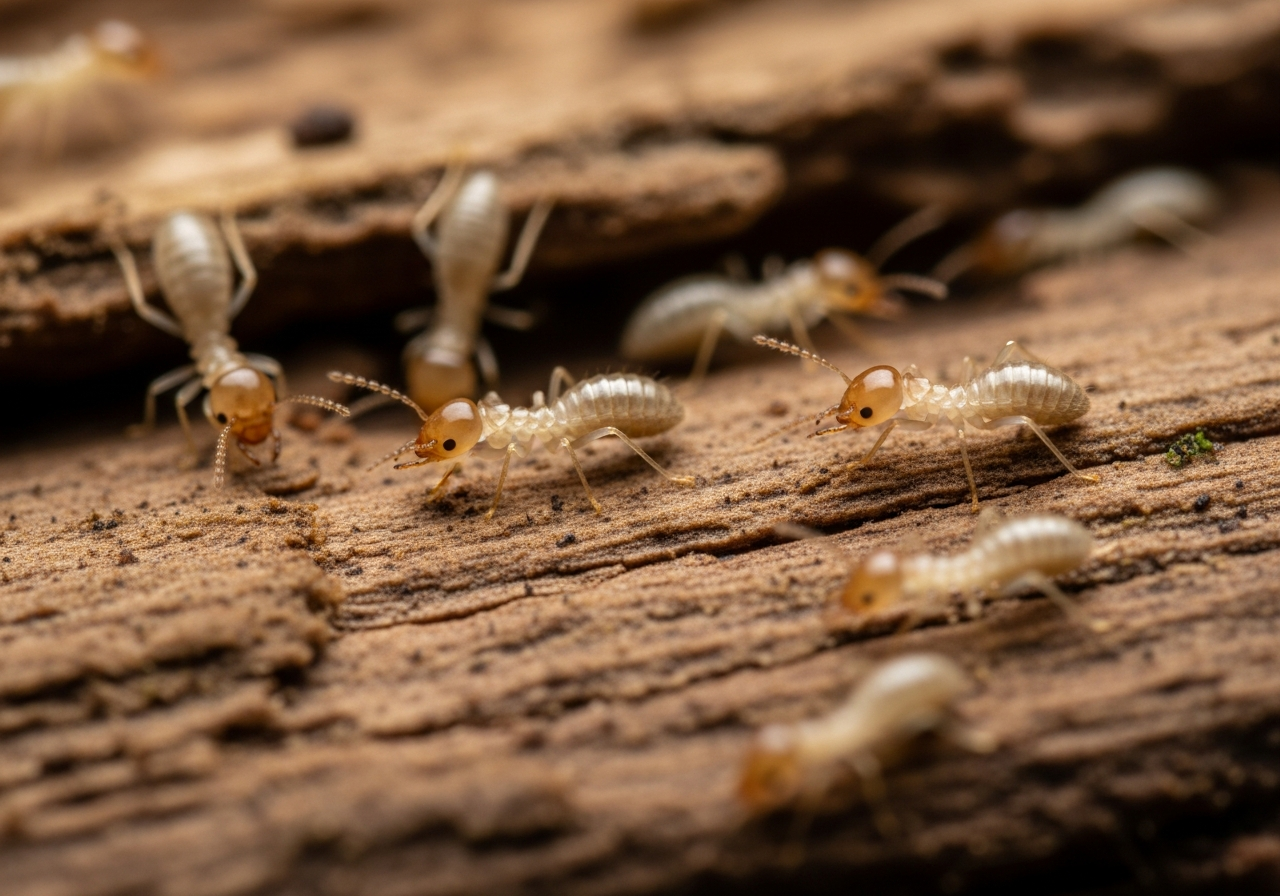
Termites are small social insects of the infraorder Isoptera that live in large colonies and feed on wood, leaf litter, and other plant matter. Ranging from 4 to 15 mm long, they build organised societies of workers, soldiers, and reproductive kings and queens, with colonies numbering from thousands to several million. Worker termites live only months, while a queen can survive for many years. They are vital recyclers of dead plant material in tropical and warm regions.
Top questions about the Termite
Termite facts at a glance
- Weight 0 g
- Length 1 cm
- Top speed 0 km/h
- Lifespan 1 years
| Scientific name | Infraorder Isoptera |
|---|---|
| Diet | Herbivore/detritivore (wood, leaf litter, plant matter) |
| Habitat | Soil and wood in tropical and warm-temperate regions |
| Lifespan | Workers months; queens many years |
| Length | 4–15 mm depending on species and caste |
| Colony size | Thousands to several million |
| Conservation status | Varies by species |
| Kingdom | Animalia |
|---|---|
| Phylum | Arthropoda |
| Class | Insecta |
| Order | Blattodea |
Where it lives
The termite (Isoptera) is native to Soil and wood in tropical and warm-temperate regions worldwide; ecosystem engineers that recycle dead plant matter. — recorded across Africa, Asia, South America, North America, Oceania in this guide’s range summary.
For occurrence records, see GBIF species search and sources below.
How big is a termite?
An adult termite measures 1 cm long — about 1% of the height of an average adult person (1.73 m) — and weighs around 0 g, a small fraction of an average adult’s body weight (70 kg).
Length vs an average adult’s height (to scale)
What is a group of termites called?
Group name (collective noun)
A group of Termites is called a colony. It is also known as a swarm or a nest.
Baby name
A baby Termite is called a larva. It may also be called a nymph.
Explore more animal collective nouns and baby animal names .
Life in a caste society
Termites are among the most social of all insects, organised into distinct castes that each do a specific job. Workers, which are blind and pale, gather food, tend the young, and build the nest, while soldiers with enlarged heads and jaws defend the colony against attackers such as ants. At the centre are the reproductives: a king and a long-lived queen who together produce all the colony's offspring. This division of labour lets a colony function almost like a single organism.
Feeding on wood and recycling
Termites eat cellulose from dead wood, leaf litter, and other plant matter, a diet few animals can digest. They manage it with the help of specialised microbes and protozoa in their guts that break the tough fibres down into usable nutrients. By consuming fallen timber and dead vegetation, termites return nutrients to the soil and are among the most important decomposers in tropical and warm-temperate ecosystems. This same appetite for wood is what makes some species serious pests of timber buildings.
Mounds and nests
Many termites are extraordinary builders, raising mounds of soil, saliva, and droppings that can tower several metres above ground. These structures are engineered with networks of tunnels and vents that circulate air and keep the nest at a steady temperature and humidity. Some species cultivate gardens of fungus inside the mound as an extra food source. The largest termite mounds are among the biggest structures built by any animal relative to its size.
The queen and colony growth
A termite colony is founded by a single mated pair, and the queen can live for many years, far longer than her tiny workers, who survive only months. As she matures her abdomen swells enormously and she may lay thousands of eggs a day, allowing a colony to grow to several million members over time. The king remains with her throughout her life, unlike in many other social insects. Colonies expand slowly at first, then rapidly once the workforce is large enough to support the queen.
Swarming and new colonies
Termites spread by producing winged reproductives, called alates, which leave the nest in large synchronised swarms, usually after rain. After a brief flight they shed their wings, pair up, and search for a place to start a colony of their own. Only a tiny fraction survive predators and drought to succeed, but those that do become the kings and queens of new nests. These swarming flights are the moment most people notice termites, which otherwise stay hidden inside wood and soil.
Dig deeper into the Termite
- Termite: Key Facts
Termites (Isoptera) are insects found across Africa, Asia, South America, North America, Oceania. The colony-building recycler of dead wood.
- What Do Termites Eat?
What termites eat: Herbivore/detritivore (wood, leaf litter, plant matter), foraging style, and seasonal shifts in Soil and wood in tropical and warm-temperate regions.
- Where Do Termites Live?
Where termites live: Soil and wood in tropical and warm-temperate regions, native range cues, and human overlap. Status Least Concern.
Explore the Termite
Related Insects
Did you know? Termite facts
- Termites are small, social insects that live in large colonies and feed mainly on dead plant material such as wood, leaf litter, and soil.
- Termites feed mainly on dead plant material, especially the cellulose in wood, leaf litter, and dry grass. Microbes in their guts or cultivated fungus help them digest this tough material.
- No. Only a small number of termite species damage buildings, while most live in soil or dead wood and play a valuable role recycling nutrients. The pest species, however, can cause serious structural damage.
- Worker termites usually live a few months to a couple of years, while queens are exceptionally long-lived, with some surviving for many years and laying eggs continuously.
- Termites recycle dead wood and plant litter, returning nutrients to the soil and aerating it through their tunneling. In many ecosystems they are among the most important decomposers.
- Conservation: Varies by species.
Diet & feeding
Termite feeds primarily as a herbivore/detritivore (wood, leaf litter, plant matter). Termites feed mainly on dead plant material, especially the cellulose in wood, leaf litter, and dry grass. Because cellulose is hard to digest, many termites rely on microbes living in their guts to break it down, while others cultiva
Adaptations
- Termites live in highly organized colonies divided into castes, with workers, soldiers, and a reproductive king and queen. Workers gather food, build and repair the nest, and care for the young, while soldiers with large heads or jaws defend against predators such as ants. A single colony can contain from a few thousand to several million individuals.
- Termites feed mainly on dead plant material, especially the cellulose in wood, leaf litter, and dry grass. Because cellulose is hard to digest, many termites rely on microbes living in their guts to break it down, while others cultivate fungus gardens for the same purpose. This ability lets them recycle huge amounts of dead plant matter.
Behaviour & ecology
- Termites live in highly organized colonies divided into castes, with workers, soldiers, and a reproductive king and queen. Workers gather food, build and repair the nest, and care for the young, while soldiers with large heads or jaws defend against predators such as ants. A single colony can contain from a few thousand to several million individuals.
- Termites feed mainly on dead plant material, especially the cellulose in wood, leaf litter, and dry grass. Because cellulose is hard to digest, many termites rely on microbes living in their guts to break it down, while others cultivate fungus gardens for the same purpose. This ability lets them recycle huge amounts of dead plant matter.
- By breaking down dead wood and plant litter, termites return nutrients to the soil and help shape entire ecosystems. Their tunneling aerates and mixes the soil, improving its ability to hold water, and some species build towering mounds that can stand for decades. In many tropical regions termites are among the most important decomposers.
Communication
- Termite uses scent, posture, and vocal signals to mark territory and coordinate social behaviour.
- Communication intensity often peaks during breeding seasons and territorial disputes.
Habitat & range
Soil and wood in tropical and warm-temperate regions
Ecological role
Termite shapes vegetation through grazing or browsing and serves as prey for larger predators where ranges overlap.
Conservation status of the Termite
The termite (Isoptera) is listed as Least Concern on the IUCN Red List. Least Concern (LC) is the IUCN's lowest-risk category, assigned to widespread, abundant species that have been evaluated and found not to be threatened. It does not mean a species faces no pressures — only that it is not currently at risk of extinction.
The termite (Isoptera) is assessed on the IUCN Red List. Look up on the IUCN Red List .
Frequently asked questions about the Termite
What do termites eat?
Termites eat cellulose from wood, leaf litter, and other dead plant matter. Because cellulose is hard to digest, they rely on microbes and protozoa in their guts to break it down, which lets them recycle material almost no other animal can use.
How long do termites live?
It depends on the caste. Worker termites usually live only a few months, while soldiers live somewhat longer. A queen, however, can survive for many years and is one of the longest-lived of all insects.
How big can a termite colony get?
Termite colonies range from a few thousand individuals to several million, depending on the species and the colony's age. A single long-lived queen laying thousands of eggs a day can build an enormous population over many years.
Are termites harmful?
Most termite species are harmless and play a valuable role recycling dead wood and plant matter. A minority, however, feed on the timber in buildings and can cause serious structural damage, which is why they are treated as pests in some regions.
What is the difference between termites and ants?
Although both are social insects, termites belong to the infraorder Isoptera and are more closely related to cockroaches, while ants are related to bees and wasps. Termites have straight antennae and a broad waist, whereas ants have elbowed antennae and a narrow, pinched waist.
Why do termites build mounds?
Termite mounds house and protect the colony, and their network of tunnels and vents keeps the nest cool, humid, and well ventilated. Some species also grow fungus gardens inside the mound as an additional food source.
What is a group of termites called?
A group of Termites is called a colony. It is also known as a swarm or a nest.
What is a baby termite called?
A baby Termite is called a larva. It may also be called a nymph.
Sources & references
This guide is compiled and reviewed against established zoological and conservation references. Key sources for the Termite:
-
IUCN Red List of Threatened Species
Conservation status (Least Concern) reflects the IUCN Red List category for Isoptera.
-
iNaturalist — observations & photos
Search citizen-science observations and community IDs for Isoptera. Useful for range checks and recent sightings — not a substitute for formal Red List status.
-
GBIF — occurrence data
Global Biodiversity Information Facility species search for Isoptera. Explore published occurrence records used in range research.
- IUCN Red List — Isoptera.
Conservation status (Least Concern) and population trends.
- Wikipedia — Termite.
General taxonomy and overview (cross-check primary sources).
-
Global Animal Guide editorial standards
How we research, source, review, and update every guide for accuracy.