Image sourcing: see credits & licences
Quick answer
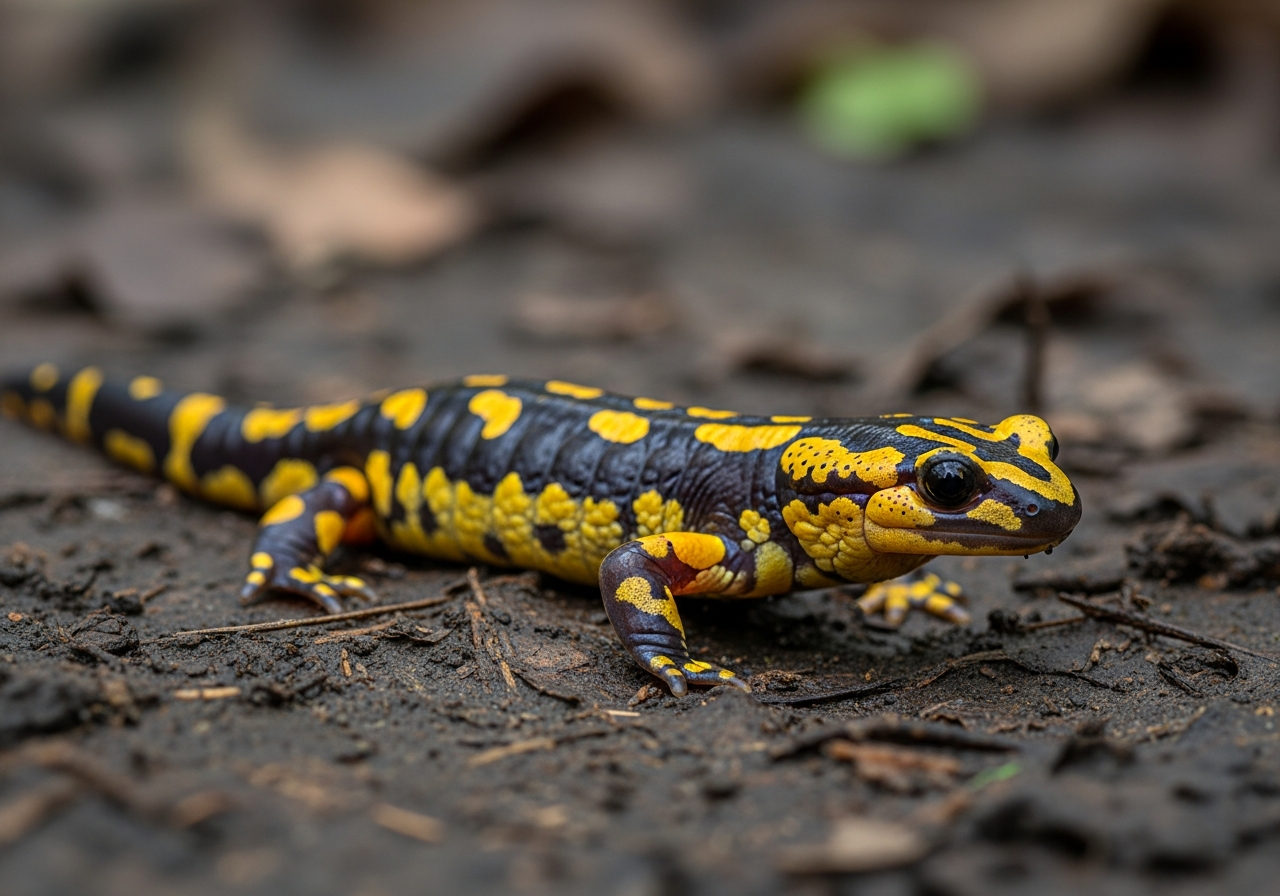
The tiger salamander is one of the largest land-dwelling salamanders in North America, named for the yellow blotches that stripe its dark body. It spends much of its life underground in burrows and returns to ponds to breed. Tiger salamanders can live 10 to 16 years.
Top questions about the Tiger Salamander
Tiger Salamander facts at a glance
- Weight 130 g
- Length 20 cm
- Top speed 4 km/h
- Lifespan 13 years
| Scientific name | Ambystoma tigrinum |
|---|---|
| Diet | Carnivore (worms, insects, small animals) |
| Habitat | Grassland, woodland, and farmland with ponds |
| Lifespan | 10–16 years |
| Weight | About 0.13 kg (4.6 oz) |
| Size | 15–30 cm (6–12 in) body length |
| Conservation status | Least Concern (IUCN) |
| Kingdom | Animalia |
|---|---|
| Phylum | Chordata |
| Class | Amphibia |
| Order | Urodela |
| Family | Ambystomatidae |
| Genus | Ambystoma |
Where it lives
The tiger salamander (Ambystoma tigrinum) is native to Grasslands, woodlands, and farmland across North America, from southern Canada through the United States into Mexico. — recorded across North America in this guide’s range summary.
For occurrence records, see GBIF species search and sources below.
How big is a tiger salamander?
An adult tiger salamander measures 20 cm long — about 12% of the height of an average adult person (1.73 m) — and weighs around 130 g, a small fraction of an average adult’s body weight (70 kg).
Length vs an average adult’s height (to scale)
What is a group of tiger salamanders called?
Group name (collective noun)
A group of Tiger Salamanders is called a congress.
Baby name
A baby Tiger Salamander is called a larva.
Explore more animal collective nouns and baby animal names .
Behavior and life underground
Tiger salamanders are powerful diggers that spend most of the year in burrows, sometimes more than half a meter deep, which protects them from heat, cold, and drought. They are largely nocturnal and emerge on rainy nights. Adults migrate to breeding ponds in early spring, often during the first warm rains.
Diet and feeding
They are voracious carnivores that eat earthworms, insects, slugs, and other invertebrates, and large adults may take small frogs, baby mice, or even smaller salamanders. Larvae are aquatic predators that feed on tiny invertebrates and, in crowded ponds, sometimes other larvae. Their broad diet helps them grow quickly.
Habitat and range
The tiger salamander ranges widely across North America, from southern Canada through much of the United States into Mexico. It favors grasslands, woodlands, and farmland with access to fishless ponds for breeding. Because it relies on temporary pools, it is sensitive to changes in water and soil.
Conservation
Overall the species is listed as Least Concern, but some local populations are declining from habitat loss, road mortality, and pollution. Certain regional subspecies are more threatened and receive special protection. Maintaining clean breeding ponds and connected habitat is key to its future.
Dig deeper into the Tiger Salamander
- How Long Do Tiger Salamanders Live?
Tiger Salamander lifespan is typically 10–16 years. What shortens or extends life, life stages, and status (Least Concern).
- What Do Tiger Salamanders Eat?
What tiger salamanders eat: Carnivore (worms, insects, small animals), foraging style, and seasonal shifts in Grassland, woodland, and farmland with ponds.
- Where Do Tiger Salamanders Live?
Where tiger salamanders live: Grassland, woodland, and farmland with ponds, native range cues, and human overlap. Status Least Concern.
Explore the Tiger Salamander
Related Amphibians
Range & geography
Did you know? Tiger Salamander facts
- The tiger salamander is one of the largest land-dwelling salamanders in North America, named for the yellow blotches that stripe its dark body.
- Tiger salamanders typically reach 15 to 30 cm (6 to 12 in) in length, making them one of the largest land-dwelling salamanders in North America.
- They are carnivores that eat earthworms, insects, and slugs, and large adults may even take small frogs, baby mice, or smaller salamanders.
- They live across much of North America in grasslands, woodlands, and farmland, spending most of their time in burrows and returning to ponds to breed.
- Tiger salamanders can live about 10 to 16 years, and well-cared-for individuals in captivity sometimes live longer.
- Conservation: Least Concern (IUCN).
Diet & feeding
Tiger Salamander feeds primarily as a carnivore (worms, insects, small animals). Tiger salamanders are powerful diggers that spend most of the year in burrows, sometimes more than half a meter deep, which protects them from heat, cold, and drought. They are largely nocturnal and emerge on rainy nights. Adults migrate t
Adaptations
- Tiger salamanders are powerful diggers that spend most of the year in burrows, sometimes more than half a meter deep, which protects them from heat, cold, and drought. They are largely nocturnal and emerge on rainy nights. Adults migrate to breeding ponds in early spring, often during the first warm rains.
- They are voracious carnivores that eat earthworms, insects, slugs, and other invertebrates, and large adults may take small frogs, baby mice, or even smaller salamanders. Larvae are aquatic predators that feed on tiny invertebrates and, in crowded ponds, sometimes other larvae. Their broad diet helps them grow quickly.
Behaviour & ecology
- Tiger salamanders are powerful diggers that spend most of the year in burrows, sometimes more than half a meter deep, which protects them from heat, cold, and drought. They are largely nocturnal and emerge on rainy nights. Adults migrate to breeding ponds in early spring, often during the first warm rains.
- They are voracious carnivores that eat earthworms, insects, slugs, and other invertebrates, and large adults may take small frogs, baby mice, or even smaller salamanders. Larvae are aquatic predators that feed on tiny invertebrates and, in crowded ponds, sometimes other larvae. Their broad diet helps them grow quickly.
- The tiger salamander ranges widely across North America, from southern Canada through much of the United States into Mexico. It favors grasslands, woodlands, and farmland with access to fishless ponds for breeding. Because it relies on temporary pools, it is sensitive to changes in water and soil.
Communication
- Tiger Salamander uses scent, posture, and vocal signals to mark territory and coordinate social behaviour.
- Communication intensity often peaks during breeding seasons and territorial disputes.
Habitat & range
Grassland, woodland, and farmland with ponds
Ecological role
Tiger Salamander acts as a predator that helps regulate prey populations and maintain balance in grassland, woodland, and farmland with ponds.
Conservation status of the Tiger Salamander
The tiger salamander (Ambystoma tigrinum) is listed as Least Concern on the IUCN Red List. Least Concern (LC) is the IUCN's lowest-risk category, assigned to widespread, abundant species that have been evaluated and found not to be threatened. It does not mean a species faces no pressures — only that it is not currently at risk of extinction.
The tiger salamander (Ambystoma tigrinum) is assessed on the IUCN Red List. Look up on the IUCN Red List .
Frequently asked questions about the Tiger Salamander
How big do tiger salamanders get?
Tiger salamanders typically reach 15 to 30 cm (6 to 12 in) in length, making them one of the largest land-dwelling salamanders in North America.
What do tiger salamanders eat?
They are carnivores that eat earthworms, insects, and slugs, and large adults may even take small frogs, baby mice, or smaller salamanders.
Where do tiger salamanders live?
They live across much of North America in grasslands, woodlands, and farmland, spending most of their time in burrows and returning to ponds to breed.
How long do tiger salamanders live?
Tiger salamanders can live about 10 to 16 years, and well-cared-for individuals in captivity sometimes live longer.
Are tiger salamanders good pets?
They are sometimes kept as pets and can be hardy, but they need a cool, humid enclosure with deep substrate for burrowing. Wild populations should never be collected, and captive-bred animals are the responsible choice.
What is a group of tiger salamanders called?
A group of Tiger Salamanders is called a congress.
What is a baby tiger salamander called?
A baby Tiger Salamander is called a larva.
Sources & references
This guide is compiled and reviewed against established zoological and conservation references. Key sources for the Tiger Salamander:
-
IUCN Red List of Threatened Species
Conservation status (Least Concern) reflects the IUCN Red List category for Ambystoma tigrinum.
-
iNaturalist — observations & photos
Search citizen-science observations and community IDs for Ambystoma tigrinum. Useful for range checks and recent sightings — not a substitute for formal Red List status.
-
GBIF — occurrence data
Global Biodiversity Information Facility species search for Ambystoma tigrinum. Explore published occurrence records used in range research.
- IUCN Red List — Ambystoma tigrinum.
Conservation status (Least Concern) and population trends.
- Animal Diversity Web — Ambystoma tigrinum. University of Michigan Museum of Zoology.
Life history, morphology, and range.
- Wikipedia — Tiger Salamander.
General taxonomy and overview (cross-check primary sources).
-
Global Animal Guide editorial standards
How we research, source, review, and update every guide for accuracy.