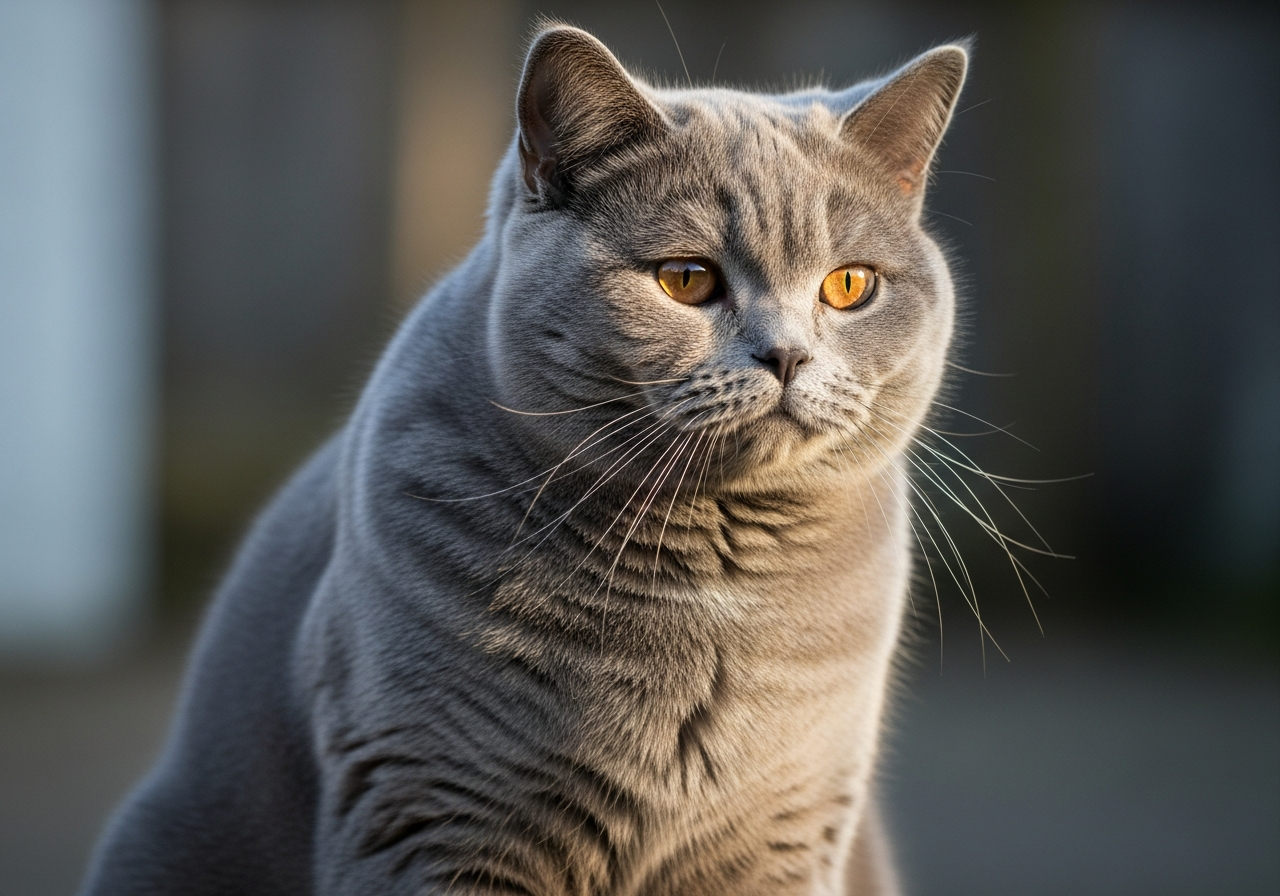
British Shorthair
Quick answer
The British Shorthair is a sturdy, round-faced cat with a dense, plush coat, best known in solid blue-grey. Calm, dignified, and easygoing, it is an undemanding, affectionate companion that bonds quietly with its family.
British Shorthair at a glance
| Origin | United Kingdom |
|---|---|
| Size | Medium (4–8 kg) |
| Weight | 4–8 kg (9–18 lb) |
| Lifespan | 12–17 years |
| Coat | Short, dense, plush coat; brush weekly |
| Temperament | Calm, easygoing, loyal |
| Good with | Families, busy owners, calm multi-pet homes |
History of the British Shorthair
The British Shorthair descends from domestic cats brought to Britain by the Romans, later developed into a hardy, robust working cat. In the 1800s breeder Harrison Weir championed it at Britain's earliest cat shows, refining its rounded look and dense coat. The breed nearly vanished during the World Wars and was rebuilt by crossing with Persians and other cats. Today the plush blue-grey 'British Blue' remains the most iconic color of one of Britain's most beloved breeds.
Interesting facts about the British Shorthair
- The British Shorthair is thought to have inspired the Cheshire Cat in 'Alice in Wonderland.'
- Its dense, plush coat is famously thick and stands away from the body.
- The blue-grey color is so iconic the breed is often called the 'British Blue.'
- They tend to be undemanding and prefer sitting beside owners over being carried.
If a cat of your own isn't practical right now, you can adopt a cat symbolically through World Animal Rescue Network — it funds rescue and care for community cats.
Common health issues in the British Shorthair and how to help
Like all cat breeds, the British Shorthair can be more prone to a few specific health conditions. Knowing the early signs helps you act quickly — always consult a qualified vet for diagnosis and treatment.
Hypertrophic cardiomyopathy (HCM)
What it is: HCM is a heart condition that thickens the heart muscle and may not show obvious early signs.
How to help: A vet can screen with a heart scan and manage it with medication when needed; reputable breeders test for it.
Obesity
What it is: British Shorthairs are calm and food-loving, so they can put on weight easily.
How to help: Measured meals and regular play help, and a vet can set a healthy weight target.
Polycystic kidney disease (PKD)
What it is: PKD is an inherited condition where kidney cysts can affect function over time.
How to help: A vet can screen for it, and genetic testing of breeding cats helps prevent it; early detection supports kidney health.
This is general information for owners, not veterinary advice. If you are worried about your cat's health, contact your vet.
Frequently asked questions about the British Shorthair
Are British Shorthairs affectionate?
British Shorthairs are affectionate but independent. They enjoy being near their family and may follow you around, yet they often prefer sitting beside you rather than being picked up or carried.
Do British Shorthairs get along with other pets?
Yes. Their calm, even temperament makes them easygoing with other cats and dogs. They are rarely territorial and adapt well to multi-pet households when introduced gradually.
How much grooming does a British Shorthair need?
Their short but dense coat needs weekly brushing, increasing during seasonal shedding. Regular grooming helps manage the thick undercoat and reduces hairballs.