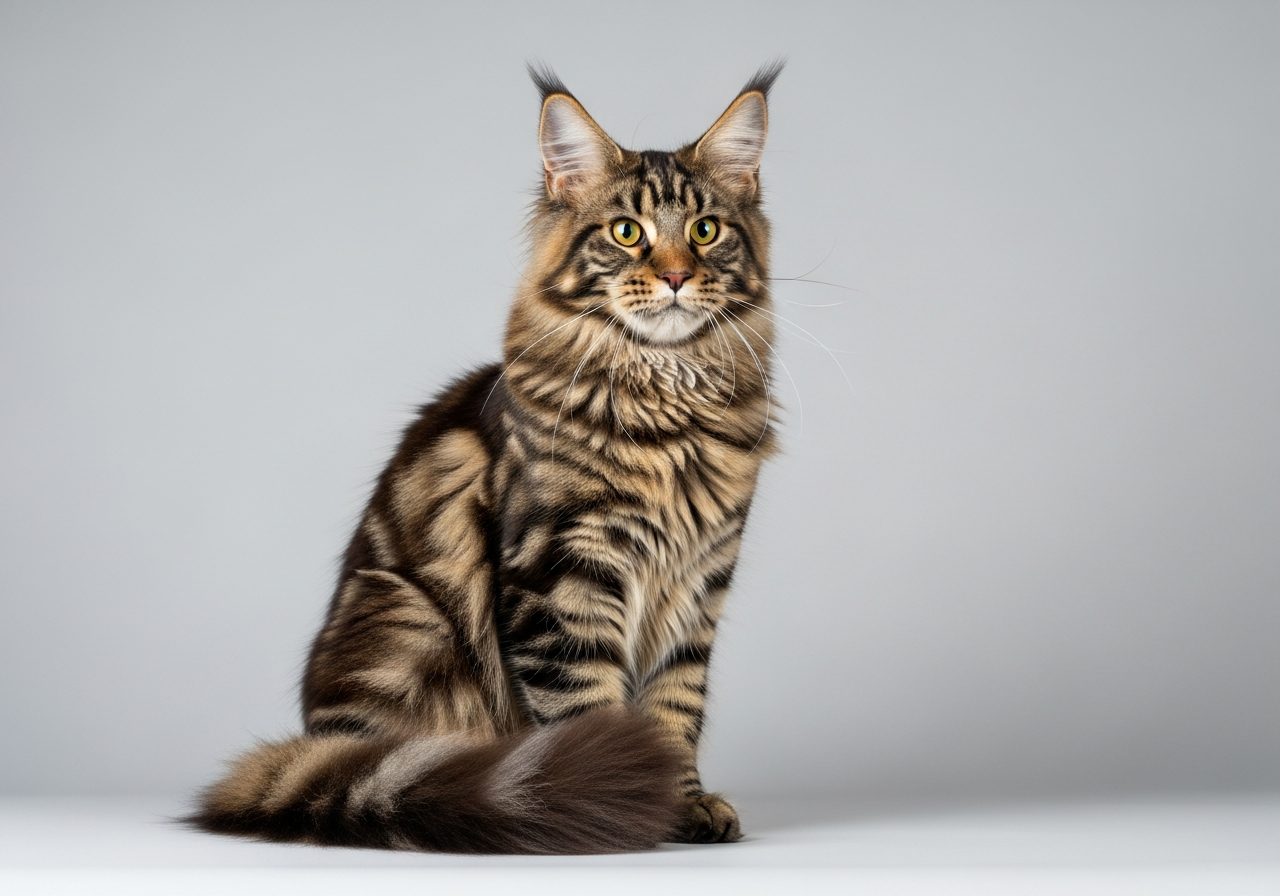
Maine Coon
Quick answer
The Maine Coon is one of the largest domestic cat breeds, known as a 'gentle giant' for its big size, shaggy water-resistant coat, tufted ears, bushy tail, and friendly, dog-like, people-loving personality.
Maine Coon at a glance
| Origin | United States (Maine) |
|---|---|
| Size | Large (5–11 kg) |
| Weight | 5–11 kg (11–24 lb) |
| Lifespan | 12–15 years |
| Coat | Long, shaggy, water-resistant coat; needs weekly brushing |
| Temperament | Gentle, sociable, playful |
| Good with | Families, children, other pets, dog-friendly homes |
History of the Maine Coon
The Maine Coon developed naturally in the northeastern United States, where it became the official state cat of Maine. Adapted to harsh New England winters, it grew a thick, water-resistant coat, large paws, and a rugged frame. Folklore links it to longhaired cats brought by sailors. It was a popular farm and show cat in the late 1800s, faded in the early 1900s, then rebounded into one of the world's most beloved breeds.
Interesting facts about the Maine Coon
- Maine Coons are among the largest domestic cats, with some males exceeding 11 kilograms.
- Many Maine Coons enjoy water and may dip their paws or play in it.
- They are famous for chirping and trilling rather than typical meowing.
- The Maine Coon is the official state cat of Maine, USA.
Love cats but can't take one in? You can sponsor a cat welfare programme through World Animal Rescue Network, which helps community cats get food and veterinary care.
Common health issues in the Maine Coon and how to help
Like all cat breeds, the Maine Coon can be more prone to a few specific health conditions. Knowing the early signs helps you act quickly — always consult a qualified vet for diagnosis and treatment.
Hypertrophic cardiomyopathy (HCM)
What it is: HCM is a heart condition where the heart muscle thickens, and it can be present without obvious early signs.
How to help: A vet can screen for it with a heart scan and manage it with medication when needed; reputable breeders test their cats.
Hip dysplasia
What it is: As a large breed, Maine Coons can develop hip joint problems that cause stiffness or reduced activity.
How to help: A vet can assess the joints and advise on weight control and supportive care to keep them comfortable.
Spinal muscular atrophy
What it is: This inherited condition can cause muscle weakness and an unsteady gait in some Maine Coons.
How to help: A vet can help diagnose it, and genetic testing of breeding cats helps prevent it; affected cats often live comfortably indoors with support.
This is general information for owners, not veterinary advice. If you are worried about your cat's health, contact your vet.
Frequently asked questions about the Maine Coon
How big do Maine Coons get?
Maine Coons are one of the largest domestic breeds, with males typically weighing 6–11 kilograms and reaching up to a meter long including the tail. They grow slowly, often maturing fully around three to five years of age.
Are Maine Coons good family pets?
Yes. Maine Coons are gentle, sociable, and tolerant, earning the nickname 'gentle giant.' They generally get along well with children, dogs, and other cats, and enjoy being part of family activities.
Do Maine Coons require a lot of grooming?
Their long, shaggy coat needs brushing once or twice a week to prevent mats and tangles. Regular grooming during seasonal shedding helps reduce hairballs and keeps the coat healthy.