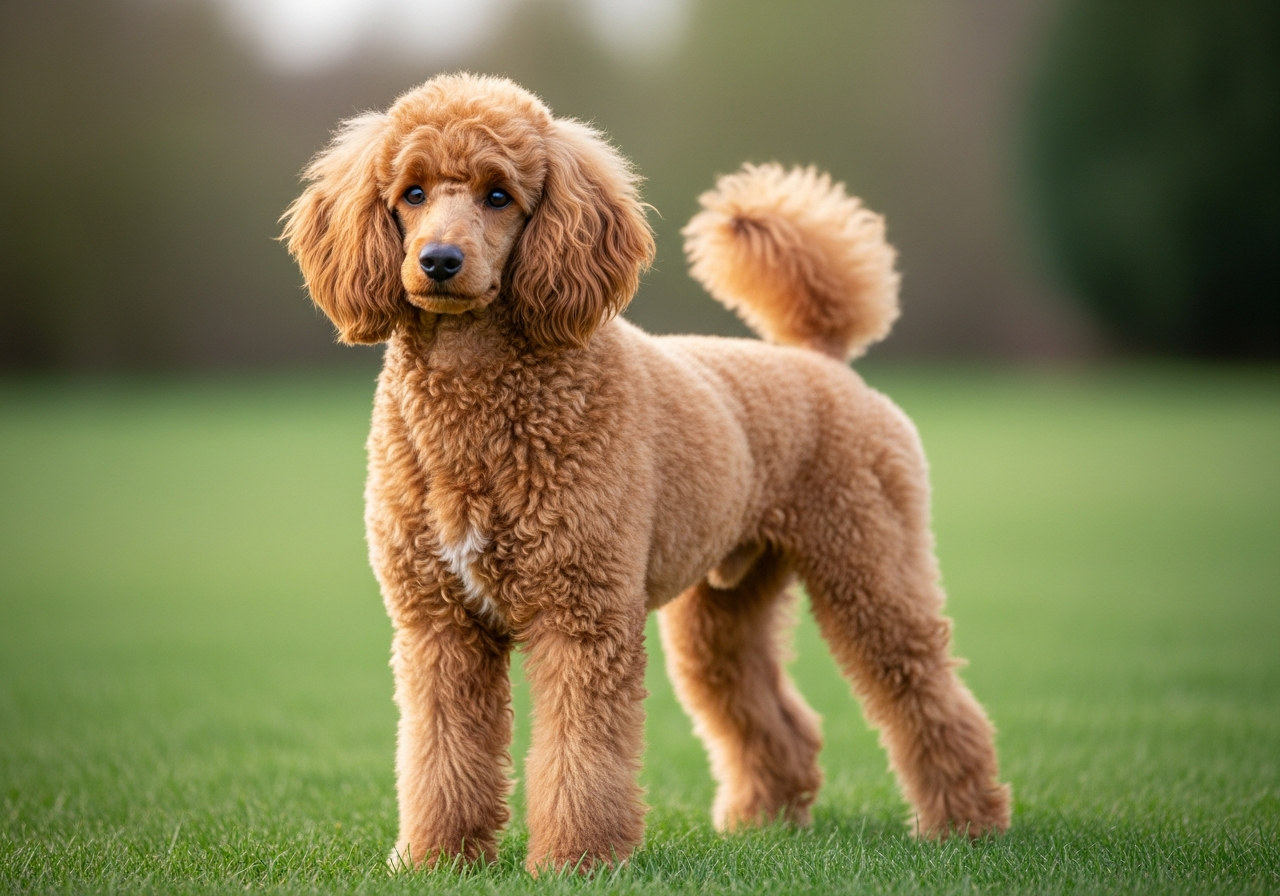
Poodle
Quick answer
The Poodle is a highly intelligent, elegant breed that comes in toy, miniature, and standard sizes. Known for a low-shedding curly coat and exceptional trainability, it suits allergy-conscious owners and excels in obedience and performance.
Poodle at a glance
| Origin | Germany and France |
|---|---|
| Size | Toy to Standard (3–32 kg) |
| Weight | 3–32 kg (6–70 lb) depending on size |
| Lifespan | 12–15 years |
| Coat | Dense curly low-shedding coat; needs regular clipping and grooming |
| Temperament | Intelligent, elegant, eager |
| Good with | Allergy-conscious owners, families, active and dog-sport homes |
History of the Poodle
The Poodle was developed as a water retriever, with its name derived from the German word pudel, meaning to splash. The Standard Poodle's elaborate show clip originated as a practical trim to protect joints and organs in cold water while freeing the legs for swimming. The breed flourished in France, where it became a national favorite and was bred down into miniature and toy sizes. Poodles later gained fame as performing and companion dogs across Europe.
Interesting facts about the Poodle
- Poodles were originally bred as water retrievers, not pampered show dogs.
- They come in three sizes: toy, miniature, and standard.
- Poodles are often ranked the second-most intelligent dog breed.
- Their fancy show clip began as a practical trim for swimming in cold water.
Love dogs but can't commit to ownership right now? You can sponsor a dog rescue programme through World Animal Rescue Network, which funds street-dog clinics and vaccination drives.
Common health issues in the Poodle and how to help
Like all dog breeds, the Poodle can be more prone to a few specific health conditions. Knowing the early signs helps you act quickly — always consult a qualified vet for diagnosis and treatment.
Progressive retinal atrophy
What it is: This inherited eye condition gradually reduces vision and can eventually lead to blindness, often first noticed as hesitancy in dim light.
How to help: A vet or eye specialist can diagnose it, and although there is no cure, dogs adapt well in a stable environment; genetic testing of breeding dogs helps prevent it.
Hip dysplasia
What it is: More common in Standard Poodles, this joint condition can cause stiffness or limping as the dog ages.
How to help: A vet can assess the joints and advise on weight control and suitable exercise; choosing health-tested lines reduces the risk.
Addison's disease
What it is: This hormonal condition can cause vague signs such as tiredness, poor appetite, or digestive upset that come and go.
How to help: A vet can diagnose it with blood tests and manage it effectively with ongoing treatment, allowing affected dogs to live full lives.
This is general information for owners, not veterinary advice. If you are worried about your dog's health, contact your vet.
Frequently asked questions about the Poodle
Are Poodles hypoallergenic?
Poodles are considered low-shedding and are often better tolerated by allergy sufferers, but no dog is truly hypoallergenic. Their curly coat traps dander, so regular grooming is essential.
Are Poodles easy to train?
Yes, Poodles are extremely easy to train. They are among the most intelligent breeds and learn commands and tricks quickly, which is why they historically excelled as performing dogs.
What are the three sizes of Poodle?
Poodles come in standard, miniature, and toy sizes. All three share the same intelligent, elegant character, differing mainly in height and weight.