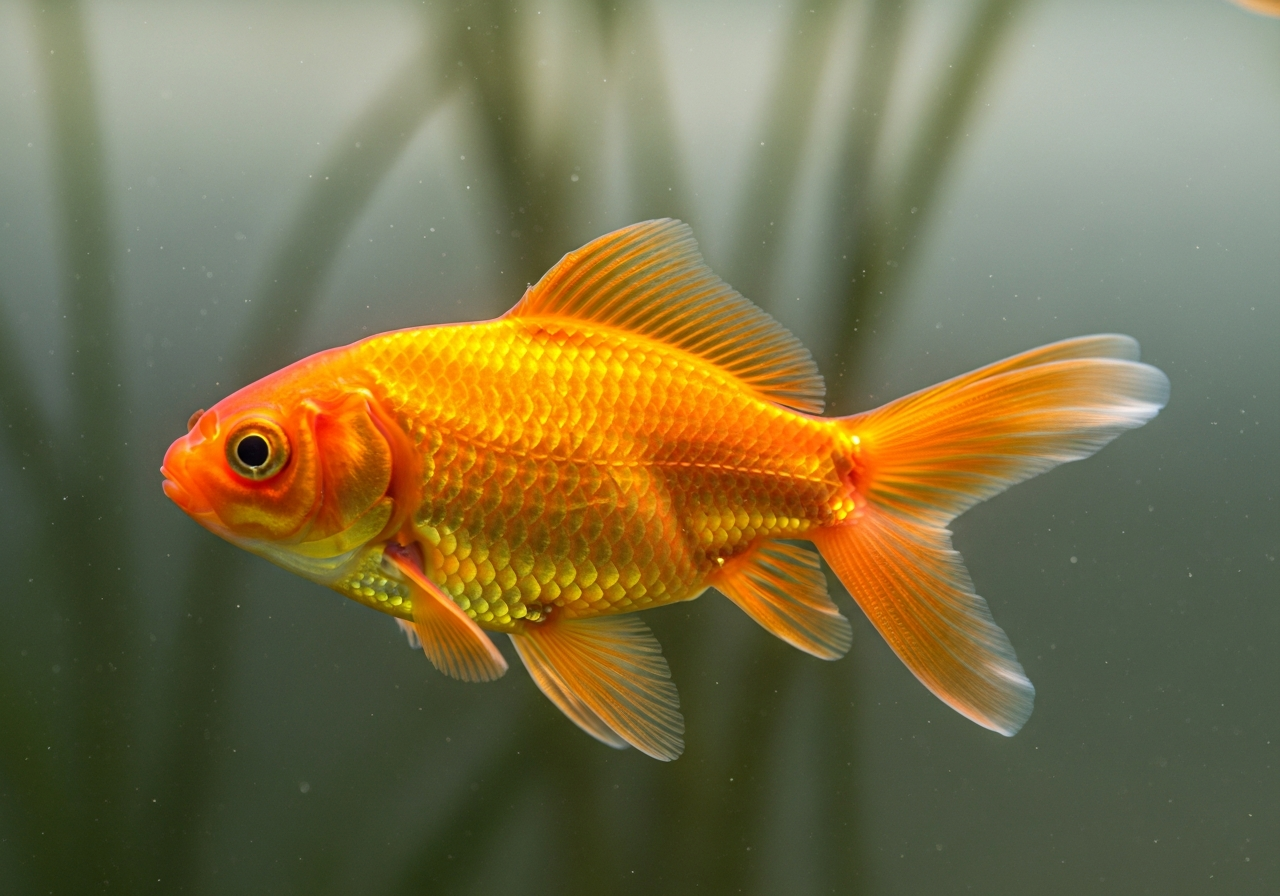
Goldfish
Quick answer
The Goldfish is a hardy cold-water fish and the classic first pet fish, available in slim single-tailed and rounded fancy types. It can grow surprisingly large and live for many years, so it needs a roomy, well-filtered tank rather than a small bowl.
Goldfish at a glance
| Origin | East Asia (developed in China from wild carp); kept worldwide |
|---|---|
| Size | Medium (often 15-30 cm, depending on type and space) |
| Weight | A few grams when young, much heavier as it grows |
| Lifespan | Often 10-15 years or more with good care |
| Appearance | Metallic orange, white, and calico colors with varied fin and tail shapes; fancy types have delicate fins to protect from sharp decor |
| Temperament | Peaceful, social, food-motivated |
| Good with | Beginner keepers with a large tank or pond; best kept with other goldfish of a similar type |
History of the Goldfish
The Goldfish was developed in China over a thousand years ago from wild carp that were bred for their golden color. Kept first in ornamental ponds and bowls by collectors, it spread along trade routes to Japan and eventually around the world. Centuries of selective breeding produced a remarkable variety of body shapes, fins, and colors, from streamlined comets to round-bodied fancy types. Today it is one of the most familiar aquarium and pond fish anywhere.
Interesting facts about the Goldfish
- Goldfish were among the first fish to be selectively bred purely for their looks.
- With good care they can live well over a decade.
- They have good memories and can learn feeding routines and simple cues.
- They lack a stomach, so small, frequent meals suit them better than large ones.
Common health issues in the Goldfish and how to help
Like all fish breeds, the Goldfish can be more prone to a few specific health conditions. Knowing the early signs helps you act quickly — always consult a qualified vet for diagnosis and treatment.
Swim bladder disease
What it is: Round-bodied fancy goldfish are prone to swim bladder problems that cause floating, sinking, or tilting, often linked to diet or overfeeding.
How to help: Feeding small, soaked, appropriate portions helps, and an aquatic or exotics vet can check for underlying causes if a fish struggles to stay level.
Ich (white spot)
What it is: Ich is a parasite showing as small white spots, with affected fish rubbing against surfaces and clamping their fins.
How to help: Clean, stable water lowers the risk, and a vet can confirm the diagnosis and advise on a safe treatment if spots appear.
Water-quality stress
What it is: Goldfish produce a lot of waste, so an under-filtered or overstocked tank can raise ammonia and stress the fish, dulling color and energy.
How to help: Generous filtration, regular partial water changes, and not overstocking keep conditions stable, and a vet can help if fish stay unwell despite good water.
This is general information for owners, not veterinary advice. If you are worried about your fish's health, contact your vet.
Frequently asked questions about the Goldfish
Can goldfish live in a bowl?
A small bowl is not suitable for goldfish because they grow large and produce a lot of waste. They need a roomy, well-filtered tank or pond to stay healthy.
Do goldfish need a heater?
Goldfish are cold-water fish and generally do not need a heater, as they prefer cooler temperatures than tropical species. They still need stable conditions without sudden swings.
How long do goldfish live?
With good care, goldfish often live 10 to 15 years and sometimes longer. Adequate space, strong filtration, and a sensible diet all help them reach a long life.