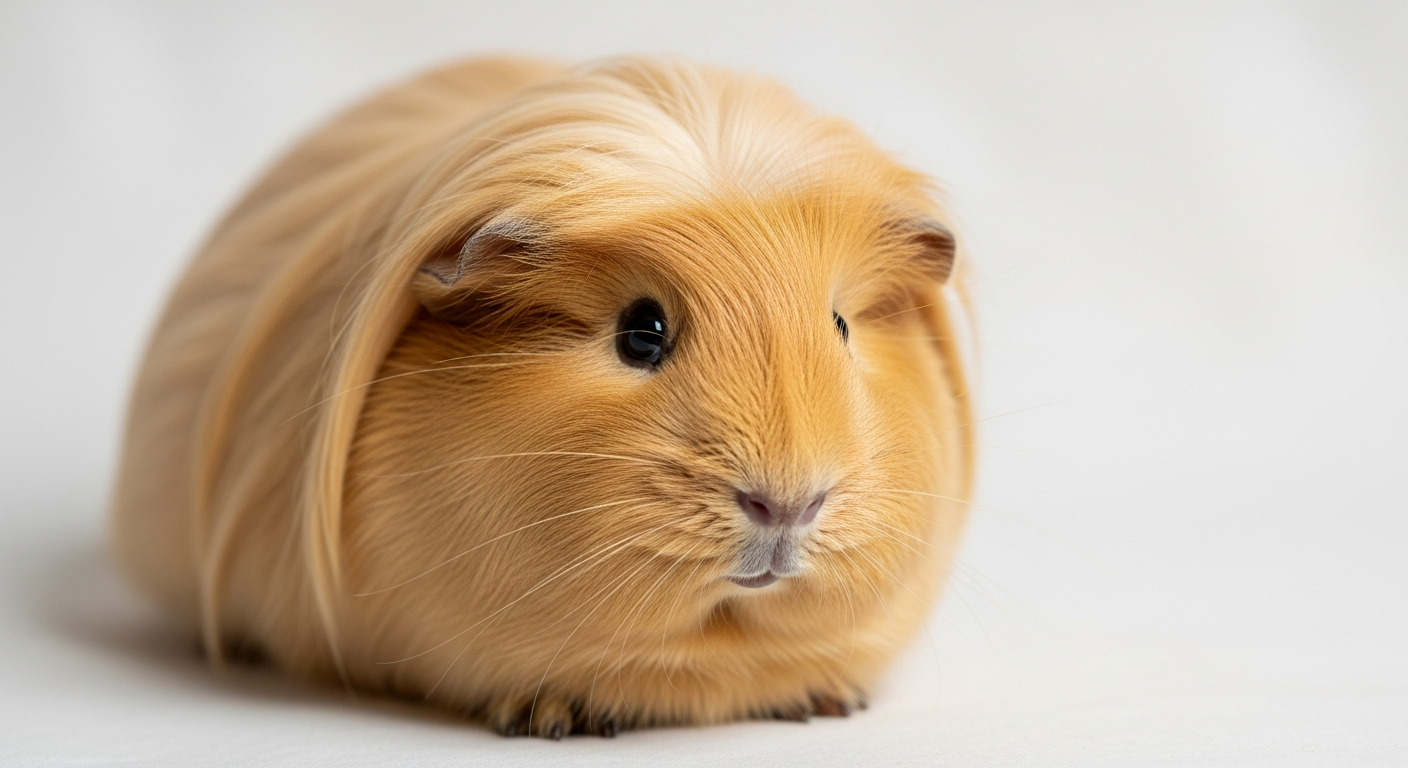
Silkie (Sheltie)
Quick answer
The Silkie, also known as the Sheltie, is a long-haired guinea pig with a smooth coat that flows back from the head, giving a teardrop shape. Gentle and shy, it makes an affectionate pet for owners ready to brush its silky fur daily.
Silkie (Sheltie) at a glance
| Origin | United Kingdom |
|---|---|
| Size | Medium (700–1,200 g) |
| Weight | 700–1,200 g (1.5–2.6 lb) |
| Lifespan | 5–7 years |
| Coat | Long, silky, swept-back coat; needs daily brushing |
| Temperament | Gentle, shy, sweet |
| Good with | Calm owners, dedicated groomers, gentle older children |
History of the Silkie (Sheltie)
The Silkie was developed in the United Kingdom by crossing the Peruvian with the self-coated Roan to create a long-haired breed with no forward-falling fringe over the face. The result is a coat that sweeps back from the head and grows longer toward the rear, forming a distinctive teardrop silhouette. Known as the Sheltie in some countries, the breed was recognized in the late 20th century and is valued for both its elegant coat and calm nature.
Interesting facts about the Silkie (Sheltie)
- The Silkie's coat sweeps back from the face, unlike the Peruvian's forward fringe.
- Its long body and flowing rear coat give it a distinctive teardrop shape.
- The breed is known as the Sheltie in several countries.
- Silkies are often described as one of the gentlest and shyest guinea pig breeds.
Common health issues in the Silkie (Sheltie) and how to help
Like all guinea pig breeds, the Silkie (Sheltie) can be more prone to a few specific health conditions. Knowing the early signs helps you act quickly — always consult a qualified vet for diagnosis and treatment.
Skin issues from a soiled coat
What it is: The long rear coat can collect droppings and moisture, which may irritate the skin and cause sores if it is not kept clean.
How to help: Brush daily, trim as needed, and keep bedding fresh, and see a vet if the skin looks red or sore so it can be diagnosed and treated.
Vitamin C deficiency (scurvy)
What it is: Silkies need dietary vitamin C, and a deficiency can cause swollen joints, lethargy, a rough coat, and poor appetite.
How to help: Provide fresh greens, hay, and a vet-recommended vitamin C source daily, and consult a vet promptly if you notice stiffness or weakness.
Respiratory infections
What it is: Guinea pigs are prone to chest infections, with signs including sneezing, nasal discharge, wheezing, or labored breathing.
How to help: Keep housing clean, dry, and well ventilated, and seek veterinary care quickly so a vet can diagnose and manage the infection.
This is general information for owners, not veterinary advice. If you are worried about your guinea pig's health, contact your vet.
Frequently asked questions about the Silkie (Sheltie)
What is the difference between a Silkie and a Peruvian?
Both are long-haired, but the Silkie's coat sweeps back away from the face, while the Peruvian's hair falls forward over the head.
Are Silkie guinea pigs friendly?
Yes. Silkies are known for being especially gentle, sweet, and laid-back, though they can be shy and appreciate calm, patient handling.
Do Silkie guinea pigs need a lot of grooming?
Yes. Their long, silky coat needs daily brushing and occasional trimming to prevent tangles and keep it clean.