Skinny Pig
Quick answer
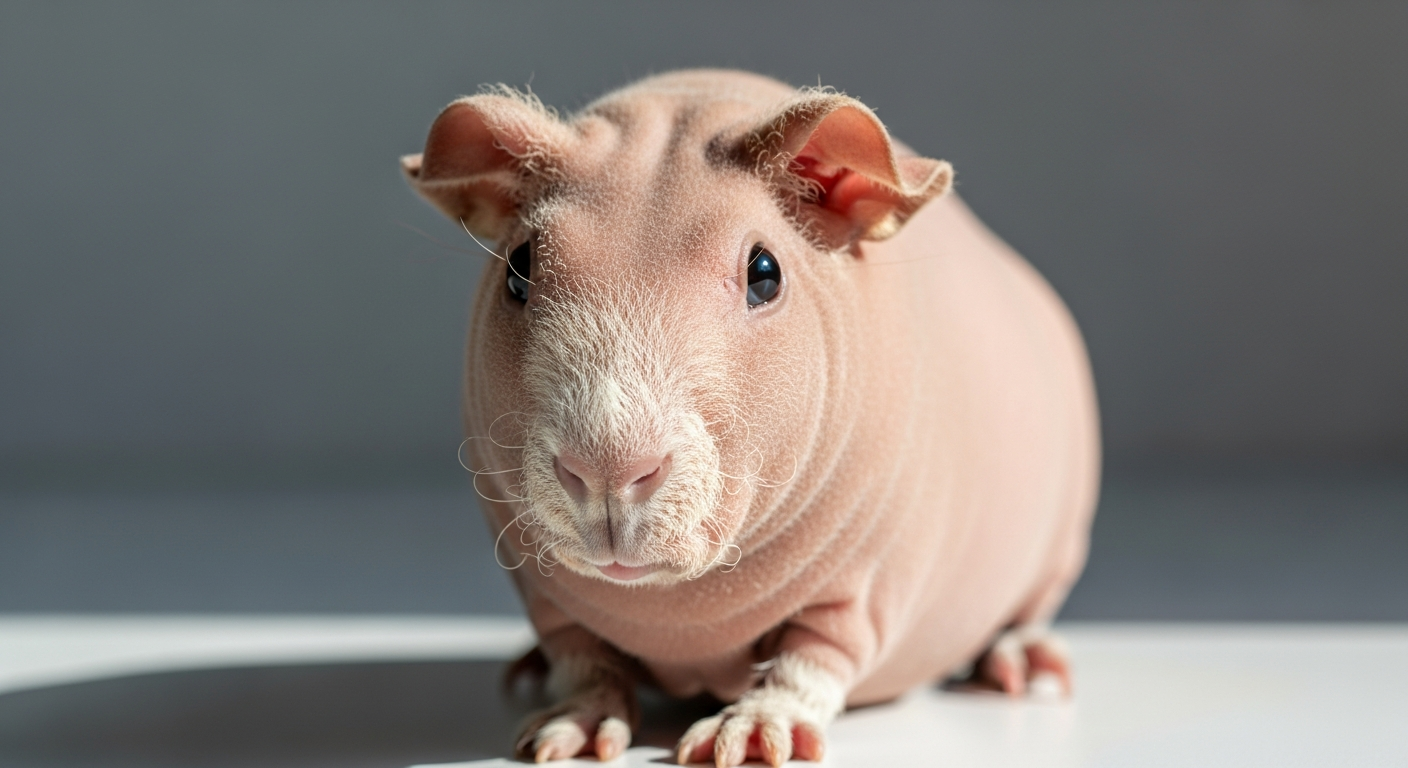
The Skinny Pig is a nearly hairless guinea pig breed with soft, smooth skin and small patches of fur on the face and feet. Friendly and affectionate, it needs warm housing, sun protection, and a higher food intake to stay healthy.
Skinny Pig at a glance
| Origin | Canada |
|---|---|
| Size | Medium (700–1,200 g) |
| Weight | 700–1,200 g (1.5–2.6 lb) |
| Lifespan | 5–7 years |
| Coat | Nearly hairless with fur on the muzzle and feet; needs skin care |
| Temperament | Friendly, curious, affectionate |
| Good with | Attentive owners, warm indoor homes, older children |
History of the Skinny Pig
The Skinny Pig originated in the 1970s and 1980s through a cross between a hairless laboratory strain and haired guinea pigs, producing a mostly bald animal with fur limited to the muzzle and feet. Developed in Canada, the breed has smooth, wrinkled skin and the same friendly temperament as coated guinea pigs. Because it lacks an insulating coat, the Skinny Pig burns more energy to stay warm and needs careful management, making it a specialist's pet that has grown in popularity.
Interesting facts about the Skinny Pig
- The Skinny Pig is almost hairless, with fur usually only on its muzzle and feet.
- It was created by crossing a hairless lab strain with haired guinea pigs.
- Because it has no insulating coat, it eats more to keep warm.
- Its bare skin can sunburn, so it needs shade and protection from direct sun.
Common health issues in the Skinny Pig and how to help
Like all guinea pig breeds, the Skinny Pig can be more prone to a few specific health conditions. Knowing the early signs helps you act quickly — always consult a qualified vet for diagnosis and treatment.
Sensitivity to cold and skin injury
What it is: Without an insulating coat, the Skinny Pig chills easily and its bare skin is prone to scratches, dryness, and sunburn.
How to help: Keep it in a warm, draft-free indoor home with soft bedding and shade, and see a vet for any skin wound or sore so it can be assessed and treated.
Vitamin C deficiency (scurvy)
What it is: Skinny Pigs cannot make their own vitamin C, and their higher energy needs make a balanced diet important to avoid swollen joints, lethargy, and poor appetite.
How to help: Provide plenty of fresh greens, hay, and a vet-recommended vitamin C source daily, and consult a vet promptly if you notice stiffness or weakness.
Respiratory infections
What it is: Guinea pigs are prone to chest infections, with signs such as sneezing, nasal discharge, wheezing, or labored breathing, and chilling can increase the risk.
How to help: Keep housing warm, clean, dry, and well ventilated, and seek veterinary care quickly so a vet can diagnose and manage the infection.
This is general information for owners, not veterinary advice. If you are worried about your guinea pig's health, contact your vet.
Frequently asked questions about the Skinny Pig
Why is the Skinny Pig hairless?
The Skinny Pig was bred from a hairless genetic strain, leaving it mostly bald with fur only on the muzzle and feet.
Do Skinny Pigs need special care?
Yes. They need warm, draft-free housing, protection from sunburn, and a bit more food than coated breeds because they burn extra energy staying warm.
Are Skinny Pigs friendly?
Yes. Skinny Pigs are typically friendly, curious, and affectionate, with the same sociable nature as their coated relatives.