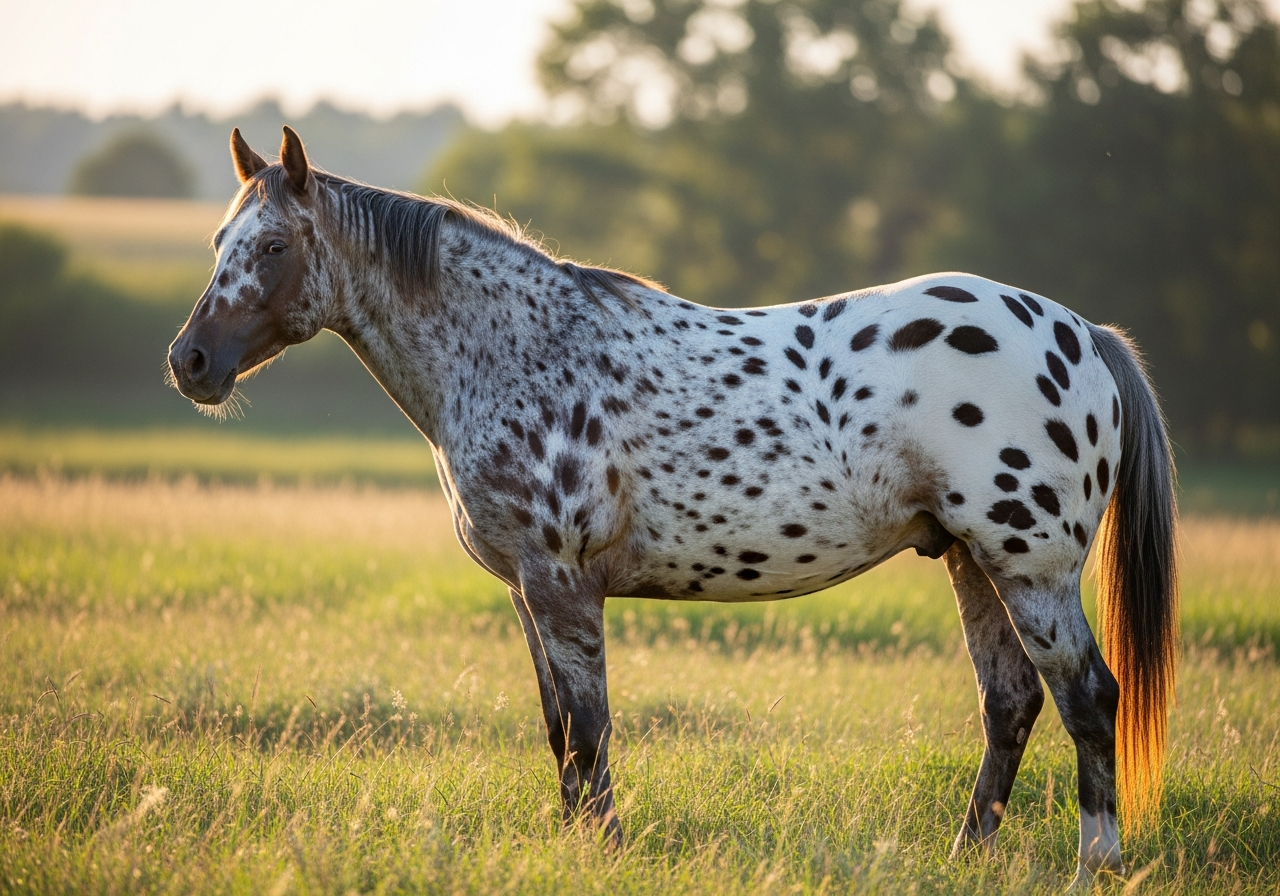
Appaloosa
Quick answer
The Appaloosa is an American breed famous for its colorful spotted coat, developed by the Nez Perce people of the Pacific Northwest, and valued today as a tough, gentle, and versatile riding and stock horse.
Appaloosa at a glance
| Origin | United States (Nez Perce) |
|---|---|
| Size | 14.2–15.2 hands |
| Weight | 450–570 kg (1,000–1,250 lb) |
| Lifespan | 25–30 years |
| Coat | Spotted or patterned coat with mottled skin and striped hooves; routine grooming |
| Temperament | Gentle, hardy, intelligent |
| Good with | Families, trail riders, and all-around recreational riders |
History of the Appaloosa
The Appaloosa descends from spotted horses bred by the Nez Perce people of the Pacific Northwest, who developed them for hardiness, speed, and reliability. The name comes from the Palouse River region. After the Nez Perce War of 1877, the breed was nearly lost, but dedicated enthusiasts revived it, founding the Appaloosa Horse Club in 1938. Today the Appaloosa is celebrated for its distinctive coat patterns, mottled skin, and striped hooves, and it serves in both Western and English disciplines.
Interesting facts about the Appaloosa
- Appaloosas have mottled skin and vertically striped hooves alongside their spots.
- The breed was nearly wiped out after the Nez Perce War of 1877.
- Their distinctive coat patterns include leopard, blanket, and snowflake markings.
- Many show visible white sclera around the eye, like humans.
Common health issues in the Appaloosa and how to help
Like all horse breeds, the Appaloosa can be more prone to a few specific health conditions. Knowing the early signs helps you act quickly — always consult a qualified vet for diagnosis and treatment.
Equine recurrent uveitis
What it is: Appaloosas have a higher rate of equine recurrent uveitis, a painful, recurring eye inflammation that can cause squinting, tearing, or cloudiness.
How to help: Early and ongoing veterinary treatment helps control flare-ups and protect vision.
Congenital stationary night blindness
What it is: Some Appaloosas inherit night blindness, which makes moving in low light difficult.
How to help: A vet can diagnose it, and affected horses do well in well-lit, predictable environments.
Osteoarthritis
What it is: Joint wear can cause stiffness with age or heavy use.
How to help: A vet can help manage it with weight control, appropriate exercise, and joint support.
This is general information for owners, not veterinary advice. If you are worried about your horse's health, contact your vet.
Frequently asked questions about the Appaloosa
What is an Appaloosa horse known for?
Appaloosas are best known for their colorful spotted coat patterns, mottled skin, and striped hooves, along with a hardy, gentle, and versatile nature.
Are Appaloosas good family horses?
Yes. Appaloosas are generally calm, intelligent, and willing, making them well suited to families, trail riding, and recreational use.
Where did the Appaloosa breed come from?
The Appaloosa was developed by the Nez Perce people of the Pacific Northwest United States, and its name derives from the Palouse River region.