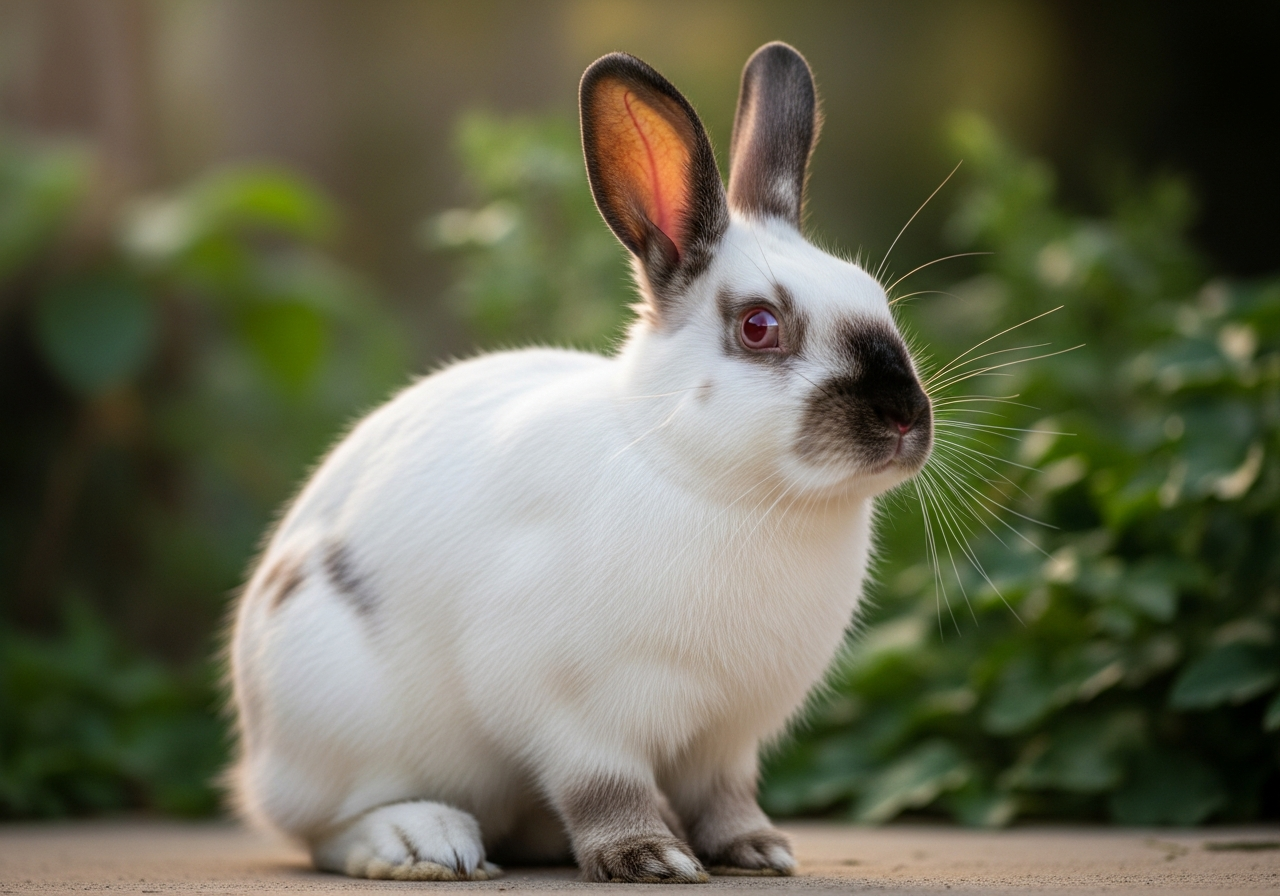
Himalayan
Quick answer
The Himalayan is a small, slender rabbit weighing about 1.1–2 kg, recognized by its white body with dark points on the ears, nose, feet, and tail, and prized for its famously calm, gentle, and docile nature.
Himalayan at a glance
| Origin | Asia |
|---|---|
| Size | Small (1.1–2 kg) |
| Weight | 1.1–2 kg (2.5–4.5 lb) |
| Lifespan | 5–8 years |
| Coat | Short, soft flyback coat; low grooming needs |
| Temperament | Calm, gentle, docile |
| Good with | Families, children, first-time owners |
History of the Himalayan
The Himalayan is one of the oldest known rabbit breeds, with origins in Asia and a long history across many regions, which has given it numerous names. It is distinguished by a color-pointed pattern similar to that seen in Siamese cats, where pigment develops in the cooler extremities. The breed spread widely through Europe and the United States and was among the early breeds recognized by the American Rabbit Breeders Association, valued for its gentle temperament and distinctive markings.
Interesting facts about the Himalayan
- The Himalayan is one of the oldest and most widespread domestic rabbit breeds.
- Its dark points develop on the cooler parts of the body, like a Siamese cat's coloring.
- Babies are often born all white, with the points darkening as they grow.
- It has a long, slender, cylindrical body unusual among small rabbit breeds.
Common health issues in the Himalayan and how to help
Like all rabbit breeds, the Himalayan can be more prone to a few specific health conditions. Knowing the early signs helps you act quickly — always consult a qualified vet for diagnosis and treatment.
Dental malocclusion
What it is: Misaligned or overgrown teeth can make eating painful and cause drooling or weight loss.
How to help: Unlimited hay supports natural wear, and a vet can trim teeth and check the mouth regularly.
Gastrointestinal stasis
What it is: GI stasis is a serious slowdown of the gut, often seen as a rabbit that stops eating or producing droppings.
How to help: A high-hay diet and hydration help prevent it, and prompt veterinary care is essential because it can quickly become life-threatening.
Temperature sensitivity and respiratory infections
What it is: Himalayans can be sensitive to temperature extremes, and cold or damp conditions can contribute to respiratory infections shown by sneezing or discharge.
How to help: Stable, well-ventilated housing helps, and a vet can treat any infection that develops.
This is general information for owners, not veterinary advice. If you are worried about your rabbit's health, contact your vet.
Frequently asked questions about the Himalayan
Why does a Himalayan rabbit have dark points?
The Himalayan carries a temperature-sensitive gene, so pigment develops only on the cooler extremities, the ears, nose, feet, and tail, much like the points of a Siamese cat.
Are Himalayan rabbits good pets?
Yes. Himalayans are calm, gentle, and docile, and their easygoing temperament and manageable size make them well suited to families and first-time owners.
How big do Himalayan rabbits get?
Himalayans are a small breed, typically weighing 1.1 to 2 kg (about 2.5 to 4.5 pounds), with a distinctive long, slender body.