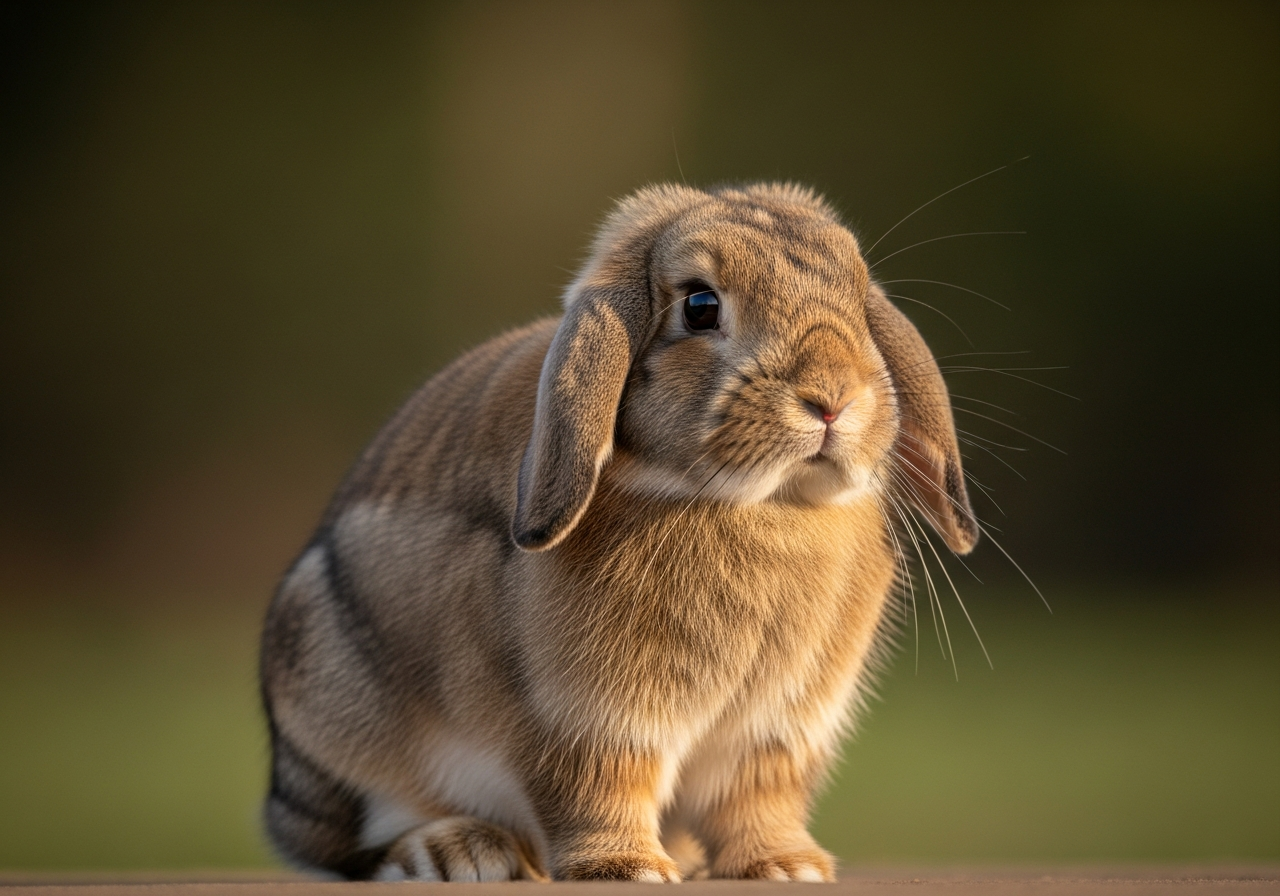
Mini Lop
Quick answer
The Mini Lop is a compact lop-eared rabbit weighing about 2.5–3 kg, known for its cuddly rounded body and affectionate, playful, people-oriented nature that makes it a favorite family companion.
Mini Lop at a glance
| Origin | Germany |
|---|---|
| Size | Small (2.5–3 kg) |
| Weight | 2.5–3 kg (5.5–6.5 lb) |
| Lifespan | 5–10 years |
| Coat | Short, dense rollback coat; minimal grooming |
| Temperament | Affectionate, playful, social |
| Good with | Families, children, first-time owners |
History of the Mini Lop
The Mini Lop was developed in Germany, where it was originally known as the Klein Widder, derived from crossing the German Big Lop with a small Chinchilla rabbit. American breeder Bob Herschbach discovered the breed at a German show in 1972 and brought it to the United States. After further development, the American Rabbit Breeders Association recognized the Mini Lop in 1980. Its compact body and friendly disposition quickly made it one of the most popular pet rabbit breeds.
Interesting facts about the Mini Lop
- The Mini Lop was originally called the Klein Widder in its native Germany.
- Despite the name, it is larger and stockier than the Holland Lop.
- It has a thick, rounded body often described as cuddly or muscular.
- The breed was recognized in the United States in 1980.
Common health issues in the Mini Lop and how to help
Like all rabbit breeds, the Mini Lop can be more prone to a few specific health conditions. Knowing the early signs helps you act quickly — always consult a qualified vet for diagnosis and treatment.
Dental malocclusion
What it is: Lop breeds can develop misaligned or overgrown teeth that make eating painful and may cause drooling or weight loss.
How to help: Unlimited hay supports natural wear, and a vet can trim affected teeth and check the mouth regularly.
Ear infections
What it is: Their floppy ears can trap moisture and wax, raising the risk of ear infections shown by head shaking or scratching.
How to help: A vet can diagnose and treat infections and advise on gentle, routine ear care.
Gastrointestinal stasis
What it is: GI stasis is a serious slowdown of the gut, often seen as a rabbit that stops eating or producing droppings.
How to help: A high-hay diet and hydration help prevent it, and prompt veterinary care is essential because it can quickly become life-threatening.
This is general information for owners, not veterinary advice. If you are worried about your rabbit's health, contact your vet.
Frequently asked questions about the Mini Lop
What is the difference between a Mini Lop and a Holland Lop?
The Mini Lop is larger and heavier, weighing around 2.5 to 3 kg, while the Holland Lop is smaller at 1.3 to 1.8 kg. Both have floppy ears, but the Mini Lop has a stockier build.
Are Mini Lop rabbits good pets?
Yes. Mini Lops are affectionate, playful, and social, and their friendly, people-oriented nature makes them a popular choice for families and first-time owners.
How big do Mini Lop rabbits get?
Mini Lops are a small but solid breed, typically weighing about 2.5 to 3 kg (around 5.5 to 6.5 pounds) when fully grown.