Electric Eel
Electrophorus electricus
Quick answer
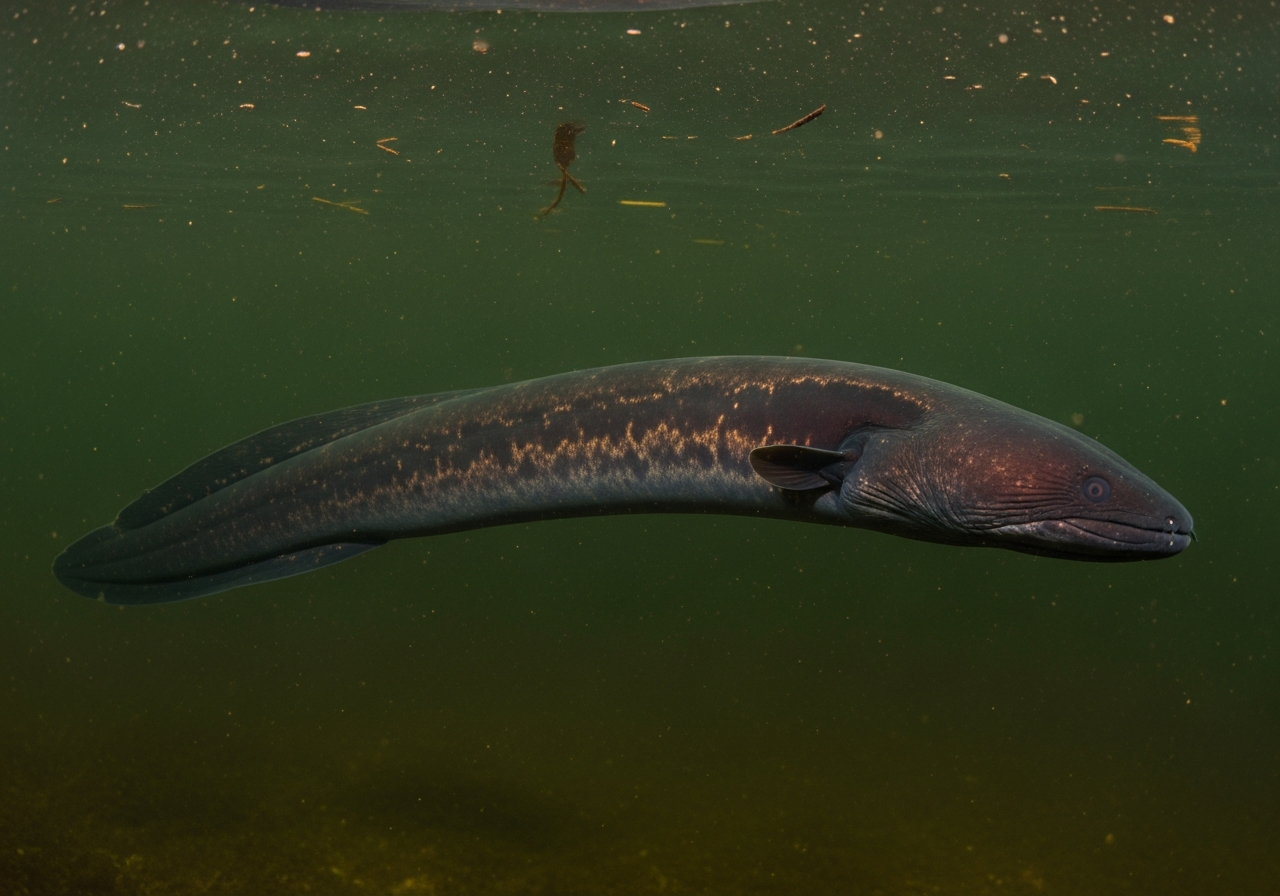
The electric eel is a long, air-breathing fish of South American rivers that can generate powerful electric discharges to stun prey and defend itself. Despite its name, it is not a true eel but a type of knifefish, and it can grow up to 2.5 m (8 ft) long. Its strongest shocks can exceed 600 volts, and electric eels live around 15 years in the wild.
Electric Eel facts at a glance
| Scientific name | Electrophorus electricus |
|---|---|
| Diet | Carnivore |
| Habitat | Murky freshwater streams and pools |
| Lifespan | About 15 years in the wild |
| Length | Up to 2.5 m (8 ft) |
| Top speed | Slow, undulating swimmer |
| Conservation status | Least Concern (IUCN) |
| Kingdom | Animalia |
|---|---|
| Phylum | Chordata |
| Class | Actinopterygii |
| Order | Gymnotiformes |
| Family | Gymnotidae |
| Genus | Electrophorus |
Where it lives
Murky freshwater streams and pools of the Amazon and Orinoco basins in South America.
Behavior and electricity
The electric eel produces electricity in three specialized organs that make up most of its long body, packed with thousands of cells that act like tiny batteries stacked together. It uses weak pulses to navigate and sense its surroundings in murky water and strong discharges, which can exceed 600 volts, to stun prey or deter attackers. Some have even been observed leaping from the water to press their discharge directly against a threat.
Diet and hunting
Electric eels are carnivores that feed on fish, amphibians, crustaceans, and small invertebrates, and young eels also eat insects. They hunt at night, using high-voltage shocks to immobilize prey before swallowing it whole. Their electric pulses can also force hidden prey to twitch, revealing its location.
Habitat and breathing
Electric eels live in murky, slow-moving freshwater of the Amazon and Orinoco basins in South America, including streams, swamps, and floodplain pools. Because these waters are often low in oxygen, the eel is an obligate air-breather that must rise to the surface regularly to gulp air. They prefer dark, sheltered places where they can ambush prey.
Interaction with humans
An electric eel's shock is rarely fatal to a healthy adult, but multiple discharges can be dangerous, and the jolt can cause people to fall and risk drowning in the water. Indigenous peoples and scientists have long been fascinated by the species, which helped inspire early research into electricity. They are kept in some public aquariums where their discharges can be demonstrated.
Frequently asked questions about the Electric Eel
How much electricity can an electric eel produce?
An electric eel can generate strong discharges that exceed 600 volts, enough to stun prey or deter a large attacker, using specialized electric organs along its body.
Is an electric eel really an eel?
No. Despite its name and shape, the electric eel is not a true eel but a type of knifefish, more closely related to catfish and carp.
What do electric eels eat?
Electric eels are carnivores that eat fish, amphibians, crustaceans, and invertebrates, often using electric shocks to stun prey before swallowing it whole.
Can an electric eel kill a human?
A single shock is rarely fatal to a healthy adult, but repeated discharges can be dangerous and may cause a person to fall or be unable to swim, risking drowning.
Why do electric eels breathe air?
They live in oxygen-poor, murky water, so electric eels must surface regularly to gulp air, which provides most of the oxygen they need to survive.
How long do electric eels live?
Electric eels live around 15 years in the wild, and they can reach similar or somewhat older ages in captivity with good care.