Quick answer
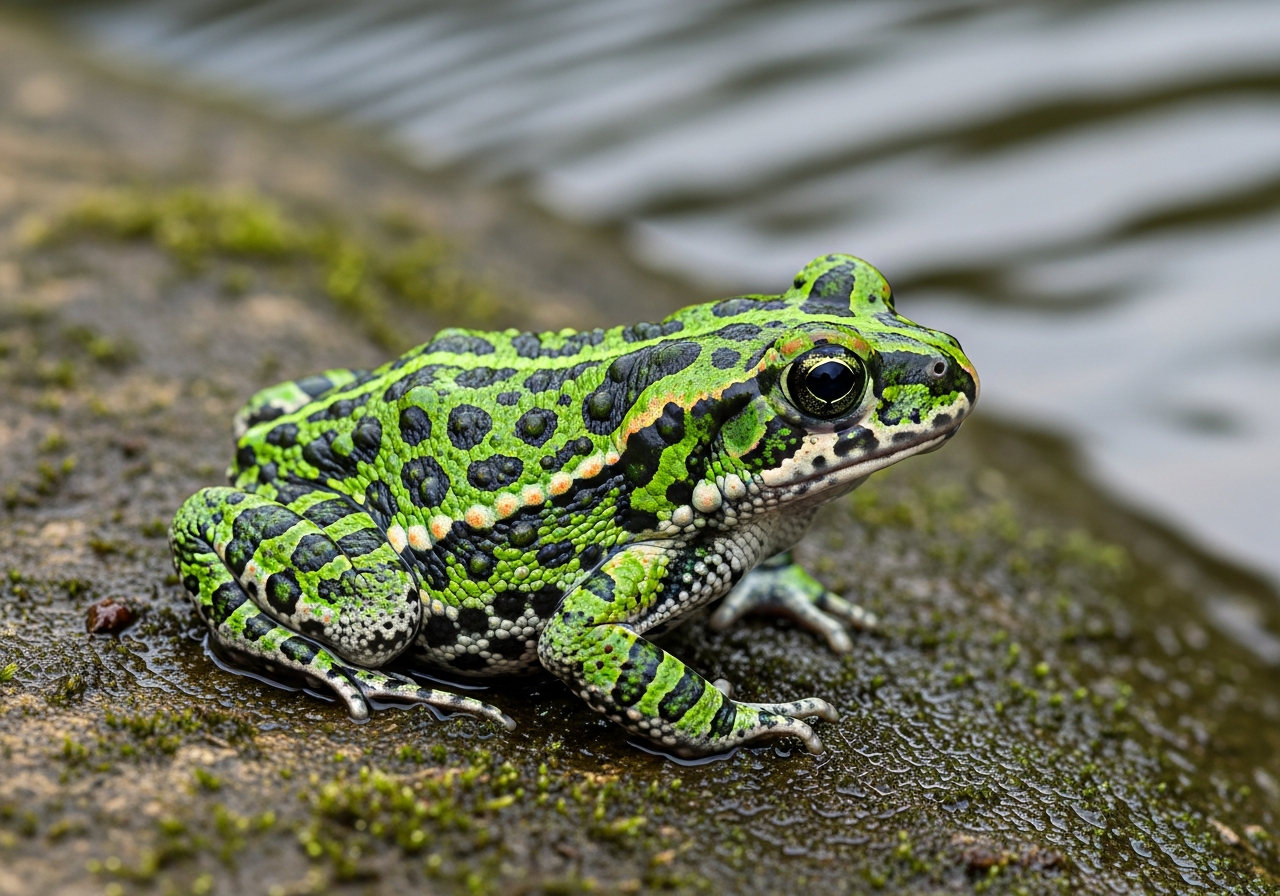
The Oriental fire-bellied toad is a small, semi-aquatic amphibian from East Asia, recognized by its green and black back and its vivid red-and-black underside. When threatened, it arches its body to flash the bright belly, warning predators that its skin is toxic. These hardy, popular pet toads commonly live 12 to 15 years, sometimes longer.
Top questions about the Oriental Fire-bellied Toad
Oriental Fire-bellied Toad facts at a glance
- Weight 40 g
- Length 5 cm
- Top speed 4 km/h
- Lifespan 14 years
| Scientific name | Bombina orientalis |
|---|---|
| Diet | Carnivore (insects, worms, small invertebrates) |
| Habitat | Slow streams, ponds, and rice paddies |
| Lifespan | 12–15 years, sometimes more |
| Length | 4–5 cm (1.5–2 in) body length |
| Weight | Around 40 g (1.4 oz) |
| Conservation status | Least Concern (IUCN) |
| Kingdom | Animalia |
|---|---|
| Phylum | Chordata |
| Class | Amphibia |
| Order | Anura |
| Family | Bombinatoridae |
| Genus | Bombina |
Where it lives
The oriental fire-bellied toad (Bombina orientalis) is native to Slow streams, ponds, and rice paddies of Korea, northeastern China, and parts of southeastern Russia. — recorded across Asia in this guide’s range summary.
For occurrence records, see GBIF species search and sources below.
How big is a oriental fire-bellied toad?
An adult oriental fire-bellied toad measures 5 cm long — about 3% of the height of an average adult person (1.73 m) — and weighs around 40 g, a small fraction of an average adult’s body weight (70 kg).
Length vs an average adult’s height (to scale)
What is a group of oriental fire-bellied toads called?
Group name (collective noun)
A group of Oriental Fire-bellied Toads is called a knot.
Baby name
A baby Oriental Fire-bellied Toad is called a tadpole.
Explore more animal collective nouns and baby animal names .
Behavior and the warning display
Fire-bellied toads are active by day and spend much of their time in or near water. Their most famous behavior is the unken reflex: when alarmed, the toad arches its back and lifts its limbs to display the bright red-and-black belly, a warning of the toxins in its skin. These mild toxins can irritate the eyes and mouth of a predator.
Diet and feeding
These toads are carnivores that eat insects, worms, snails, and other small invertebrates. They hunt by sight and lunge at moving prey, often near the water's edge. In captivity they readily take crickets, mealworms, and earthworms.
Habitat and range
The Oriental fire-bellied toad lives in Korea, northeastern China, and parts of southeastern Russia, in slow streams, ponds, marshes, and rice paddies. It favors cool, shallow water with plenty of vegetation and basking spots. It is semi-aquatic, splitting its time between water and damp land.
Conservation and as a pet
The species is listed as Least Concern and remains common across its range. It is one of the most widely kept pet amphibians because it is hardy, active, and long-lived. Owners should handle it sparingly, as its skin secretions can irritate human skin and eyes.
Dig deeper into the Oriental Fire-bellied Toad
- How Long Do Oriental Fire-bellied Toads Live?
Oriental Fire-bellied Toad lifespan is typically 12–15 years, sometimes more. What shortens or extends life, life stages, and status (Least Concern).
- What Do Oriental Fire-bellied Toads Eat?
What oriental fire-bellied toads eat: Carnivore (insects, worms, small invertebrates), foraging style, and seasonal shifts in Slow streams, ponds, and rice paddies.
- Where Do Oriental Fire-bellied Toads Live?
Where oriental fire-bellied toads live: Slow streams, ponds, and rice paddies, native range cues, and human overlap. Status Least Concern.
Explore the Oriental Fire-bellied Toad
Related Amphibians
Collections
Range & geography
Did you know? Oriental Fire-bellied Toad facts
- The Oriental fire-bellied toad is a small, semi-aquatic amphibian from East Asia, recognized by its green and black back and its vivid red-and-black underside.
- The bright red-and-black belly is a warning signal. When threatened, the toad arches its body to flash its underside, telling predators that its skin contains toxins and that it would be an unpleasant meal.
- Yes, mildly. Their skin secretes toxins that can irritate the eyes and mouth of predators and the skin of people who handle them, so it is best to wash your hands after any contact.
- They are carnivores that eat insects, worms, snails, and other small invertebrates, readily taking crickets, mealworms, and earthworms in captivity.
- Oriental fire-bellied toads are long-lived for their size, commonly reaching 12 to 15 years and sometimes more with good care.
- Conservation: Least Concern (IUCN).
Diet & feeding
Oriental Fire-bellied Toad feeds primarily as a carnivore (insects, worms, small invertebrates). These toads are carnivores that eat insects, worms, snails, and other small invertebrates. They hunt by sight and lunge at moving prey, often near the water's edge. In captivity they readily take crickets, mealworms, and ea
Adaptations
- Fire-bellied toads are active by day and spend much of their time in or near water. Their most famous behavior is the unken reflex: when alarmed, the toad arches its back and lifts its limbs to display the bright red-and-black belly, a warning of the toxins in its skin. These mild toxins can irritate the eyes and mouth of a predator.
- These toads are carnivores that eat insects, worms, snails, and other small invertebrates. They hunt by sight and lunge at moving prey, often near the water's edge. In captivity they readily take crickets, mealworms, and earthworms.
Behaviour & ecology
- Fire-bellied toads are active by day and spend much of their time in or near water. Their most famous behavior is the unken reflex: when alarmed, the toad arches its back and lifts its limbs to display the bright red-and-black belly, a warning of the toxins in its skin. These mild toxins can irritate the eyes and mouth of a predator.
- These toads are carnivores that eat insects, worms, snails, and other small invertebrates. They hunt by sight and lunge at moving prey, often near the water's edge. In captivity they readily take crickets, mealworms, and earthworms.
- The Oriental fire-bellied toad lives in Korea, northeastern China, and parts of southeastern Russia, in slow streams, ponds, marshes, and rice paddies. It favors cool, shallow water with plenty of vegetation and basking spots. It is semi-aquatic, splitting its time between water and damp land.
Communication
- Oriental Fire-bellied Toad uses scent, posture, and vocal signals to mark territory and coordinate social behaviour.
- Communication intensity often peaks during breeding seasons and territorial disputes.
Habitat & range
Slow streams, ponds, and rice paddies
Ecological role
Oriental Fire-bellied Toad acts as a predator that helps regulate prey populations and maintain balance in slow streams, ponds, and rice paddies.
Conservation status of the Oriental Fire-bellied Toad
The oriental fire-bellied toad (Bombina orientalis) is listed as Least Concern on the IUCN Red List. Least Concern (LC) is the IUCN's lowest-risk category, assigned to widespread, abundant species that have been evaluated and found not to be threatened. It does not mean a species faces no pressures — only that it is not currently at risk of extinction.
The oriental fire-bellied toad (Bombina orientalis) is assessed on the IUCN Red List. Look up on the IUCN Red List .
Frequently asked questions about the Oriental Fire-bellied Toad
Why do fire-bellied toads have red bellies?
The bright red-and-black belly is a warning signal. When threatened, the toad arches its body to flash its underside, telling predators that its skin contains toxins and that it would be an unpleasant meal.
Are fire-bellied toads poisonous?
Yes, mildly. Their skin secretes toxins that can irritate the eyes and mouth of predators and the skin of people who handle them, so it is best to wash your hands after any contact.
What do fire-bellied toads eat?
They are carnivores that eat insects, worms, snails, and other small invertebrates, readily taking crickets, mealworms, and earthworms in captivity.
How long do fire-bellied toads live?
Oriental fire-bellied toads are long-lived for their size, commonly reaching 12 to 15 years and sometimes more with good care.
Are fire-bellied toads good pets?
Yes. They are popular, hardy, and active pets that do well in a semi-aquatic setup with water and land, though they should be handled sparingly because of their skin secretions.
Where do fire-bellied toads live?
They live in Korea, northeastern China, and parts of southeastern Russia, in slow streams, ponds, marshes, and rice paddies with shallow water and vegetation.
What is a group of oriental fire-bellied toads called?
A group of Oriental Fire-bellied Toads is called a knot.
What is a baby oriental fire-bellied toad called?
A baby Oriental Fire-bellied Toad is called a tadpole.
Sources & references
This guide is compiled and reviewed against established zoological and conservation references. Key sources for the Oriental Fire-bellied Toad:
-
IUCN Red List of Threatened Species
Conservation status (Least Concern) reflects the IUCN Red List category for Bombina orientalis.
-
iNaturalist — observations & photos
Search citizen-science observations and community IDs for Bombina orientalis. Useful for range checks and recent sightings — not a substitute for formal Red List status.
-
GBIF — occurrence data
Global Biodiversity Information Facility species search for Bombina orientalis. Explore published occurrence records used in range research.
- IUCN Red List — Bombina orientalis.
Conservation status (Least Concern) and population trends.
- Animal Diversity Web — Bombina orientalis. University of Michigan Museum of Zoology.
Life history, morphology, and range.
- Wikipedia — Oriental Fire-bellied Toad.
General taxonomy and overview (cross-check primary sources).
-
Global Animal Guide editorial standards
How we research, source, review, and update every guide for accuracy.