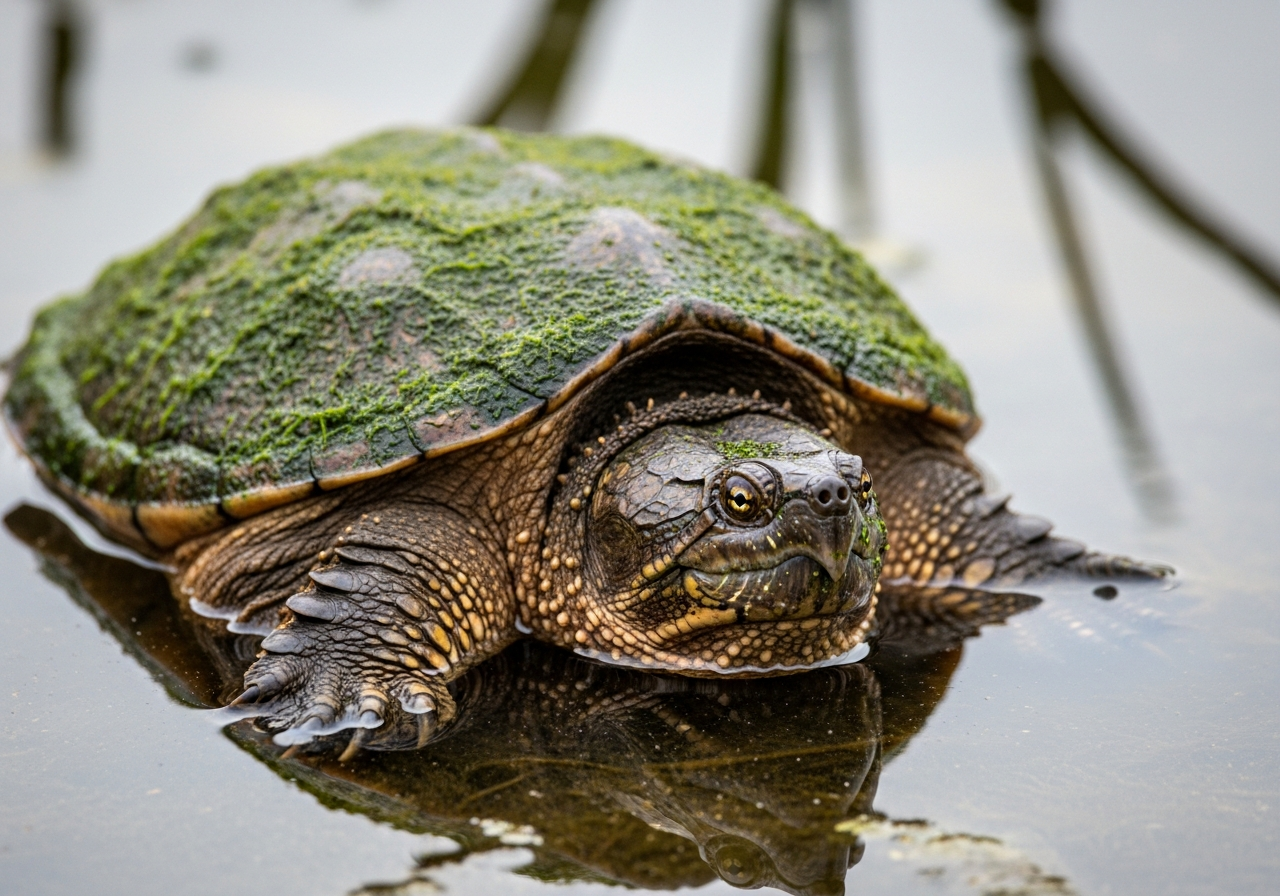
Snapping Turtle
Chelydra serpentina
Quick answer
The common snapping turtle is a large freshwater turtle of central and eastern North America, known for its powerful beak-like jaws and aggressive defense on land. It spends most of its life in ponds, lakes, and rivers, where it is far calmer and rarely bites. Snapping turtles are omnivores that eat plants and a wide range of animals, and they can live 30 to 50 years.
Snapping Turtle facts at a glance
| Scientific name | Chelydra serpentina |
|---|---|
| Diet | Omnivore |
| Habitat | Freshwater ponds, lakes, and rivers |
| Lifespan | 30–50 years |
| Length | Shell up to 0.5 m (20 in) |
| Weight | 4.5–16 kg (10–35 lb) |
| Conservation status | Least Concern (IUCN) |
| Kingdom | Animalia |
|---|---|
| Phylum | Chordata |
| Class | Reptilia |
| Order | Testudines |
| Family | Chelydridae |
| Genus | Chelydra |
Where it lives
Freshwater ponds, lakes, and rivers across central and eastern North America.
Behavior on land and in water
Snapping turtles have very different temperaments depending on where they are. In the water they are shy and usually swim or walk away from people, but on land, where they cannot retreat fully into their small shell, they defend themselves with fast, powerful bites. They often lie buried in mud with only their eyes and nostrils showing, waiting for prey.
Diet and feeding
These turtles are omnivores with a broad diet of aquatic plants, fish, frogs, invertebrates, small mammals, birds, and carrion. They are important scavengers that help keep waterways clean. They catch live prey with a quick strike of the head and their sharp, hooked jaws.
Habitat and range
The common snapping turtle ranges across central and eastern North America, from southern Canada to the Gulf of Mexico. It lives in almost any permanent fresh water, including ponds, lakes, marshes, and slow rivers, preferring soft mud bottoms and plenty of vegetation. It can tolerate brackish water and even survive in polluted habitats.
Reproduction
Females travel overland in late spring to dig nests in sandy or loose soil, sometimes far from water. Like many turtles, the nest temperature influences whether the young develop as males or females. The hatchlings dig their way out and head for water on their own, facing heavy predation in their first months.
Frequently asked questions about the Snapping Turtle
Are snapping turtles dangerous?
On land they can deliver a fast, powerful bite when they feel cornered, so they should not be handled carelessly. In the water, however, they are shy and almost always avoid people.
What do snapping turtles eat?
Snapping turtles are omnivores that eat aquatic plants, fish, frogs, invertebrates, small mammals, birds, and carrion. They both hunt live prey and scavenge.
How long do snapping turtles live?
Common snapping turtles often live 30 to 50 years in the wild, and some individuals live even longer, growing slowly throughout their lives.
How big do snapping turtles get?
Common snapping turtles typically have shells up to about 0.5 m (20 in) long and weigh 4.5 to 16 kg (10 to 35 lb), with large individuals being quite heavy.
Should you pick up a snapping turtle?
It is best to leave them alone. If a turtle must be moved off a road, it should be handled very carefully from the rear of the shell or guided with an object, as the neck can reach far back to bite.
Where do snapping turtles live?
They live in fresh water across central and eastern North America, including ponds, lakes, marshes, and slow rivers, preferring soft, muddy bottoms.