Asian Water Monitor
Varanus salvator
Quick answer
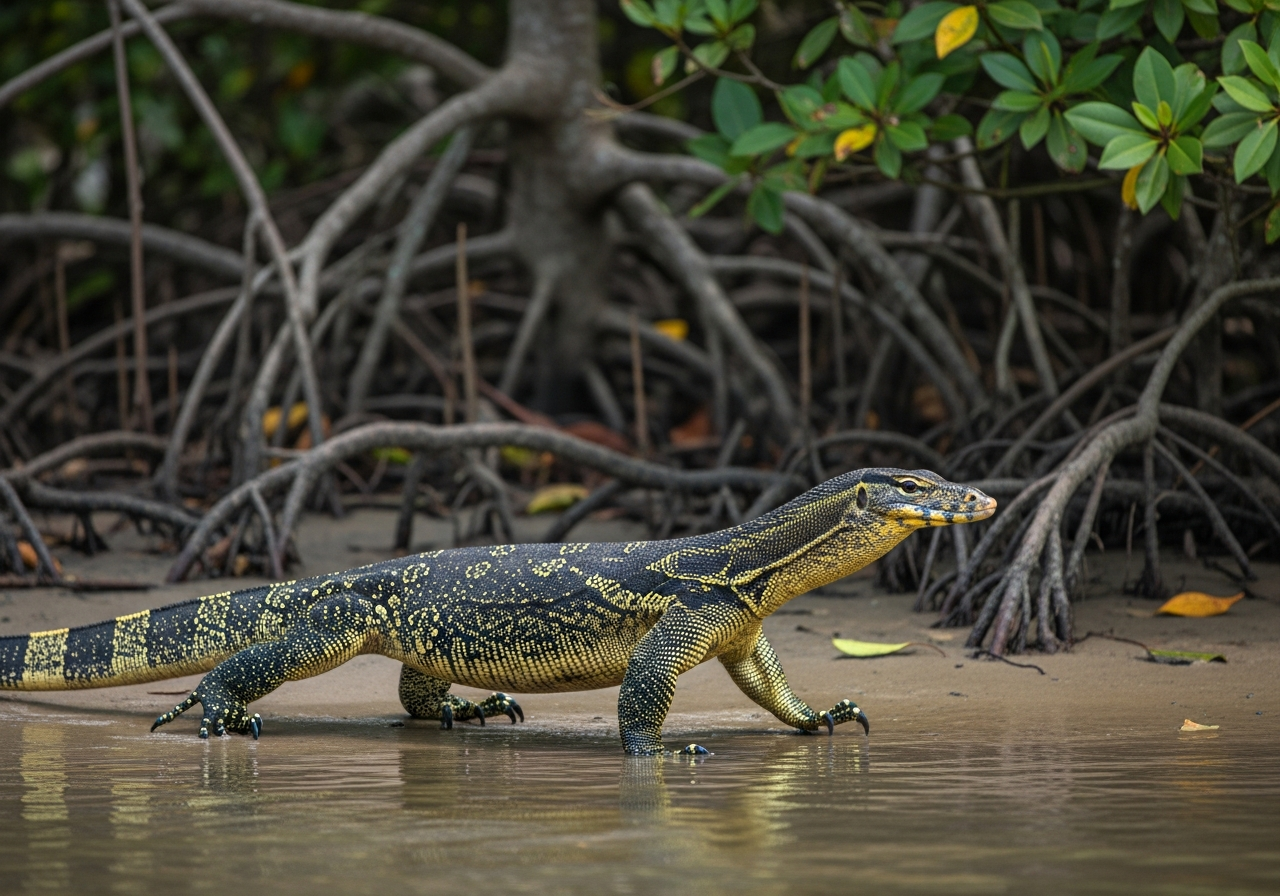
The Asian water monitor is one of the largest lizards on Earth, reaching up to 3 m (10 ft) and 25 kg (55 lb), and is a strong swimmer found across South and Southeast Asia. It is a semi-aquatic predator and scavenger that eats almost anything, from fish and crabs to carrion and small mammals. Highly adaptable, it lives even in cities and farmland and can live 10 to 20 years.
Asian Water Monitor facts at a glance
| Scientific name | Varanus salvator |
|---|---|
| Diet | Carnivore (also scavenges) |
| Habitat | Wetlands, rivers, mangroves, and coasts |
| Lifespan | 10–20 years |
| Length | Up to 3 m (10 ft) |
| Weight | Up to 25 kg (55 lb) |
| Conservation status | Least Concern (IUCN) |
| Kingdom | Animalia |
|---|---|
| Phylum | Chordata |
| Class | Reptilia |
| Order | Squamata |
| Family | Varanidae |
| Genus | Varanus |
Behavior and adaptability
Asian water monitors are semi-aquatic and never live far from water, into which they dive to escape danger or to hunt. They are excellent swimmers, using a powerful, flattened tail, and are also capable climbers and runners. Remarkably tolerant of people, they thrive in farmland, ports, and even busy cities where food is easy to find.
Diet and feeding
These monitors are opportunistic carnivores and scavengers that eat fish, frogs, crabs, birds, eggs, rodents, and carrion. A forked tongue and keen sense of smell help them track food, and they readily feed at rubbish dumps and along rivers. Their willingness to eat almost anything is a key reason for their success.
Habitat and range
The Asian water monitor ranges across South and Southeast Asia, from Sri Lanka and eastern India through Indonesia and the Philippines. It favors wetlands, riverbanks, mangroves, swamps, and coasts with access to water. It is one of the most widespread large lizards in its region.
Human interaction
Water monitors are hunted in some areas for their skins, used in leather goods, and for meat, yet they remain common and adaptable. In many cities they are tolerated as useful scavengers that clean up waste. They are generally wary of people but a large, cornered monitor can bite, scratch, and lash with its tail.
Frequently asked questions about the Asian Water Monitor
How big do Asian water monitors get?
Asian water monitors are among the largest lizards in the world, reaching up to about 3 m (10 ft) long and 25 kg (55 lb), though most are smaller.
What do water monitors eat?
They are opportunistic carnivores and scavengers that eat fish, frogs, crabs, birds, eggs, rodents, and carrion, and they readily feed at rubbish dumps.
Are Asian water monitors dangerous to humans?
They generally avoid people, but a large cornered monitor can bite, scratch, and whip with its tail. Bites can become infected, so they should be given space and not handled.
Can water monitors swim?
Yes. Asian water monitors are excellent swimmers that use their powerful, flattened tails to move through water and often dive to escape threats or find food.
Where do Asian water monitors live?
They live across South and Southeast Asia in wetlands, rivers, mangroves, and coasts, and they thrive even in farmland and cities near water.
How long do water monitors live?
Asian water monitors typically live 10 to 20 years, with well-cared-for individuals in captivity sometimes reaching the upper end of that range or beyond.